

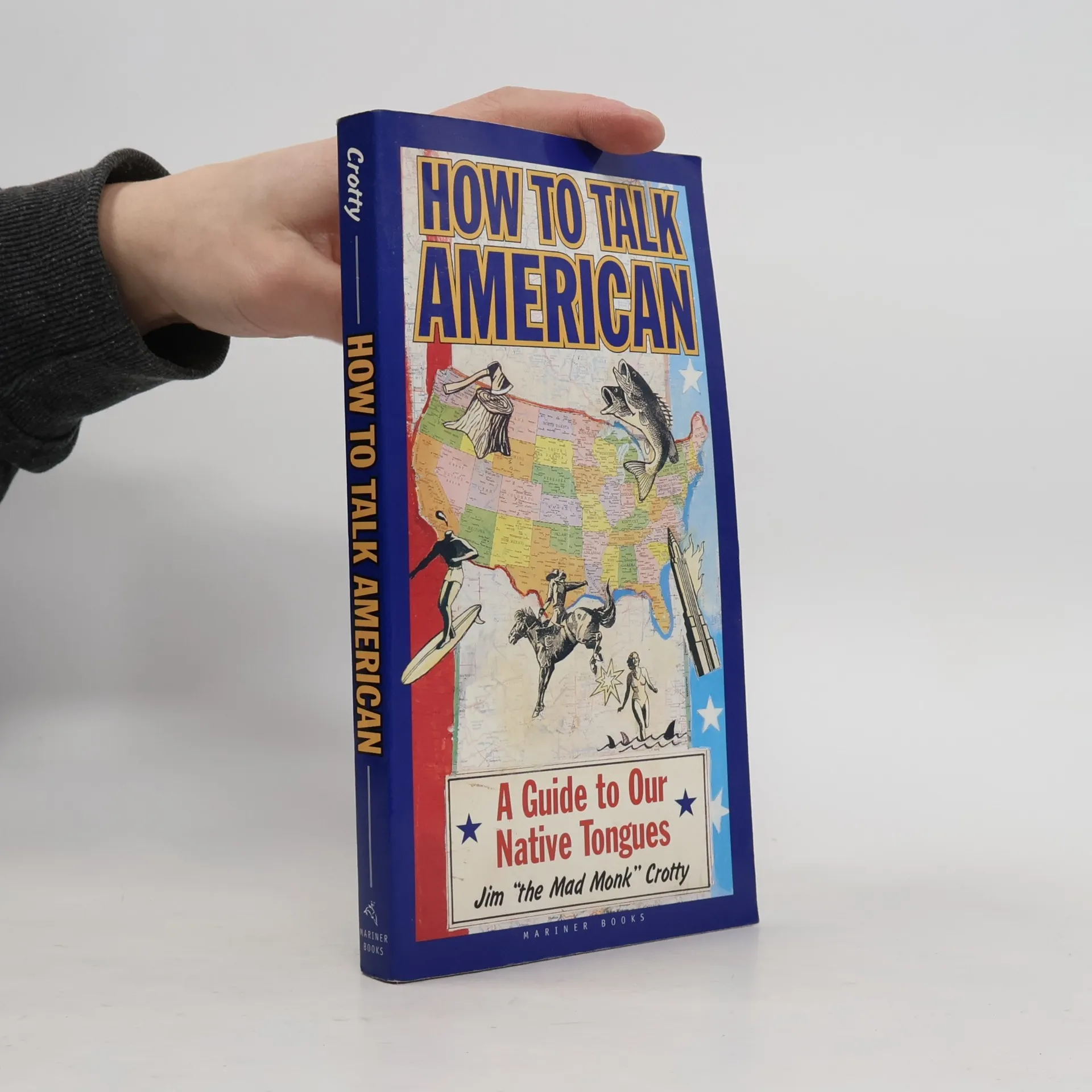
How to Talk American
A Guide to Our Native Tongues
Autores
Más información sobre el libro
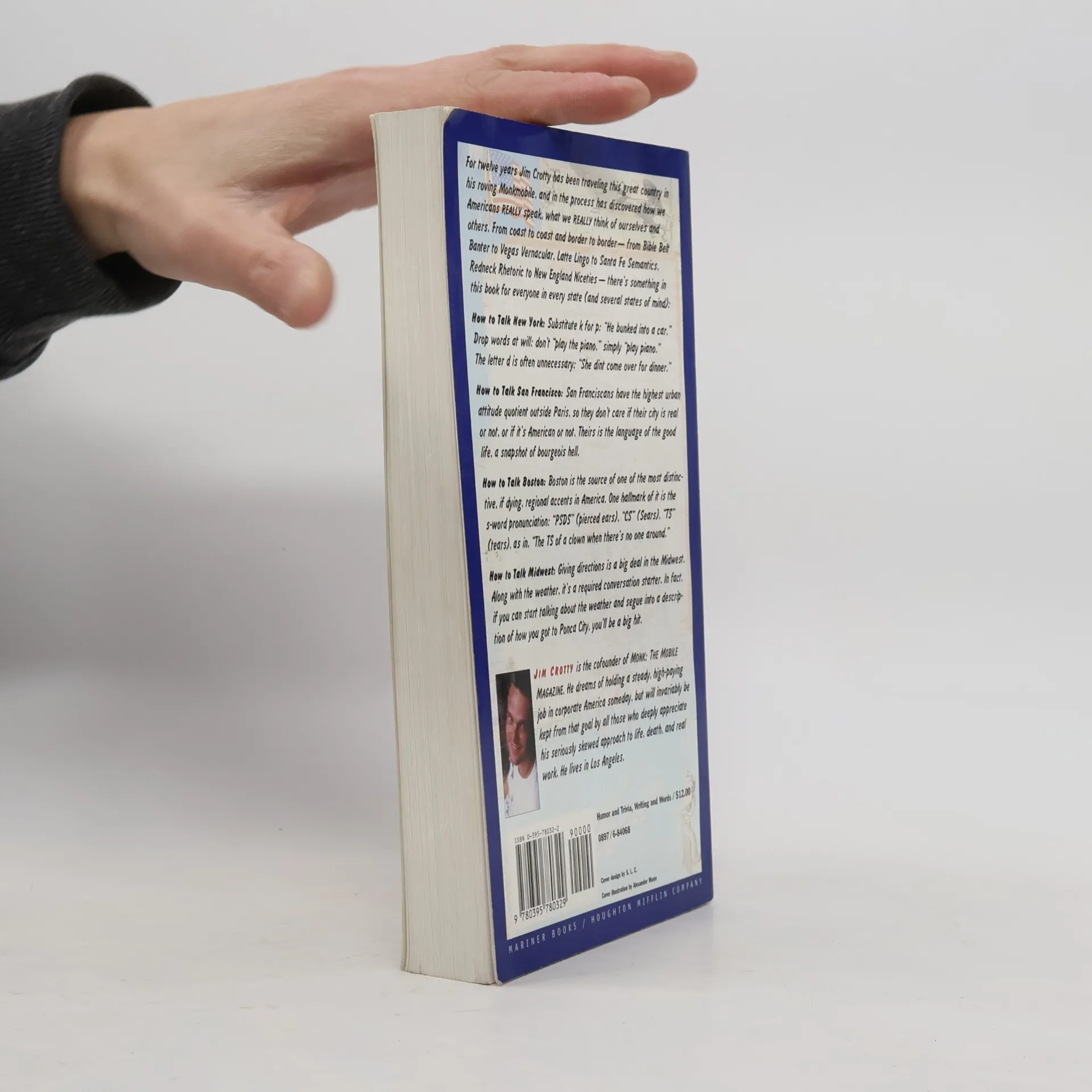
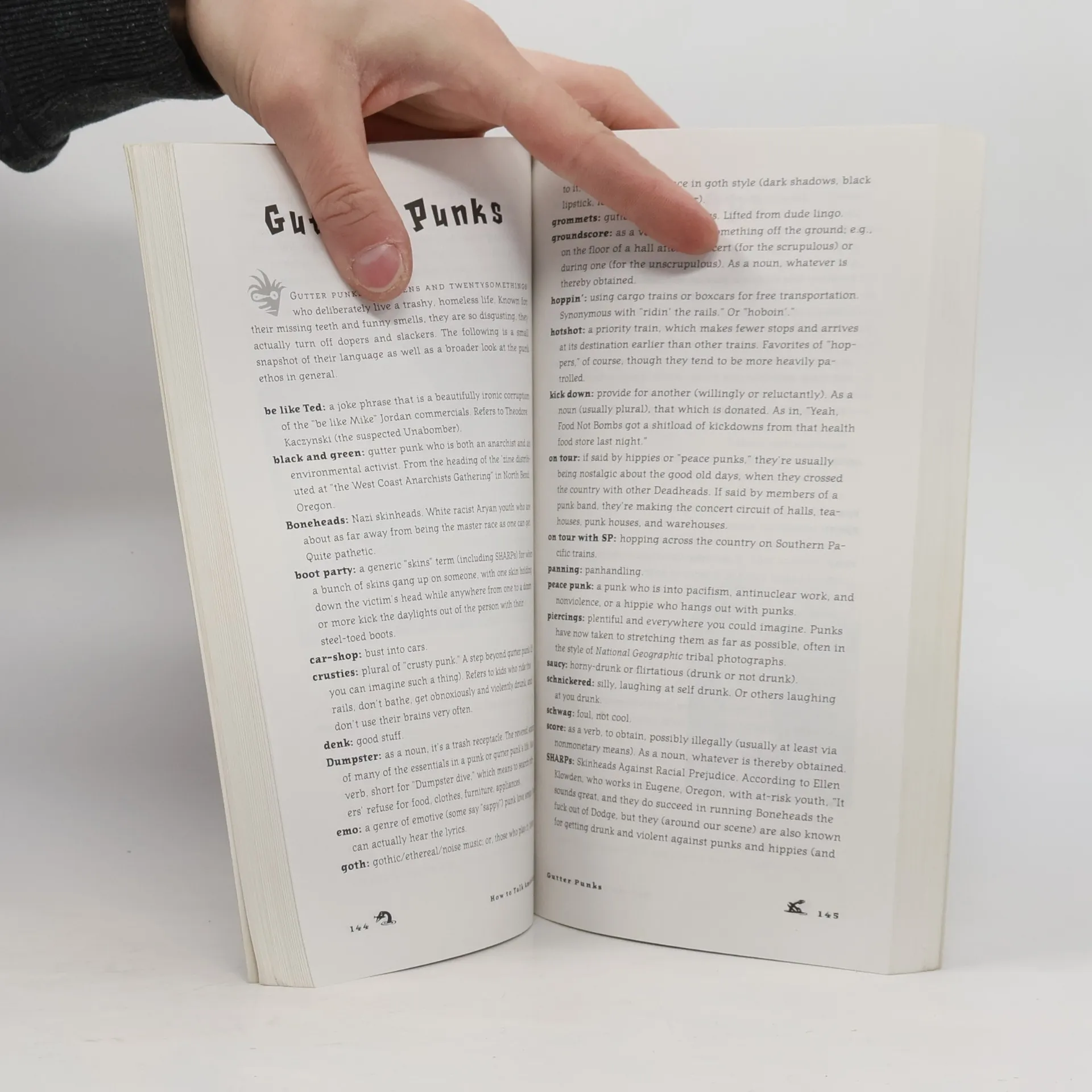
For twelve years Jim Crotty has been traveling this great country in his roving Monkmobile (don't ask) and in the process has discovered how Americans really speak, from coast to coast and border to border - from Bible Belt Banter to Vegas Vernacular, from Redneck Rhetoric to New England Niceties: Things you need to know about Boston before you go there: Quahog (say co-hog) - oil-slickened red-tide clam, prized by Bostonians for its taste; Santa Fe semantics: Blue corn - sacred food, sold as chips; Seattle-speak: Partly sunny - partly cloudy Crotty's savvy and often hilarious region-by-region guide to the way we talk provides a dead-on (and sometimes too strange) indication of how we think, how we behave, and what we hold dear.
Compra de libros
How to Talk American, James Marshall Crotty
- Idioma

- Publicado en
- 1997
- Encuadernación
- (Tapa blanda),
- Estado del libro
- Dañado
- Precio
- 11,99 €
Métodos de pago
Nadie lo ha calificado todavía.
- Título
- How to Talk American
- Subtítulo
- A Guide to Our Native Tongues
- Idioma
- Inglés
- Autores
- James Marshall Crotty
- Editorial
- Mariner Books
- Publicado en
- 1997
- Formato
- Tapa blanda
- Páginas
- 448
- ISBN10
- 0395780322
- ISBN13
- 9780395780329
- Serie
- Categorías
- Etiquetas
- Viajes, Guías y Manuales, Humor, EE.UU., Lingüística, Historia de Europa, Dialectos, Inglés Americano
- Descripción
- For twelve years Jim Crotty has been traveling this great country in his roving Monkmobile (don't ask) and in the process has discovered how Americans really speak, from coast to coast and border to border - from Bible Belt Banter to Vegas Vernacular, from Redneck Rhetoric to New England Niceties: Things you need to know about Boston before you go there: Quahog (say co-hog) - oil-slickened red-tide clam, prized by Bostonians for its taste; Santa Fe semantics: Blue corn - sacred food, sold as chips; Seattle-speak: Partly sunny - partly cloudy Crotty's savvy and often hilarious region-by-region guide to the way we talk provides a dead-on (and sometimes too strange) indication of how we think, how we behave, and what we hold dear.