

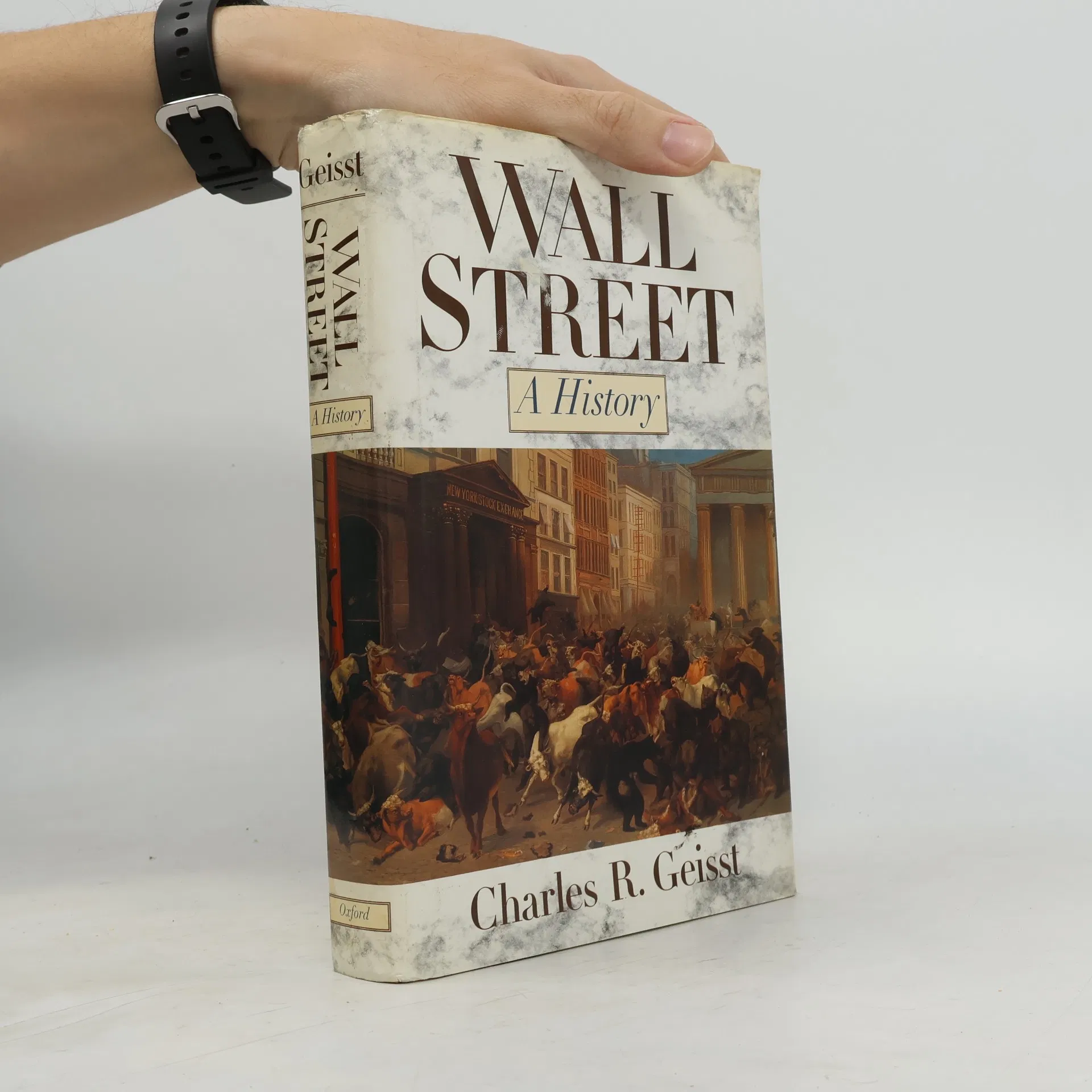


Wall Street
A History
Autores
Más información sobre el libro
Here is a fascinating chronicle of America's securities industry and of its role in our nation's economic development. Geisst's narrative ranges over two centuries, from just after the Revolutionary War, to the California Gold Rush and the economic boom (for the North) of the Civil War, to the great stock market crash of 1929, right up to the recent junk bond frenzy and the merger mania of the 1980s that culminated in the fall of Drexel Burnham. The book traces many themes - the move of industry and business westward in the early nineteenth century, the rise of the great Robber Barons, the influence of the securities market on incredible growth of industry, particularly in the innovative financing of the railroads and major steel companies and crucial investments in Bell's and Edison's technical innovations. Geisst also looks at the gradual increase in government involvement in Wall Street, revealing how regulation had been minimal at first and many investors had suffered from the abuses of corrupt firms. But with the beginning of the New Deal, the government stepped in to pass a series of laws - centered on the Securities Exchange Commission - that severely restricted the ways that Wall Street firms could operate. Here began a heated debate that still rages today between those who want unfettered license to operate as they please and those who want the government to regulate the market to curb corruption. Of course, "The Street" has always been a breeding ground for characters with brazen nerve, and no history of the stock market would be complete without a look at the most ruthless wheeler dealers. Geisst for instance details the manipulations by which Jay Gould and associatescornered the gold market, leading to the terrifying market crash on "Black Friday" in September 1869. Here too are battles of will between powerful personalities and the determined rise to power of such "self-made men" as John Jacob Astor, John D. Rockefeller, and Cornelius "Commodore"
Compra de libros
Wall Street, Charles R. Geisst
- Idioma

- Publicado en
- 1997
- Encuadernación
- (Tapa dura),
- Estado del libro
- Bueno
- Precio
- 8,09 €
Métodos de pago
Nadie lo ha calificado todavía.
- Título
- Wall Street
- Subtítulo
- A History
- Idioma
- Inglés
- Autores
- Charles R. Geisst
- Editorial
- Oxford University Press
- Publicado en
- 1997
- Formato
- Tapa dura
- Páginas
- 404
- ISBN10
- 0195115120
- ISBN13
- 9780195115123
- Serie
- Etiquetas
- Tema histórico, Comercio, EE.UU., Finanzas, Historia de EE. UU., Historia social, Historia Económica
- Descripción
- Here is a fascinating chronicle of America's securities industry and of its role in our nation's economic development. Geisst's narrative ranges over two centuries, from just after the Revolutionary War, to the California Gold Rush and the economic boom (for the North) of the Civil War, to the great stock market crash of 1929, right up to the recent junk bond frenzy and the merger mania of the 1980s that culminated in the fall of Drexel Burnham. The book traces many themes - the move of industry and business westward in the early nineteenth century, the rise of the great Robber Barons, the influence of the securities market on incredible growth of industry, particularly in the innovative financing of the railroads and major steel companies and crucial investments in Bell's and Edison's technical innovations. Geisst also looks at the gradual increase in government involvement in Wall Street, revealing how regulation had been minimal at first and many investors had suffered from the abuses of corrupt firms. But with the beginning of the New Deal, the government stepped in to pass a series of laws - centered on the Securities Exchange Commission - that severely restricted the ways that Wall Street firms could operate. Here began a heated debate that still rages today between those who want unfettered license to operate as they please and those who want the government to regulate the market to curb corruption. Of course, "The Street" has always been a breeding ground for characters with brazen nerve, and no history of the stock market would be complete without a look at the most ruthless wheeler dealers. Geisst for instance details the manipulations by which Jay Gould and associatescornered the gold market, leading to the terrifying market crash on "Black Friday" in September 1869. Here too are battles of will between powerful personalities and the determined rise to power of such "self-made men" as John Jacob Astor, John D. Rockefeller, and Cornelius "Commodore"