

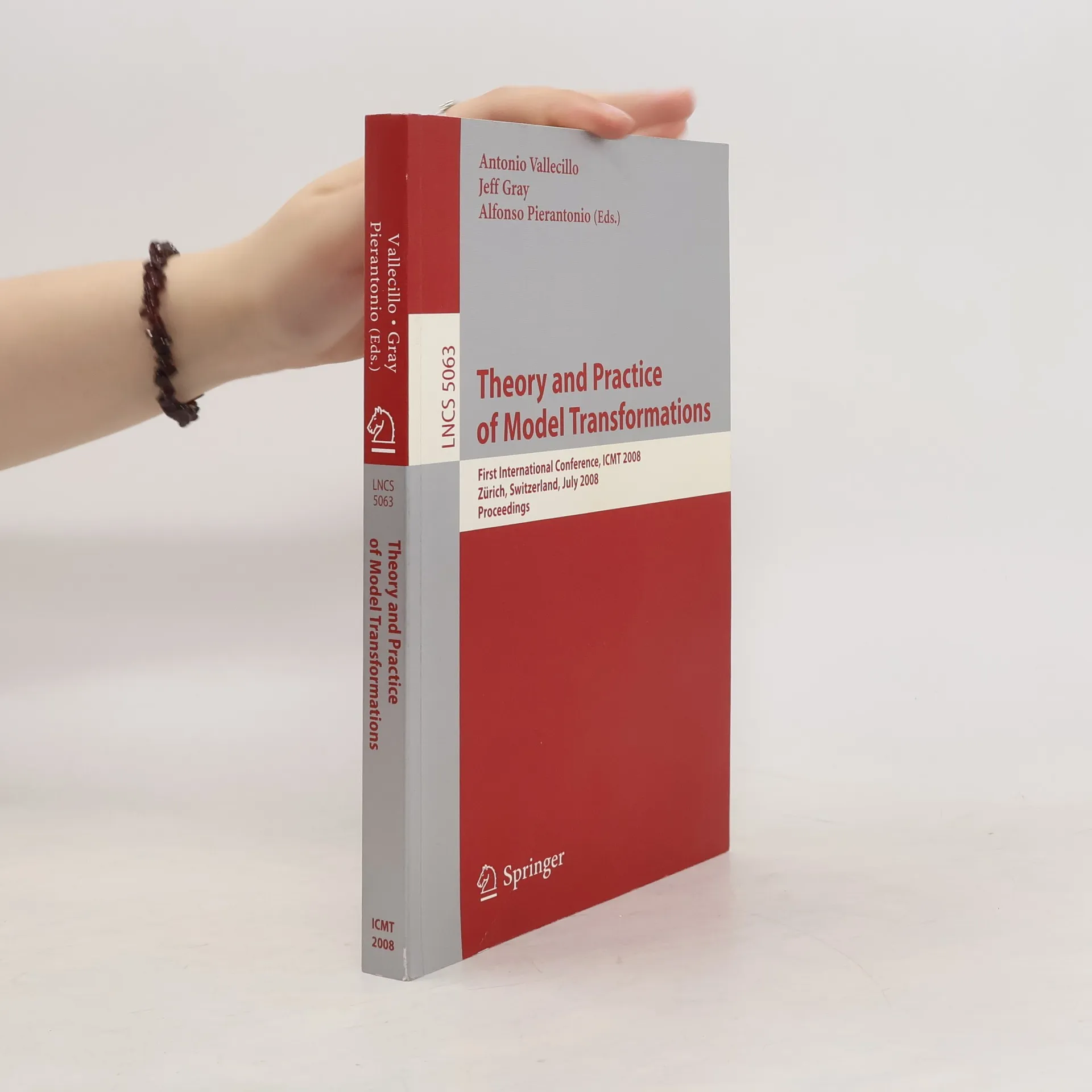


Más información sobre el libro
Models are crucial for managing the complexities of developing and maintaining IT systems, as they capture relevant system aspects from specific perspectives and levels of abstraction. Alongside models, transformations between them are vital in model-driven engineering, facilitating operations on models and enabling automated system development from corresponding models. Model transformations can also be represented using models, making them integral to any model-driven approach. While several proposals for the specification, implementation, and execution of model transformations are emerging, specialized support is necessary to unlock their full potential. This includes not just specific languages for representation but also a deep understanding of foundational concepts, operators, semantics, and properties such as modularity and composability. Additionally, model transformations can be stored as reusable assets in repositories for management and discovery. There is a need to chain and combine transformations to create new, more powerful ones and to implement novel operations on models. Finally, methodology support is essential for integrating model transformations into software development processes, supported by appropriate tools and environments. These issues define the focus of the proceedings.
Compra de libros
Theory and practice of model transformations, Antonio Vallecillo
- Idioma

- Publicado en
- 2008
- Encuadernación
- (Tapa blanda)
Métodos de pago
Nadie lo ha calificado todavía.
- Título
- Theory and practice of model transformations
- Idioma
- Inglés
- Autores
- Antonio Vallecillo
- Editorial
- Springer
- Publicado en
- 2008
- Formato
- Tapa blanda
- Páginas
- 259
- ISBN10
- 3540699260
- ISBN13
- 9783540699262
- Serie
- Etiquetas
- Descripción
- Models are crucial for managing the complexities of developing and maintaining IT systems, as they capture relevant system aspects from specific perspectives and levels of abstraction. Alongside models, transformations between them are vital in model-driven engineering, facilitating operations on models and enabling automated system development from corresponding models. Model transformations can also be represented using models, making them integral to any model-driven approach. While several proposals for the specification, implementation, and execution of model transformations are emerging, specialized support is necessary to unlock their full potential. This includes not just specific languages for representation but also a deep understanding of foundational concepts, operators, semantics, and properties such as modularity and composability. Additionally, model transformations can be stored as reusable assets in repositories for management and discovery. There is a need to chain and combine transformations to create new, more powerful ones and to implement novel operations on models. Finally, methodology support is essential for integrating model transformations into software development processes, supported by appropriate tools and environments. These issues define the focus of the proceedings.