



Parámetros
Más información sobre el libro
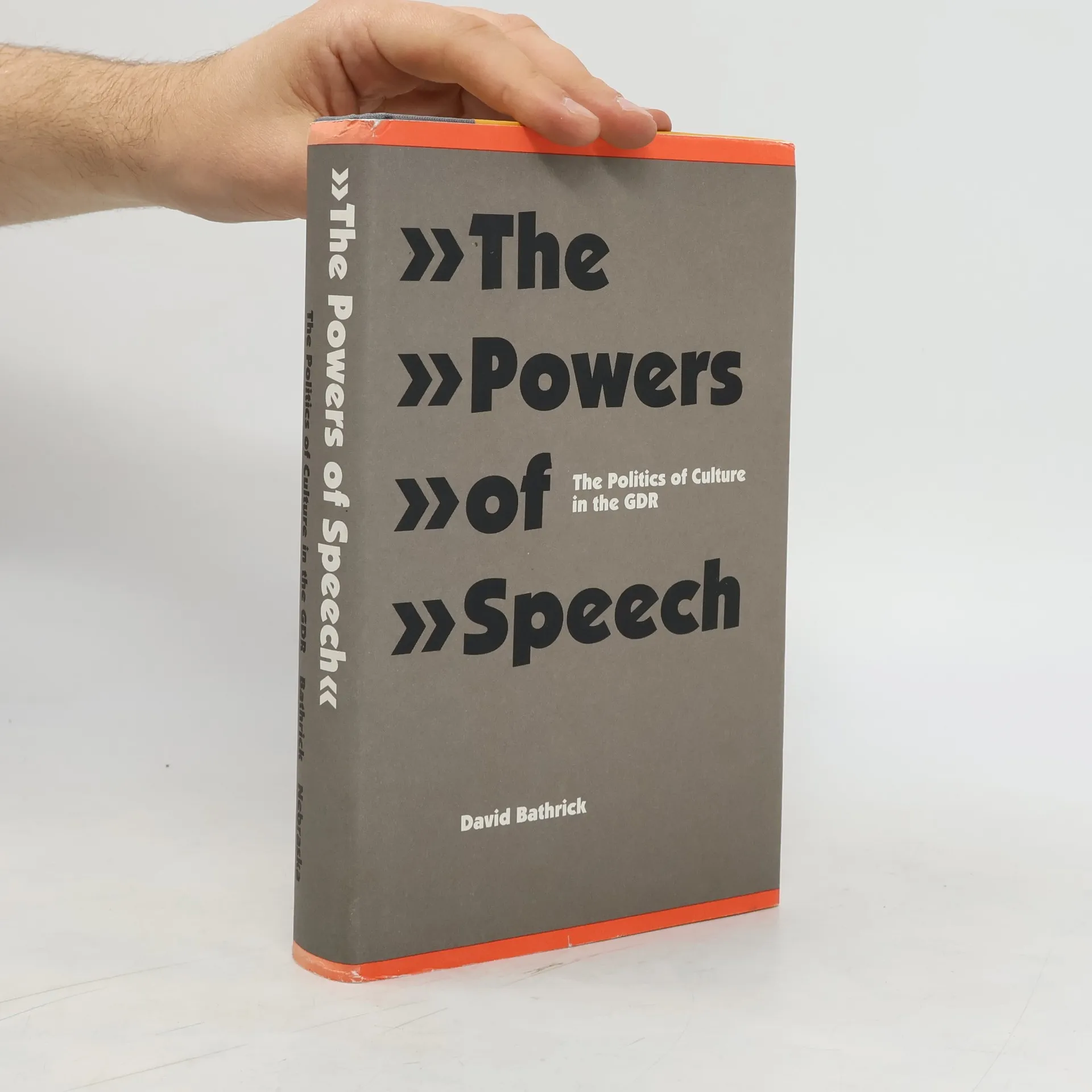
In this definitive study, David Bathrick examines East German culture before and after the fall of the Berlin Wall in November 1989. He argues that dissident East German writers uniquely sought to create "alternative spaces for public speech" within the framework of Marxism and state socialism. Bathrick notes that while these writers faced censorship and persecution, they were also privileged and nurtured, which defined a distinct intellectual identity in the GDR. His analysis covers a wide range of topics, comparing oppositional culture in East Germany to radical movements elsewhere, exploring the complex political and cultural dynamics between East and West Germany, and tracing the history of the East German avant-garde. He also discusses the challenges of establishing a revolutionary theatrical tradition in East Germany. The book offers nuanced insights into the collapse of the East German political order in the late 1980s and the controversial collaboration of some writers with the Stasi. Bathrick navigates these contentious issues with clarity and fairness, addressing themes that remain relevant in Germany and beyond today.
Compra de libros
The powers of speech, David Bathrick
- Idioma

- Publicado en
- 1995
- Encuadernación
- (Tapa dura)
Métodos de pago
Nos falta tu reseña aquí
- Título
- The powers of speech
- Idioma
- Inglés
- Autores
- David Bathrick
- Editorial
- University of Nebraska Press
- Publicado en
- 1995
- Formato
- Tapa dura
- ISBN10
- 0803212585
- ISBN13
- 9780803212589
- Serie
- Etiquetas
- Tema histórico
- Calificación
- 3,5 de 5
- Descripción
- In this definitive study, David Bathrick examines East German culture before and after the fall of the Berlin Wall in November 1989. He argues that dissident East German writers uniquely sought to create "alternative spaces for public speech" within the framework of Marxism and state socialism. Bathrick notes that while these writers faced censorship and persecution, they were also privileged and nurtured, which defined a distinct intellectual identity in the GDR. His analysis covers a wide range of topics, comparing oppositional culture in East Germany to radical movements elsewhere, exploring the complex political and cultural dynamics between East and West Germany, and tracing the history of the East German avant-garde. He also discusses the challenges of establishing a revolutionary theatrical tradition in East Germany. The book offers nuanced insights into the collapse of the East German political order in the late 1980s and the controversial collaboration of some writers with the Stasi. Bathrick navigates these contentious issues with clarity and fairness, addressing themes that remain relevant in Germany and beyond today.