



Más información sobre el libro
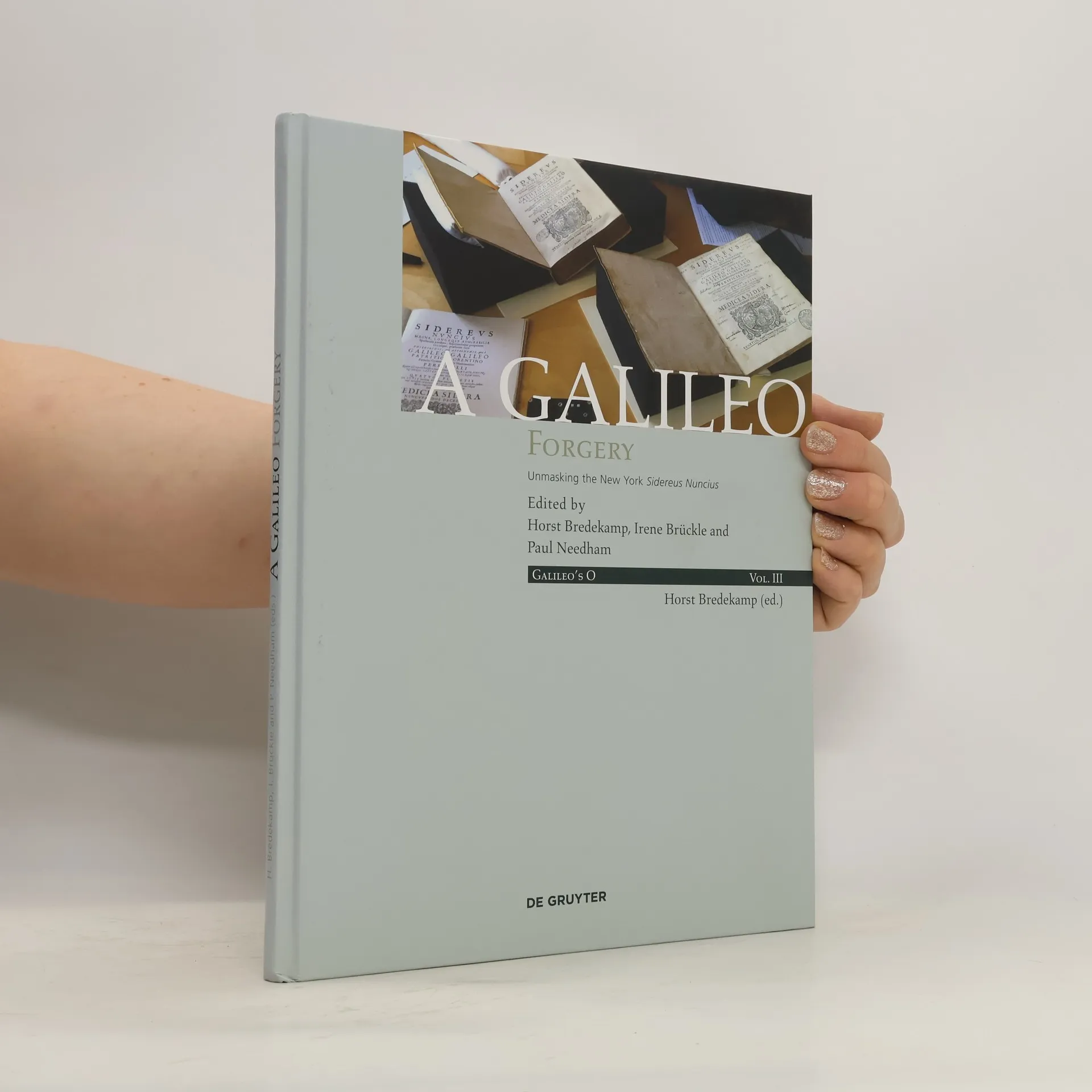
Galileo’s O, Volume III, is perhaps without peer in the history of the book. In this work, historians in various fields revise the results they presented in the first two volumes, which focused on the New York copy of Sidereus Nuncius, written in 1610. The analysis of this book was conceived as a uniquely multidisciplinary and cooperative undertaking, and many of its findings remain valid. Yet the subject of analysis proved to be the work of an international group of forgers. Volume III describes the chronology and methods by which the discovery of forgery was made – a veritable watershed moment in the continuing struggle between the ever-more refined methods of forgers and new methods used to apprehend them. Ultimately, the work also provides insight into the psychology of specialists who “research themselves” in order to prevent similar errors in the future.
Compra de libros
A Galileo Forgery, Horst Bredekamp
- Idioma

- Publicado en
- 2014
- Encuadernación
- (Tapa dura)
Métodos de pago
Nos falta tu reseña aquí
- Título
- A Galileo Forgery
- Idioma
- Inglés
- Autores
- Horst Bredekamp
- Editorial
- De Gruyter
- Publicado en
- 2014
- Formato
- Tapa dura
- Páginas
- 102
- ISBN10
- 3110354640
- ISBN13
- 9783110354645
- Serie
- Categorías
- Etiquetas
- Otros libros de texto
- Calificación
- 4 de 5
- Descripción
- Galileo’s O, Volume III, is perhaps without peer in the history of the book. In this work, historians in various fields revise the results they presented in the first two volumes, which focused on the New York copy of Sidereus Nuncius, written in 1610. The analysis of this book was conceived as a uniquely multidisciplinary and cooperative undertaking, and many of its findings remain valid. Yet the subject of analysis proved to be the work of an international group of forgers. Volume III describes the chronology and methods by which the discovery of forgery was made – a veritable watershed moment in the continuing struggle between the ever-more refined methods of forgers and new methods used to apprehend them. Ultimately, the work also provides insight into the psychology of specialists who “research themselves” in order to prevent similar errors in the future.