

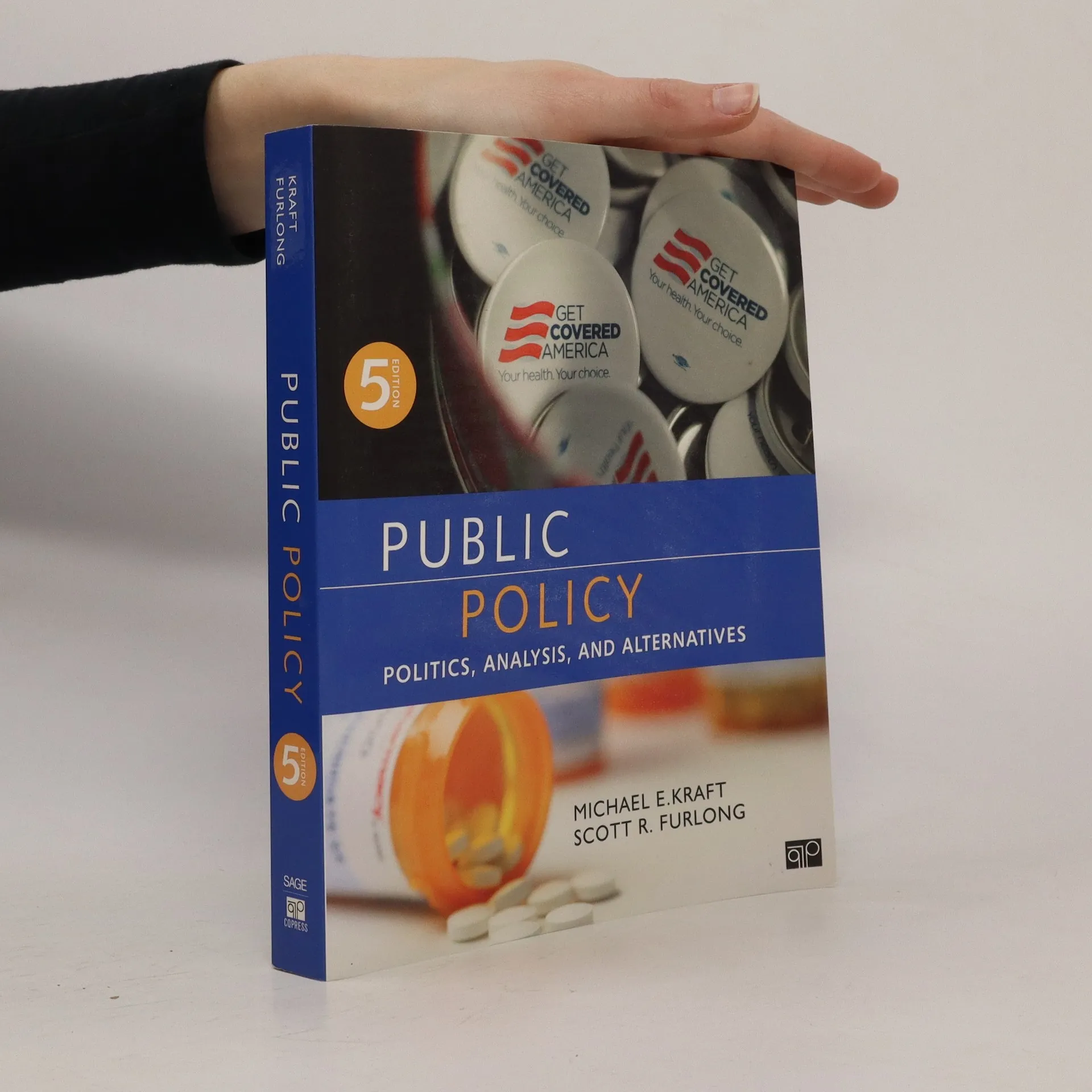
Public Policy. Politics, Analysis, and Alternatives
Valoración del libro
Más información sobre el libro
Since the first edition of Public Policy: Politics, Analysis, and Alternatives, Michael Kraft and Scott Furlong have taken a different tack. They want students to understand how and why policy analysis is used to assess policy alternatives—not only to question the assumptions of policy analysts, but also to recognize how analysis is used in support of political arguments. To encourage critical and creative thinking on issues ranging from the federal deficit to health care reform to climate change, the authors introduce and fully integrate an evaluative approach to policy. The authors begin the fifth edition of Public Policy with a concise review of institutions, policy actors, and major theoretical models. Then, they discuss the nature of policy analysis and its practice and show students how to employ evaluative criteria in six substantive policy areas. The text arms students with the analytic tools they need to understand the motivations of policy actors—both within and outside of government—and to influence a complex, yet comprehensible, policy agenda.
Compra de libros
Public Policy. Politics, Analysis, and Alternatives, Scott R. Furlong, Michael E. Kraft
- Idioma

- Publicado en
- 2014
- Encuadernación
- (Tapa blanda)
Métodos de pago
Nos falta tu reseña aquí
- Título
- Public Policy. Politics, Analysis, and Alternatives
- Idioma
- Inglés
- Autores
- Scott R. Furlong, Michael E. Kraft
- Editorial
- CQ press
- Publicado en
- 2014
- Formato
- Tapa blanda
- Páginas
- 568
- ISBN10
- 1483345785
- ISBN13
- 9781483345789
- Serie
- Etiquetas
- Política
- Calificación
- 3,25 de 5
- Descripción
- Since the first edition of Public Policy: Politics, Analysis, and Alternatives, Michael Kraft and Scott Furlong have taken a different tack. They want students to understand how and why policy analysis is used to assess policy alternatives—not only to question the assumptions of policy analysts, but also to recognize how analysis is used in support of political arguments. To encourage critical and creative thinking on issues ranging from the federal deficit to health care reform to climate change, the authors introduce and fully integrate an evaluative approach to policy. The authors begin the fifth edition of Public Policy with a concise review of institutions, policy actors, and major theoretical models. Then, they discuss the nature of policy analysis and its practice and show students how to employ evaluative criteria in six substantive policy areas. The text arms students with the analytic tools they need to understand the motivations of policy actors—both within and outside of government—and to influence a complex, yet comprehensible, policy agenda.