


Más información sobre el libro
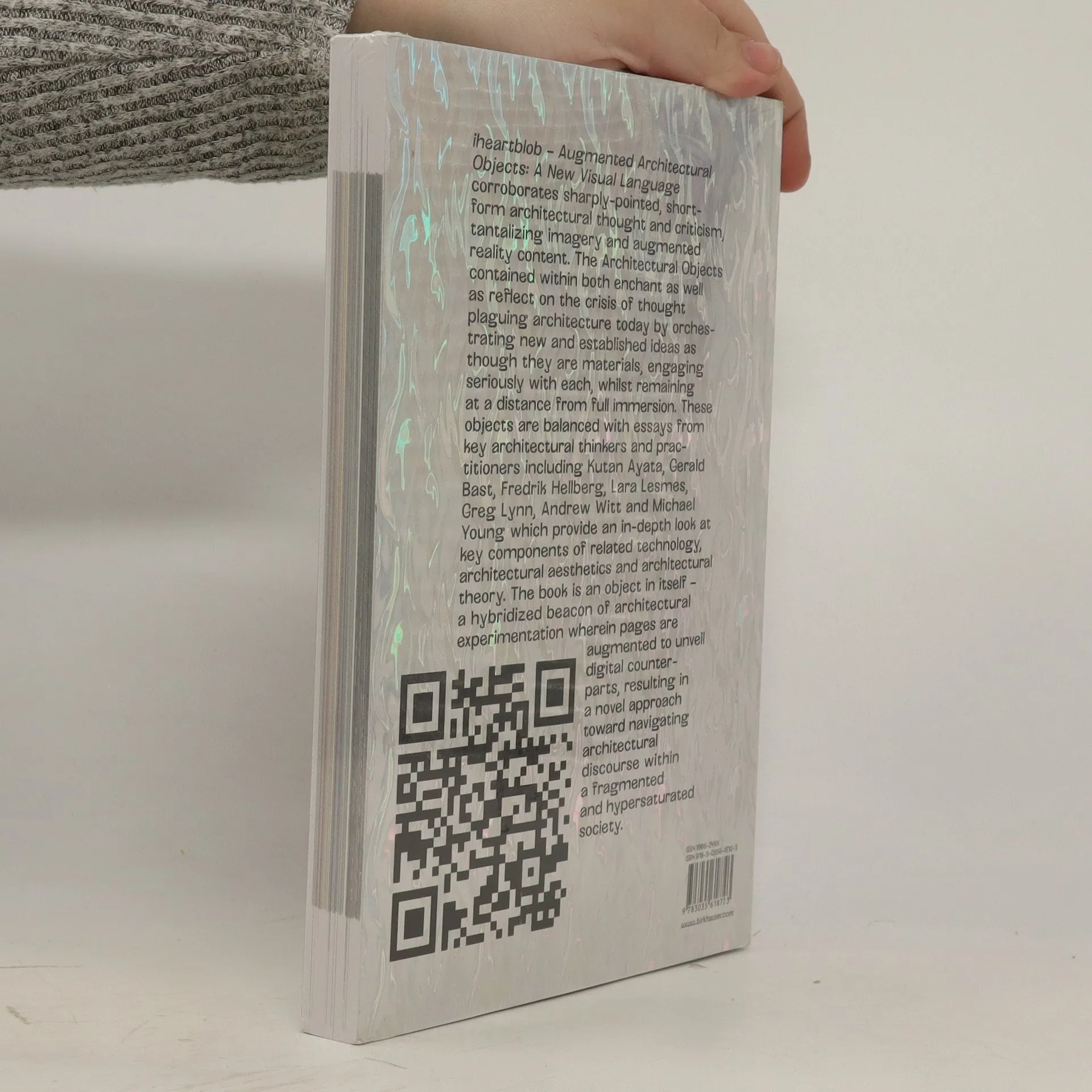
iheartblob avails itself of a new visual vocabulary of architecture. Here designs are visualized not in the form of ground plans and sections. Instead, renderings, mixed-reality objects (which are depicted physically and in augmented reality) and animations are the media which reflect the legacy of the mathematician Lagrange. Visually, but also on the basis of short theoretical texts, the book facilitates new discussions about the contemporary theoretical and cultural framework – and thus also about the “crisis of philosophy” faced not only by architecture. While the theoretical framework here invokes the principles of object-oriented ontology, in a subsequent step it attempts to unravel the theoretical principles of postmodernity and poststructural formalism.
Compra de libros
iheartblob - augmented architectural objects, Aleksandra Belitskaja
- Idioma

- Publicado en
- 2020
- Encuadernación
- (Tapa blanda)
Métodos de pago
Nos falta tu reseña aquí
- Título
- iheartblob - augmented architectural objects
- Idioma
- Inglés
- Autores
- Aleksandra Belitskaja
- Editorial
- Birkhäuser
- Publicado en
- 2020
- Formato
- Tapa blanda
- Páginas
- 272
- ISBN10
- 3035618720
- ISBN13
- 9783035618723
- Serie
- Etiquetas
- Arquitectura
- Calificación
- 5 de 5
- Descripción
- iheartblob avails itself of a new visual vocabulary of architecture. Here designs are visualized not in the form of ground plans and sections. Instead, renderings, mixed-reality objects (which are depicted physically and in augmented reality) and animations are the media which reflect the legacy of the mathematician Lagrange. Visually, but also on the basis of short theoretical texts, the book facilitates new discussions about the contemporary theoretical and cultural framework – and thus also about the “crisis of philosophy” faced not only by architecture. While the theoretical framework here invokes the principles of object-oriented ontology, in a subsequent step it attempts to unravel the theoretical principles of postmodernity and poststructural formalism.