



Parámetros
Más información sobre el libro
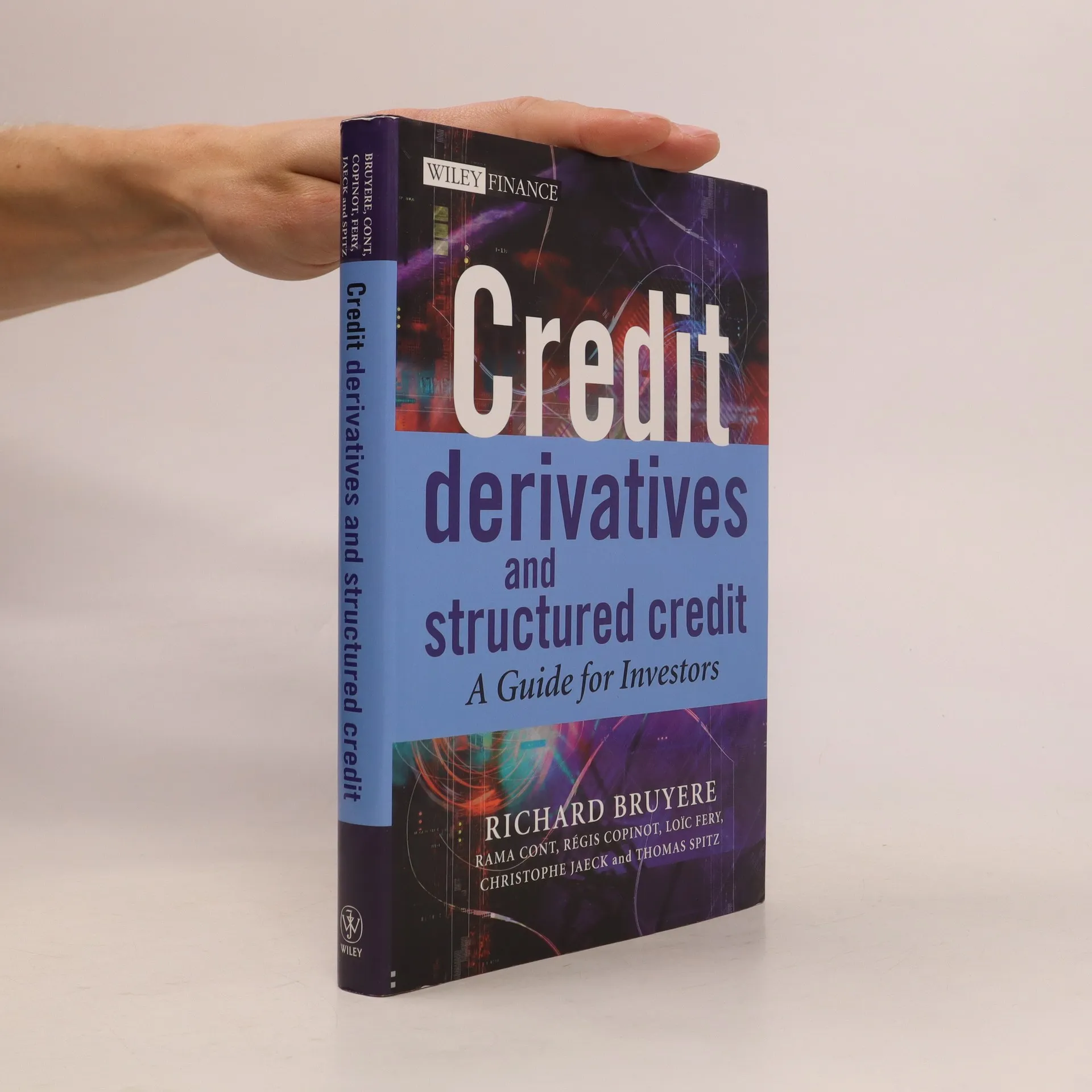
Over the past decade, credit derivatives have emerged as the key financial innovation in global capital markets. At end 2004, the market size hit $6.4 billion (in notional amounts) from virtually nothing in 1995. This rise has been spurred by the imperative for banks to better manage their risks, not least credit risks, and the appetite shown by institutional investors and hedge funds for innovative, high yielding structured investment products. As a result, growth in collateralized debt obligations and other second-generation products, such as credit indices, is currently phenomenal. It is enabled by the standardization and increased liquidity in credit default swaps – the building block of the credit derivatives market. Written by market practitioners and specialists, this book covers the fundamentals of the credit derivatives and structured credit market, including in-depth product descriptions, analysis of real transactions, market overview, pricing models, banks business models. It is recommended reading for students in business schools and financial courses, academics, and professionals working in investment and asset management, banking, corporate treasury and the capital markets. Highlights
Compra de libros
Credit Derivatives and Structured Credit. A Guide for Investors, Richard Bruyere, Rama Cont
- Idioma

- Publicado en
- 2006
- Encuadernación
- (Tapa dura)
Métodos de pago
Nos falta tu reseña aquí
- Título
- Credit Derivatives and Structured Credit. A Guide for Investors
- Idioma
- Inglés
- Autores
- Richard Bruyere, Rama Cont
- Editorial
- John Wiley & Sons
- Publicado en
- 2006
- Formato
- Tapa dura
- ISBN10
- 0470018798
- ISBN13
- 9780470018798
- Serie
- Calificación
- 3 de 5
- Descripción
- Over the past decade, credit derivatives have emerged as the key financial innovation in global capital markets. At end 2004, the market size hit $6.4 billion (in notional amounts) from virtually nothing in 1995. This rise has been spurred by the imperative for banks to better manage their risks, not least credit risks, and the appetite shown by institutional investors and hedge funds for innovative, high yielding structured investment products. As a result, growth in collateralized debt obligations and other second-generation products, such as credit indices, is currently phenomenal. It is enabled by the standardization and increased liquidity in credit default swaps – the building block of the credit derivatives market. Written by market practitioners and specialists, this book covers the fundamentals of the credit derivatives and structured credit market, including in-depth product descriptions, analysis of real transactions, market overview, pricing models, banks business models. It is recommended reading for students in business schools and financial courses, academics, and professionals working in investment and asset management, banking, corporate treasury and the capital markets. Highlights