

Más información sobre el libro
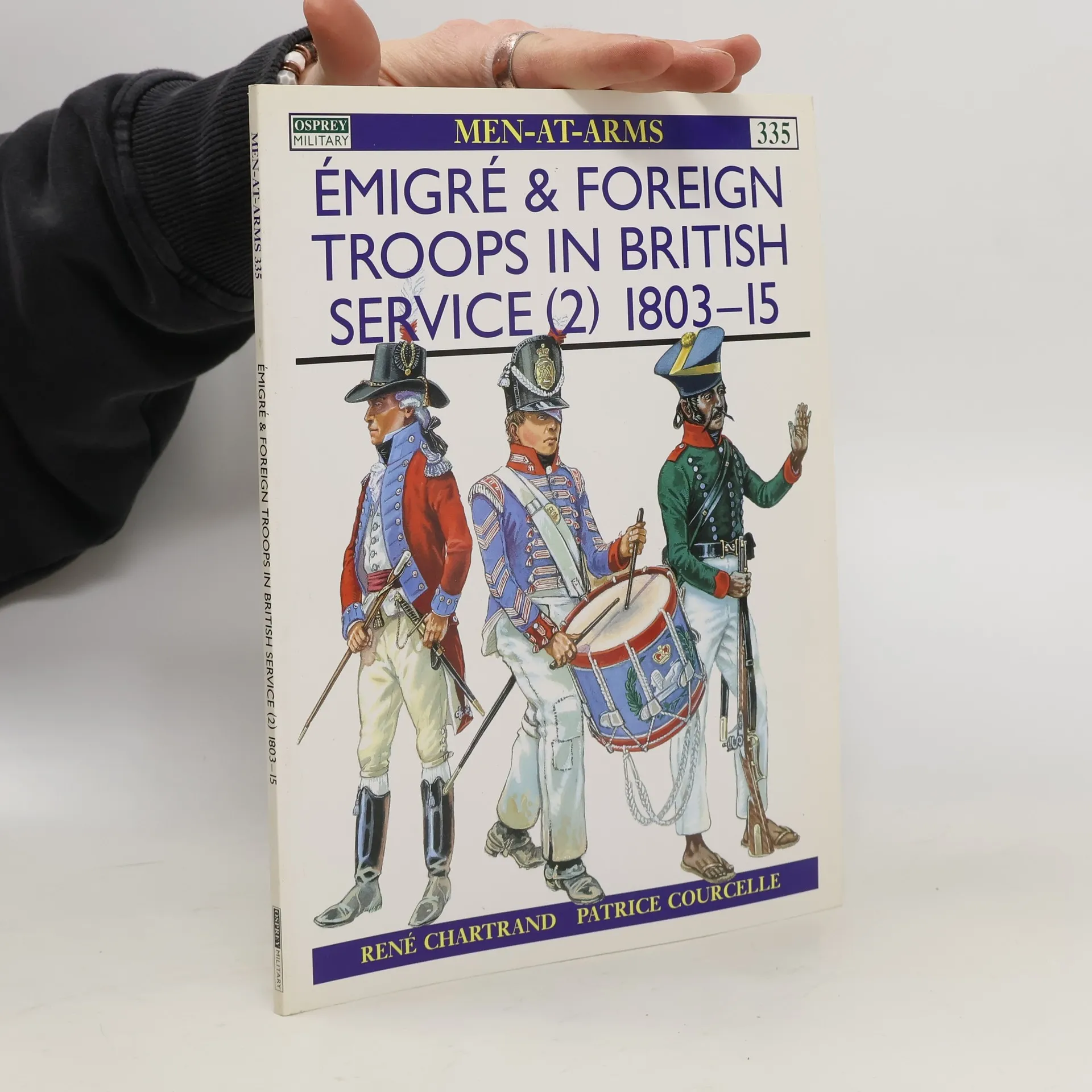
Following his study of the astonishing range of French Royalist and foreign mercenary units employed by Britain in the period 1793–1802 of the French Revolutionary Wars (Men-at-Arms 328), the author describes - often for the first time in an English language publication - the part played by their successors during the crucial years of the Napoleonic Wars. He covers not only relatively well-recorded units, such as Roll’s, Meuron’s and Watteville’s Swiss corps, but also the unjustly neglected Italians, Corsicans and Greeks, and such exotica as the African and Ceylon regiments. Uniform details of nearly 40 corps are based on impressive primary research, and this book and its companion volume make a genuinely new contribution to Napoleonic studies.
Compra de libros
Émigré and Foreign Troops in British Service (2), René Chartrand
- Idioma

- Publicado en
- 2000
- Encuadernación
- (Tapa blanda)
Métodos de pago
Nos falta tu reseña aquí
- Título
- Émigré and Foreign Troops in British Service (2)
- Idioma
- Inglés
- Autores
- René Chartrand
- Editorial
- Bloomsbury USA
- Publicado en
- 2000
- Formato
- Tapa blanda
- Páginas
- 48
- ISBN10
- 1855328593
- ISBN13
- 9781855328594
- Serie
- Etiquetas
- Tema histórico
- Calificación
- 3,45 de 5
- Descripción
- Following his study of the astonishing range of French Royalist and foreign mercenary units employed by Britain in the period 1793–1802 of the French Revolutionary Wars (Men-at-Arms 328), the author describes - often for the first time in an English language publication - the part played by their successors during the crucial years of the Napoleonic Wars. He covers not only relatively well-recorded units, such as Roll’s, Meuron’s and Watteville’s Swiss corps, but also the unjustly neglected Italians, Corsicans and Greeks, and such exotica as the African and Ceylon regiments. Uniform details of nearly 40 corps are based on impressive primary research, and this book and its companion volume make a genuinely new contribution to Napoleonic studies.