



Parámetros
Más información sobre el libro
The text provides an extensive overview of rhetorical figures and stylistic elements, beginning with an introduction to various rhetorical devices such as alliteration, anaphora, and chiasmus. It explores the principles of style through the three genera dicendi: genus humile, genus medium, and genus grande, alongside concepts of hypotaxis and parataxis. The discussion shifts to metrics, detailing verse forms, rhyme schemes, and structural components of poetry, including the significance of different metrical feet like iambus and trochaeus. Further, it delves into the foundational aspects of rhetoric, emphasizing key principles such as persuasion and the roles of inventio, dispositio, and elocutio in speech production. The text also examines tropes, including hyperbole and metaphor, and their complex forms like allegory and personification. Additionally, it addresses literary theory, focusing on structural concepts, aesthetic principles, and hermeneutics, alongside the relationship between texts and the world, including notions of intertextuality and mimesis. Lastly, it categorizes literature through various strategies, discussing genres, forms, and styles, while also touching on the essentials of lyric and dramatic forms, illustrating the rich tapestry of literary and rhetorical study.
Compra de libros
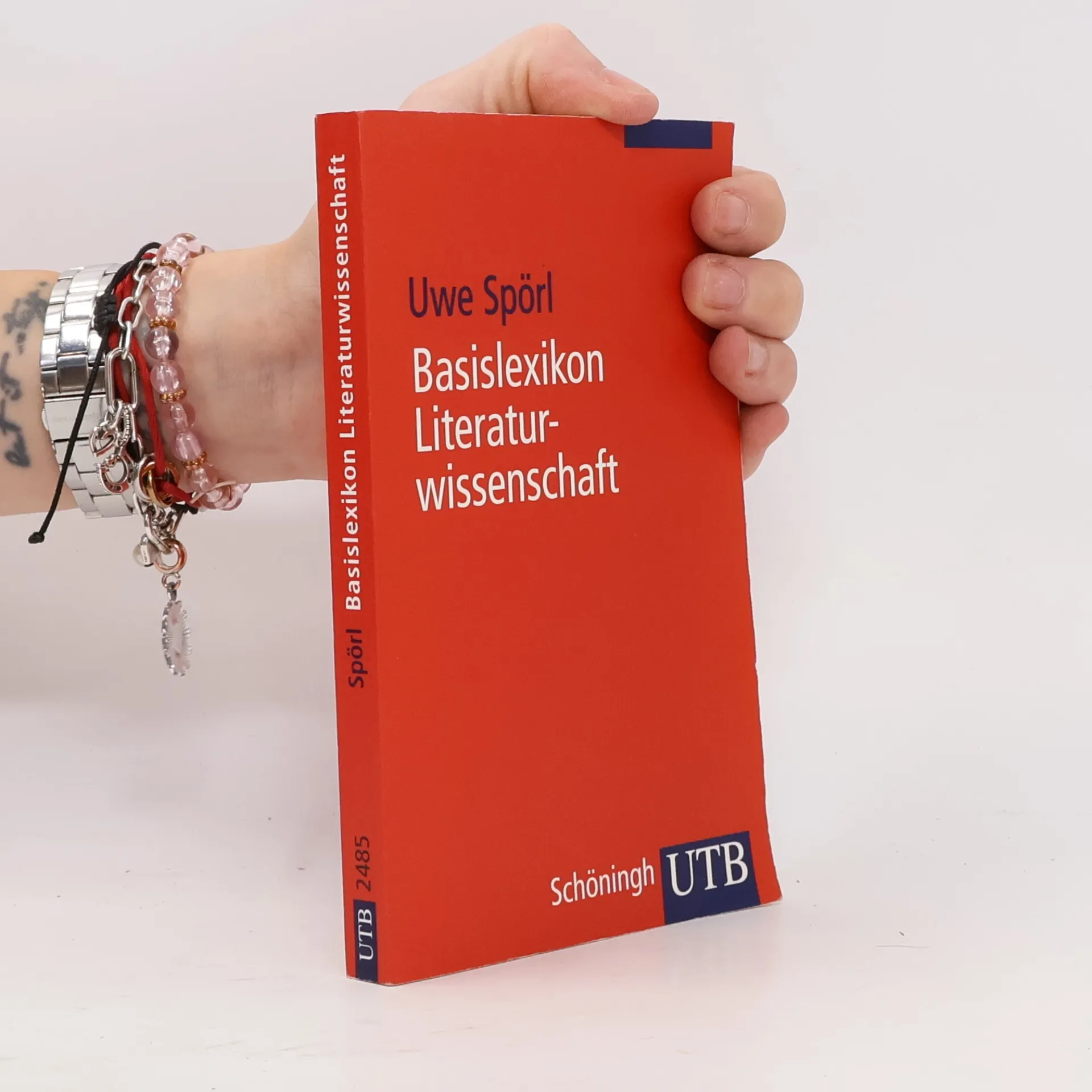
Basislexikon Literaturwissenschaft, Uwe Spörl
- Idioma

- Publicado en
- 2006
- Encuadernación
- (Tapa blanda),
- Estado del libro
- Bueno
- Precio
- 2,49 €
Métodos de pago
Nos falta tu reseña aquí
- Título
- Basislexikon Literaturwissenschaft
- Idioma
- Alemán
- Autores
- Uwe Spörl
- Editorial
- UTB GmbH
- Publicado en
- 2006
- Formato
- Tapa blanda
- ISBN10
- 3825224856
- ISBN13
- 9783825224851
- Serie
- Categorías
- Etiquetas
- Calificación
- 3 de 5
- Descripción
- The text provides an extensive overview of rhetorical figures and stylistic elements, beginning with an introduction to various rhetorical devices such as alliteration, anaphora, and chiasmus. It explores the principles of style through the three genera dicendi: genus humile, genus medium, and genus grande, alongside concepts of hypotaxis and parataxis. The discussion shifts to metrics, detailing verse forms, rhyme schemes, and structural components of poetry, including the significance of different metrical feet like iambus and trochaeus. Further, it delves into the foundational aspects of rhetoric, emphasizing key principles such as persuasion and the roles of inventio, dispositio, and elocutio in speech production. The text also examines tropes, including hyperbole and metaphor, and their complex forms like allegory and personification. Additionally, it addresses literary theory, focusing on structural concepts, aesthetic principles, and hermeneutics, alongside the relationship between texts and the world, including notions of intertextuality and mimesis. Lastly, it categorizes literature through various strategies, discussing genres, forms, and styles, while also touching on the essentials of lyric and dramatic forms, illustrating the rich tapestry of literary and rhetorical study.