

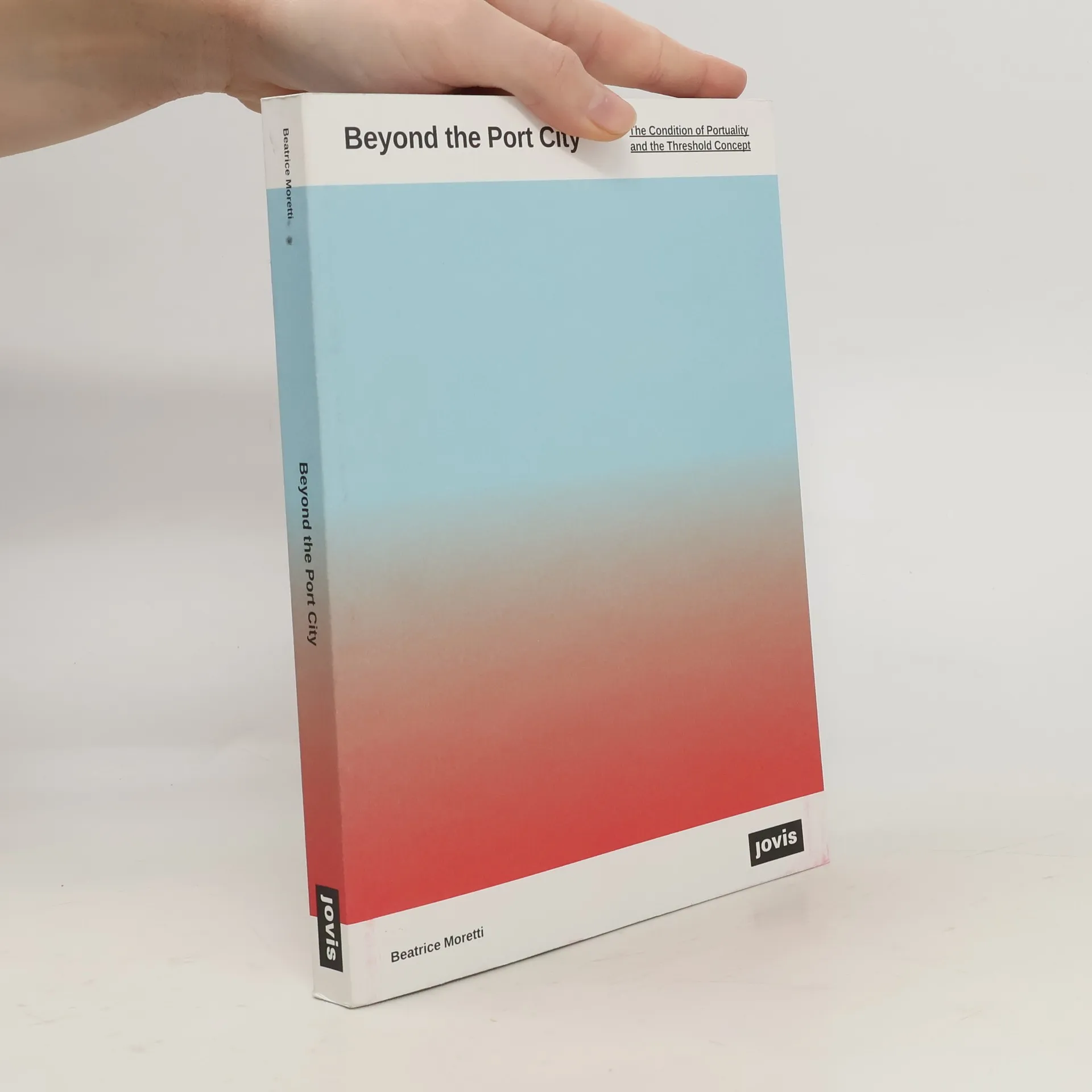


Beyond the Port City
The Condition of Portuality and the Threshold’s Field
Autores
Más información sobre el libro
Portuality is a concept that has long been rooted in several urban centers. It denotes a territorial quality specific to those cities and developed through strong relationships with their own port. Beyond the Port City recognizes portuality as a specific condition and suggests that the urban-port threshold could emerge as one major symbolic field of exploration. This unique threshold materializes along the margin between the two authorities, namely in that space where the city and the port are side by side. It is marked by an administrative boundary that becomes an accumulator of a fragmented space where the juxtapositions take sufficient shape to acquire a dimension and to be recognizable. This book updates the old city-port dichotomy and outlines a new vision in which the port city is a forma urbis affected by the speed of changing processes and influenced by the factors that are embodied in its territorial palimpsest.
Compra de libros
Beyond the Port City, Beatrice Moretti
- Idioma

- Publicado en
- 2020
- Encuadernación
- (Tapa blanda)
Métodos de pago
Nadie lo ha calificado todavía.
- Título
- Beyond the Port City
- Subtítulo
- The Condition of Portuality and the Threshold’s Field
- Idioma
- Inglés
- Autores
- Beatrice Moretti
- Editorial
- jovis
- Publicado en
- 2020
- Formato
- Tapa blanda
- Páginas
- 216
- ISBN10
- 3868596135
- ISBN13
- 9783868596137
- Serie
- Etiquetas
- Arquitectura
- Descripción
- Portuality is a concept that has long been rooted in several urban centers. It denotes a territorial quality specific to those cities and developed through strong relationships with their own port. Beyond the Port City recognizes portuality as a specific condition and suggests that the urban-port threshold could emerge as one major symbolic field of exploration. This unique threshold materializes along the margin between the two authorities, namely in that space where the city and the port are side by side. It is marked by an administrative boundary that becomes an accumulator of a fragmented space where the juxtapositions take sufficient shape to acquire a dimension and to be recognizable. This book updates the old city-port dichotomy and outlines a new vision in which the port city is a forma urbis affected by the speed of changing processes and influenced by the factors that are embodied in its territorial palimpsest.