

Más información sobre el libro
This volume contains a comprehensive collection of methods for the isolation of platelet membranes, subcellular organelles, the cytoskeleton, and for the assay and purification of platelet receptors. Key Features * Platelets are cellular elements with the highest density of receptors per membrane surface area involved in binding of adhesive molecules, clotting, enzymes, and vasoactive amines * Platelets are essential for the arrest of bleeding and for formation of intravascular thrombi contributing to heart attacks, strokes, and disseminated intravascular coagulation, and are involved in immune complex disease * Platelets are useful for studying the processes of cell adhesion, neurotransmitter uptake, stimulus-response coupling, including signal transduction and secretion
Compra de libros
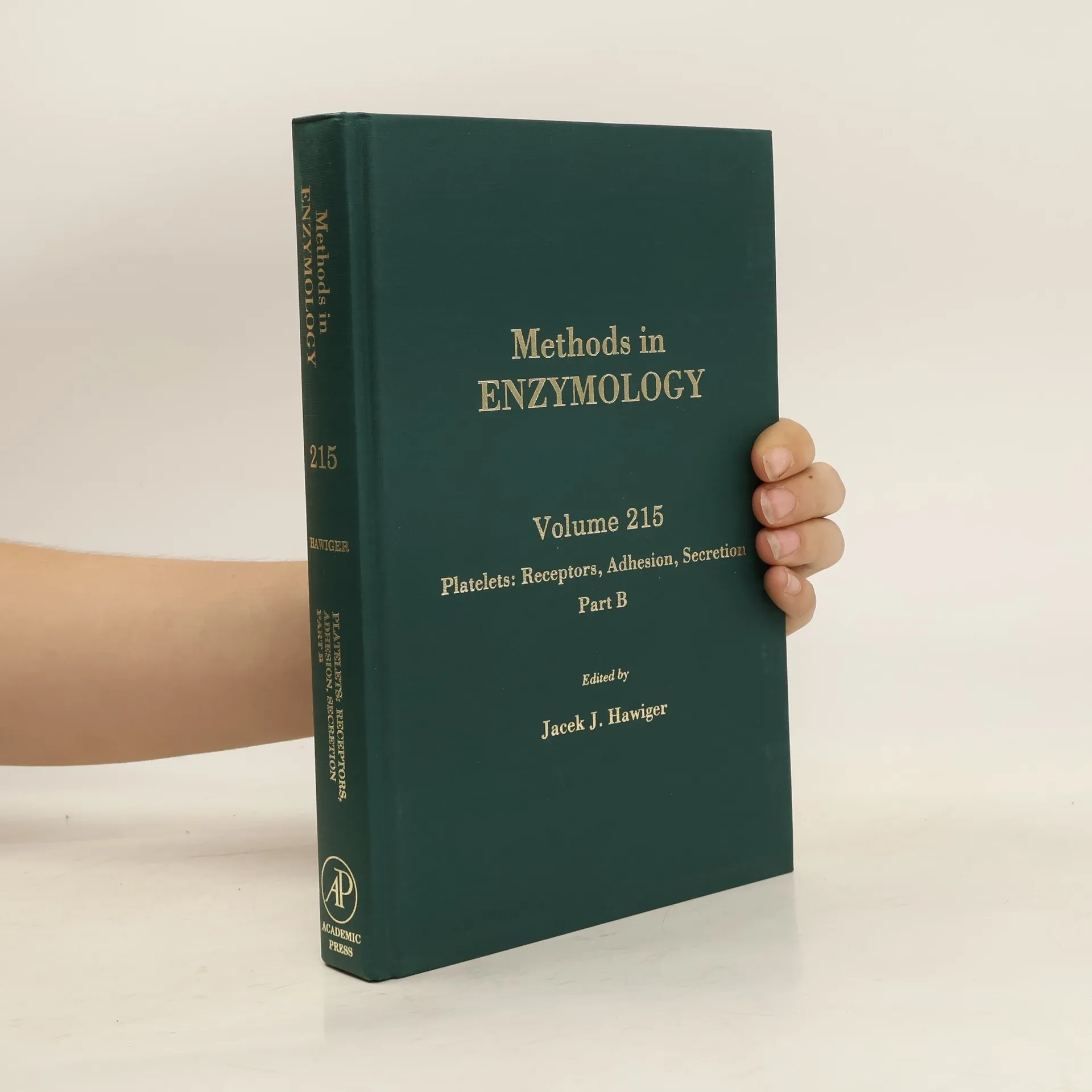
Methods in Enzymology 215. Platelets: Receptors, Adhesion, Secretion, Jacek J Hawiger
- Idioma

- Publicado en
- 1992
- Encuadernación
- (Tapa dura)
Métodos de pago
Nadie lo ha calificado todavía.
- Título
- Methods in Enzymology 215. Platelets: Receptors, Adhesion, Secretion
- Idioma
- Inglés
- Autores
- Jacek J Hawiger
- Editorial
- Academic press
- Publicado en
- 1992
- Formato
- Tapa dura
- Páginas
- 526
- ISBN10
- 0121821161
- ISBN13
- 9780121821166
- Serie
- Categorías
- Etiquetas
- Salud & Medicina, Ciencias naturales
- Descripción
- This volume contains a comprehensive collection of methods for the isolation of platelet membranes, subcellular organelles, the cytoskeleton, and for the assay and purification of platelet receptors. Key Features * Platelets are cellular elements with the highest density of receptors per membrane surface area involved in binding of adhesive molecules, clotting, enzymes, and vasoactive amines * Platelets are essential for the arrest of bleeding and for formation of intravascular thrombi contributing to heart attacks, strokes, and disseminated intravascular coagulation, and are involved in immune complex disease * Platelets are useful for studying the processes of cell adhesion, neurotransmitter uptake, stimulus-response coupling, including signal transduction and secretion