



Más información sobre el libro
Dr. Grof's extensive research on consciousness reveals that the roots of trauma often stem from birth experiences or unresolved historical events embedded in the collective unconscious. These unresolved issues manifest in individuals or groups connected to the past. Traditional therapies that focus solely on personal history or medication fail to address these deeper psychological wounds. Dr. Grof explores societal issues like violence and greed, suggesting that the fear and aggression prevalent among individuals and groups may largely arise from the unconscious expression of unresolved historical traumas. Despite this, he offers a hopeful perspective: there are therapeutic methods that utilize a specific non-ordinary state of consciousness, allowing individuals to access and heal these deep-seated traumas. He refers to this state as Holotropic, meaning “oriented toward wholeness.” Dr. Grof outlines various techniques to achieve this Holotropic state, emphasizing Holotropic Breathwork, which he developed with his partner Christina, and psychedelic therapy, which he pioneered in the 1950s and is now being revisited in clinical research for treating addictions and PTSD.
Compra de libros
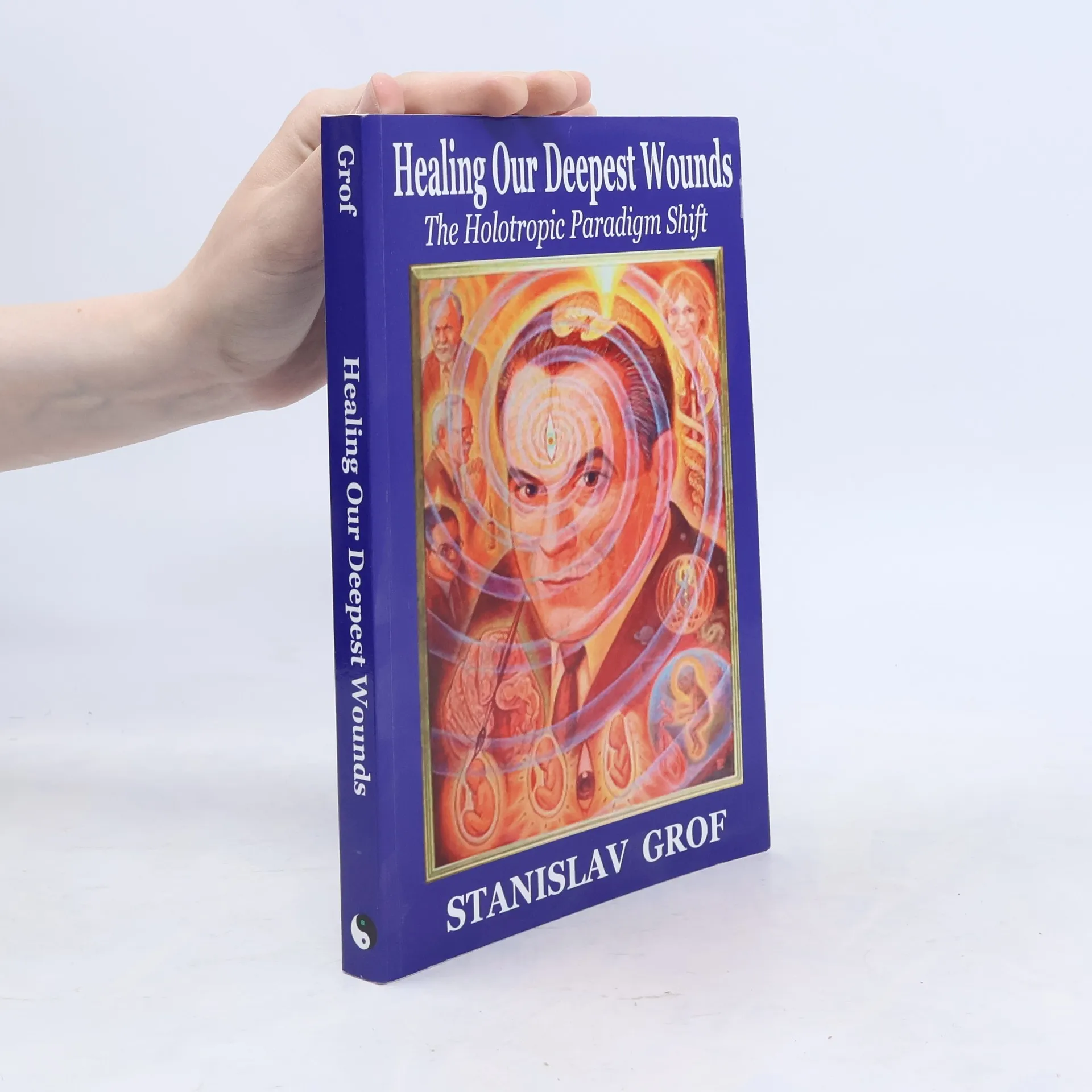
Healing our deepest wounds : the holotropic paradigm shift, Stanislav Grof
- Idioma

- Publicado en
- 2012
- Encuadernación
- (Tapa blanda)
Métodos de pago
Nos falta tu reseña aquí
- Título
- Healing our deepest wounds : the holotropic paradigm shift
- Idioma
- Inglés
- Autores
- Stanislav Grof
- Publicado en
- 2012
- Formato
- Tapa blanda
- Páginas
- 276
- ISBN10
- 0982607725
- ISBN13
- 9780982607725
- Serie
- Categorías
- Etiquetas
- Salud & Medicina, Temas psicológicos, Temática filosófica, Espiritualidad y Religión, Salud, Misticismo
- Calificación
- 4,35 de 5
- Descripción
- Dr. Grof's extensive research on consciousness reveals that the roots of trauma often stem from birth experiences or unresolved historical events embedded in the collective unconscious. These unresolved issues manifest in individuals or groups connected to the past. Traditional therapies that focus solely on personal history or medication fail to address these deeper psychological wounds. Dr. Grof explores societal issues like violence and greed, suggesting that the fear and aggression prevalent among individuals and groups may largely arise from the unconscious expression of unresolved historical traumas. Despite this, he offers a hopeful perspective: there are therapeutic methods that utilize a specific non-ordinary state of consciousness, allowing individuals to access and heal these deep-seated traumas. He refers to this state as Holotropic, meaning “oriented toward wholeness.” Dr. Grof outlines various techniques to achieve this Holotropic state, emphasizing Holotropic Breathwork, which he developed with his partner Christina, and psychedelic therapy, which he pioneered in the 1950s and is now being revisited in clinical research for treating addictions and PTSD.