



Más información sobre el libro
Clearly, nature has been very effective in creating organisms that are capable of protecting themselves against a wide variety of pathogens such as bacteria, fungi, and parasites. The powerful information-processing capabilities of the immune system, such as feature extraction, pattern recognition, learning, memory, and its distributive nature provide rich metaphors that researchers are finding very useful for the development of computational models. While some of these models are designed to give us a better understanding of the immune system, other models are being developed to solve complex real-world problems such as anomaly detection, pattern recognition, data analysis (clustering), function optimization, and computer security. Immunological Theory and Applications is devoted to discussing different immunological mechanisms and their relation to information processing and problem solving. This unique volume presents a compendium of up-to-date work related to immunity-based techniques. After presenting the general abstractions of immune elements and processes used in computational models, it then―The text goes further to describe a wide variety of applications, which include computer security, the detection and analysis of anomalies and faults, robotics, and data mining among others. To enhance understanding of this emerging field of study, each chapter includes a summary, review questions, and exercis
Compra de libros
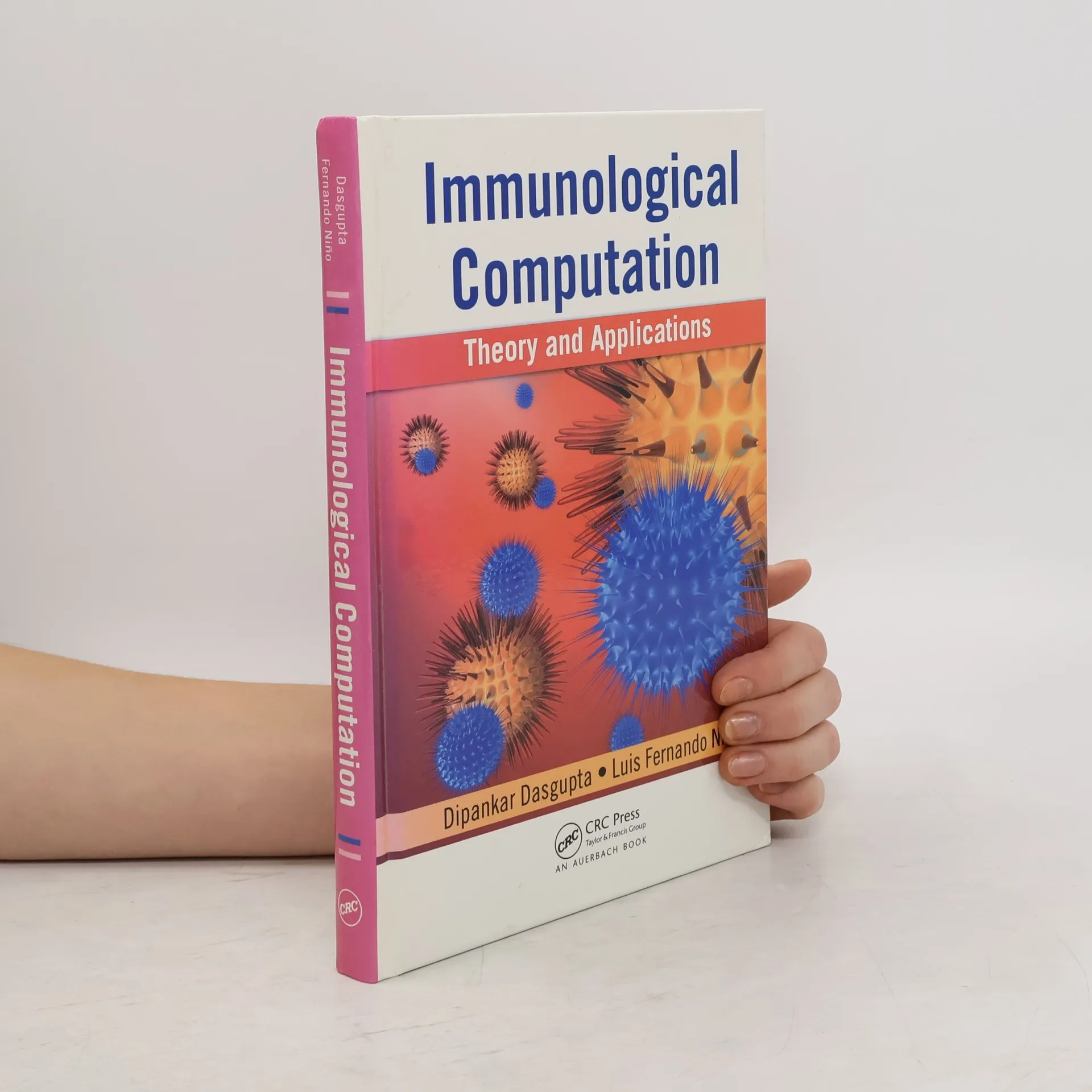
Immunological Computation. Theory and Applications, Dipankar Das Gupta, Luis Fernando Nino
- Idioma

- Publicado en
- 2009
- Encuadernación
- (Tapa dura)
Métodos de pago
Nos falta tu reseña aquí
- Título
- Immunological Computation. Theory and Applications
- Idioma
- Inglés
- Autores
- Dipankar Das Gupta, Luis Fernando Nino
- Editorial
- CRC
- Publicado en
- 2009
- Formato
- Tapa dura
- Páginas
- 296
- ISBN10
- 1420065459
- ISBN13
- 9781420065459
- Serie
- Etiquetas
- Calificación
- 4 de 5
- Descripción
- Clearly, nature has been very effective in creating organisms that are capable of protecting themselves against a wide variety of pathogens such as bacteria, fungi, and parasites. The powerful information-processing capabilities of the immune system, such as feature extraction, pattern recognition, learning, memory, and its distributive nature provide rich metaphors that researchers are finding very useful for the development of computational models. While some of these models are designed to give us a better understanding of the immune system, other models are being developed to solve complex real-world problems such as anomaly detection, pattern recognition, data analysis (clustering), function optimization, and computer security. Immunological Theory and Applications is devoted to discussing different immunological mechanisms and their relation to information processing and problem solving. This unique volume presents a compendium of up-to-date work related to immunity-based techniques. After presenting the general abstractions of immune elements and processes used in computational models, it then―The text goes further to describe a wide variety of applications, which include computer security, the detection and analysis of anomalies and faults, robotics, and data mining among others. To enhance understanding of this emerging field of study, each chapter includes a summary, review questions, and exercis