

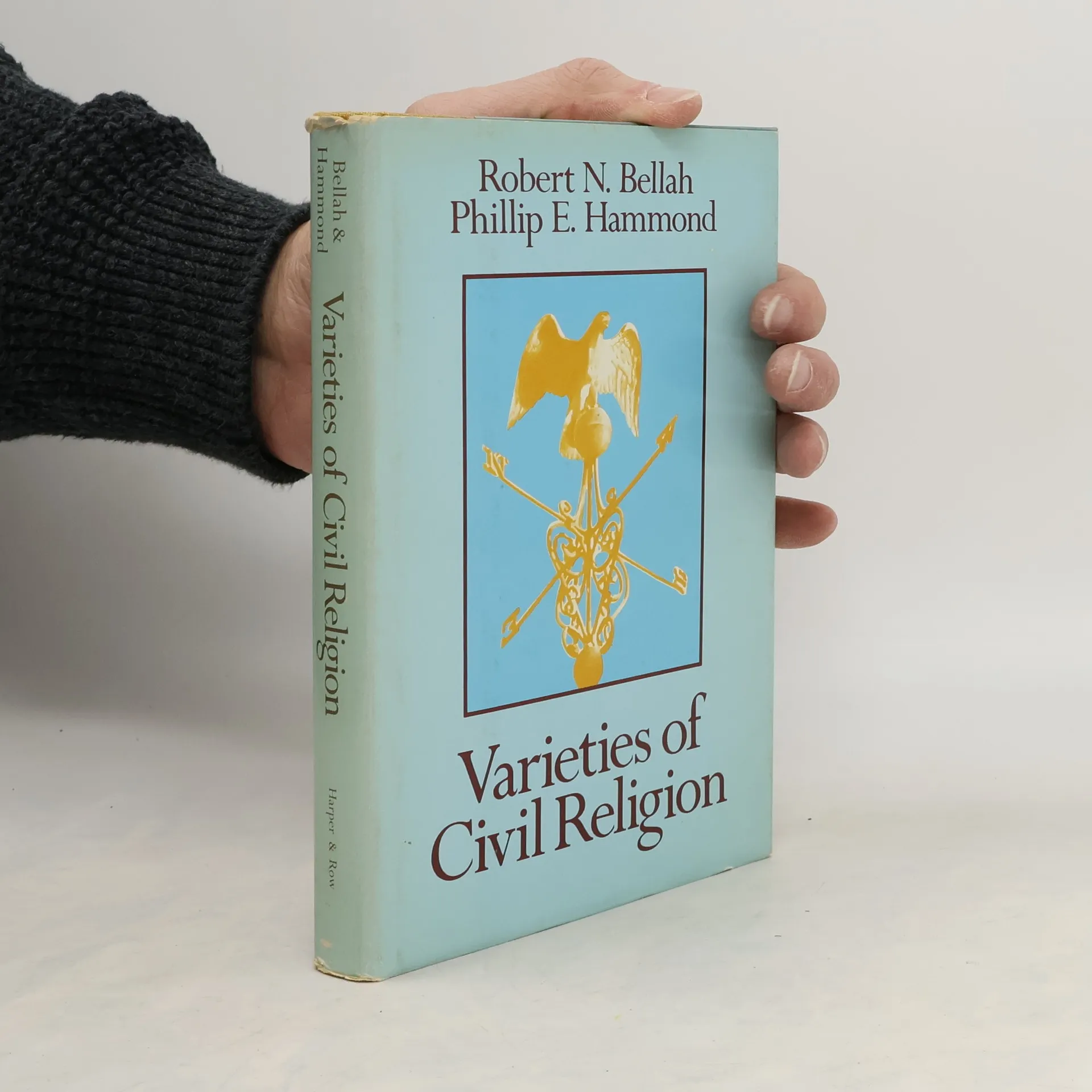


Varieties of Civil Religion
Valoración del libro
Más información sobre el libro
This latest statement in the field pioneered by Robert Bellah explores the force of religion in politics and society. The authors offer a thoughtful, carefully researched analysis of international varieties of civil religion, comparing them with the American case. They trace the development of the peculiarly American model -- a mixture of traditional religious forms, patriotism, group identification, collective rituals, and sheer American enthusiasm -- and argue that the unique vitality of the American civil religion stems from the pluralistic nature of the American religious scene. Bellah and Hammond make comparisons with other representative societies, focusing on the Italian, Mexican, and Japanese experiences, to establish the conditions that make a civil religion possible. Varieties of Civil Religion shows how the American experience is distinctive and gives a context in which to take our pulse as a society.
Compra de libros
Varieties of Civil Religion, Robert Neelly Bellah, Phillip E. Hammond
- Idioma

- Publicado en
- 1980
- Encuadernación
- (Tapa blanda)
Métodos de pago
Nos falta tu reseña aquí
- Título
- Varieties of Civil Religion
- Idioma
- Inglés
- Editorial
- Harper
- Publicado en
- 1980
- Formato
- Tapa blanda
- Páginas
- 208
- ISBN10
- 0060607769
- ISBN13
- 9780060607760
- Serie
- Categorías
- Etiquetas
- Tema histórico, Temas religiosos, Política
- Calificación
- 2 de 5
- Descripción
- This latest statement in the field pioneered by Robert Bellah explores the force of religion in politics and society. The authors offer a thoughtful, carefully researched analysis of international varieties of civil religion, comparing them with the American case. They trace the development of the peculiarly American model -- a mixture of traditional religious forms, patriotism, group identification, collective rituals, and sheer American enthusiasm -- and argue that the unique vitality of the American civil religion stems from the pluralistic nature of the American religious scene. Bellah and Hammond make comparisons with other representative societies, focusing on the Italian, Mexican, and Japanese experiences, to establish the conditions that make a civil religion possible. Varieties of Civil Religion shows how the American experience is distinctive and gives a context in which to take our pulse as a society.