

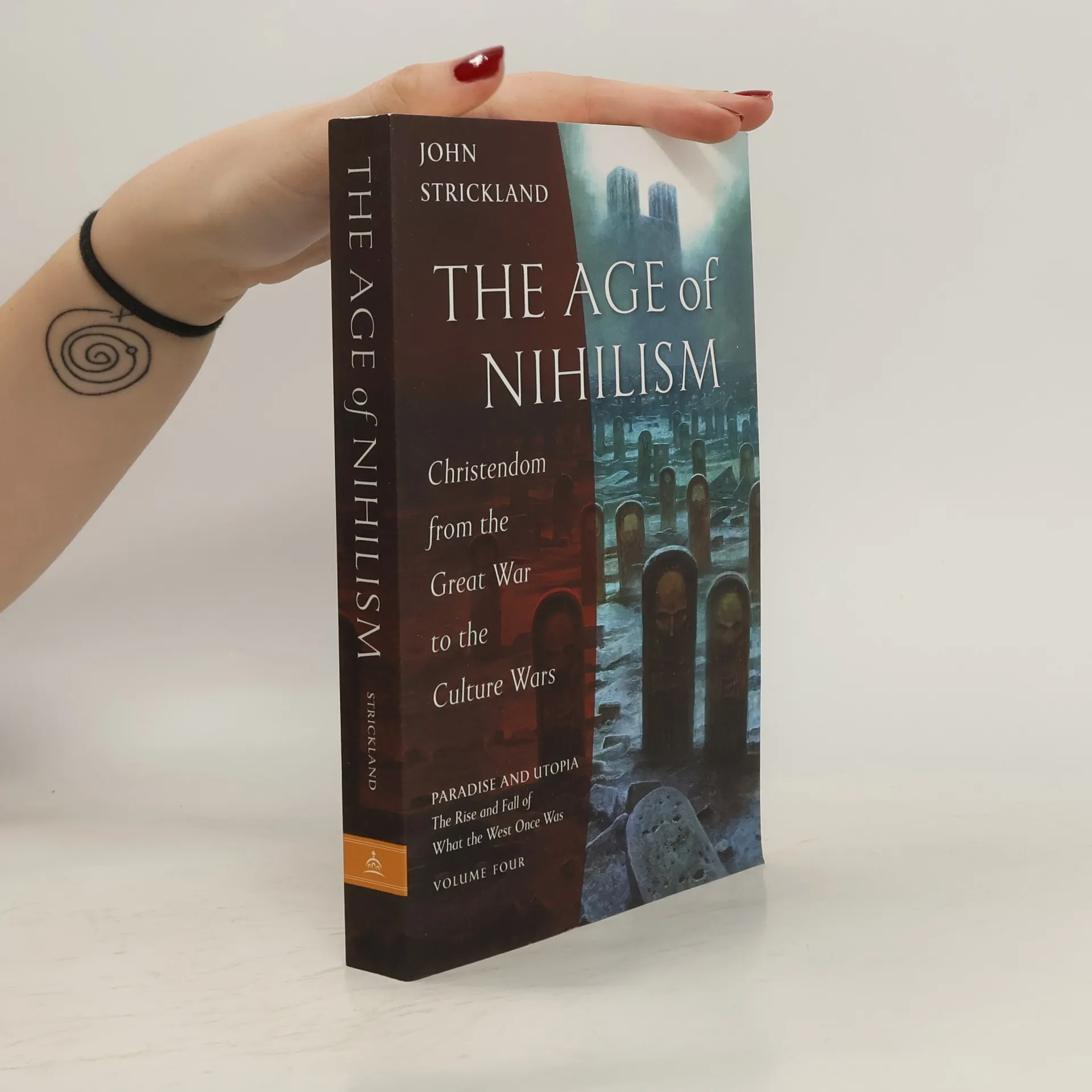

Age Of Nihilism
Christendom From The Great War To The Culture Wars
Autores
Parámetros
- 395 páginas
- 14 horas de lectura
Más información sobre el libro
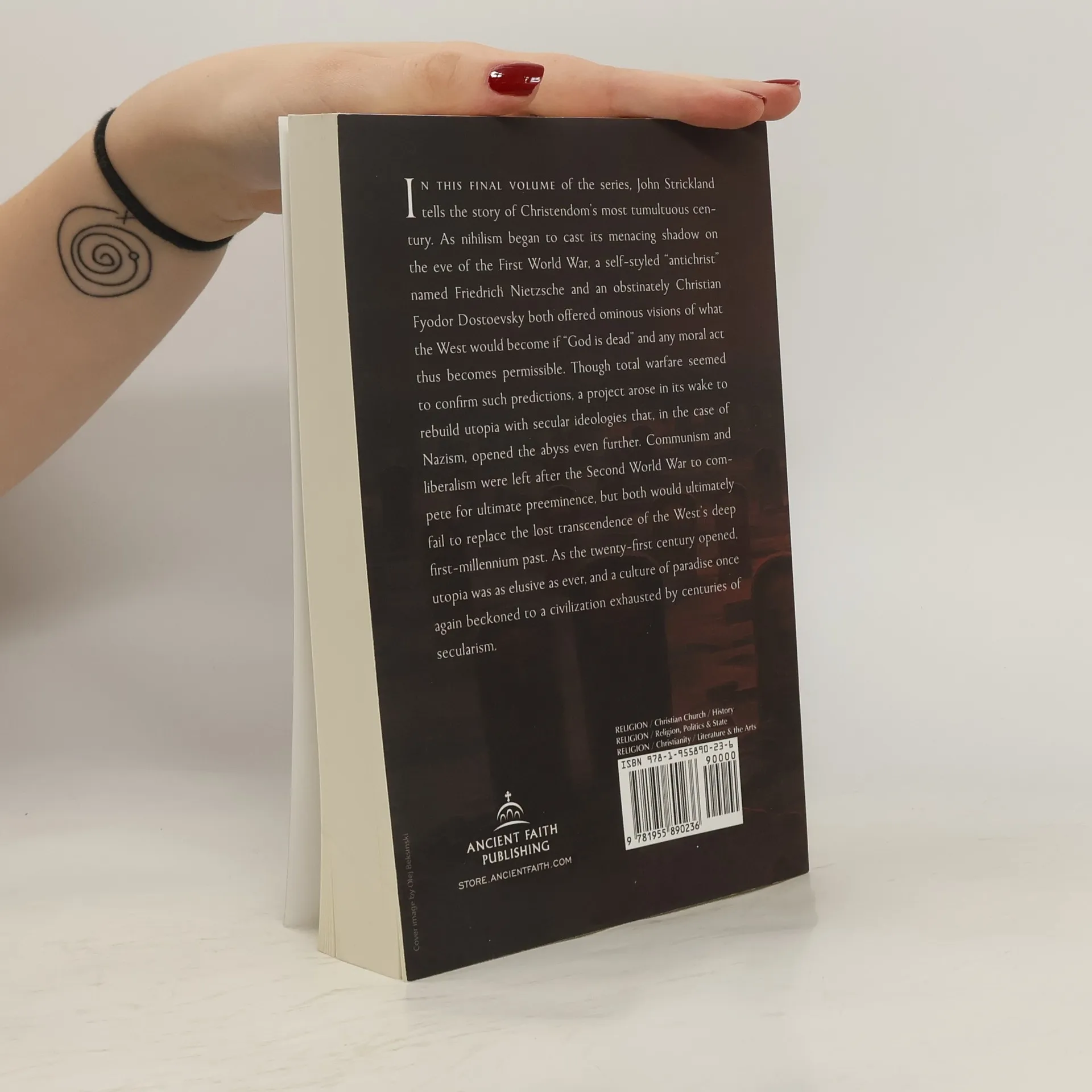
In this final volume of the series, John Strickland tells the story of Christendom's most tumultuous century. As nihilism began to cast its menacing shadow on the eve of the First World War, a self-styled "antichrist" named Friedrich Nietzsche and an obstinately Christian Fyodor Dostoevsky both offered ominous visions of what the West would become if "God is dead" and any moral act thus becomes permissible. Though total warfare seemed to confirm such predictions, a project arose in its wake to rebuild utopia with secular ideologies that, in the case of Nazism, opened the abyss even further. Communism and liberalism were left after the Second World War to compete for ultimate preeminence, but both would ultimately fail to replace the lost transcendence of the West's deep first-millennium past. As the twenty-first century opened, utopia was as elusive as ever, and a culture of paradise once again beckoned to a civilization exhausted by centuries of secularism.
Compra de libros
Age Of Nihilism, John Strickland
- Idioma

- Publicado en
- 2022
- Encuadernación
- (Tapa blanda)
Métodos de pago
Nadie lo ha calificado todavía.
- Título
- Age Of Nihilism
- Subtítulo
- Christendom From The Great War To The Culture Wars
- Idioma
- Inglés
- Autores
- John Strickland
- Editorial
- Ancient Faith Publishing
- Publicado en
- 2022
- Formato
- Tapa blanda
- Páginas
- 395
- ISBN10
- 1955890234
- ISBN13
- 9781955890236
- Serie
- Categorías
- Etiquetas
- Tema histórico, Temas religiosos, Temática filosófica, Siglo XX, Regalos para abuelo, Crítica social
- Descripción
- In this final volume of the series, John Strickland tells the story of Christendom's most tumultuous century. As nihilism began to cast its menacing shadow on the eve of the First World War, a self-styled "antichrist" named Friedrich Nietzsche and an obstinately Christian Fyodor Dostoevsky both offered ominous visions of what the West would become if "God is dead" and any moral act thus becomes permissible. Though total warfare seemed to confirm such predictions, a project arose in its wake to rebuild utopia with secular ideologies that, in the case of Nazism, opened the abyss even further. Communism and liberalism were left after the Second World War to compete for ultimate preeminence, but both would ultimately fail to replace the lost transcendence of the West's deep first-millennium past. As the twenty-first century opened, utopia was as elusive as ever, and a culture of paradise once again beckoned to a civilization exhausted by centuries of secularism.