

Más información sobre el libro
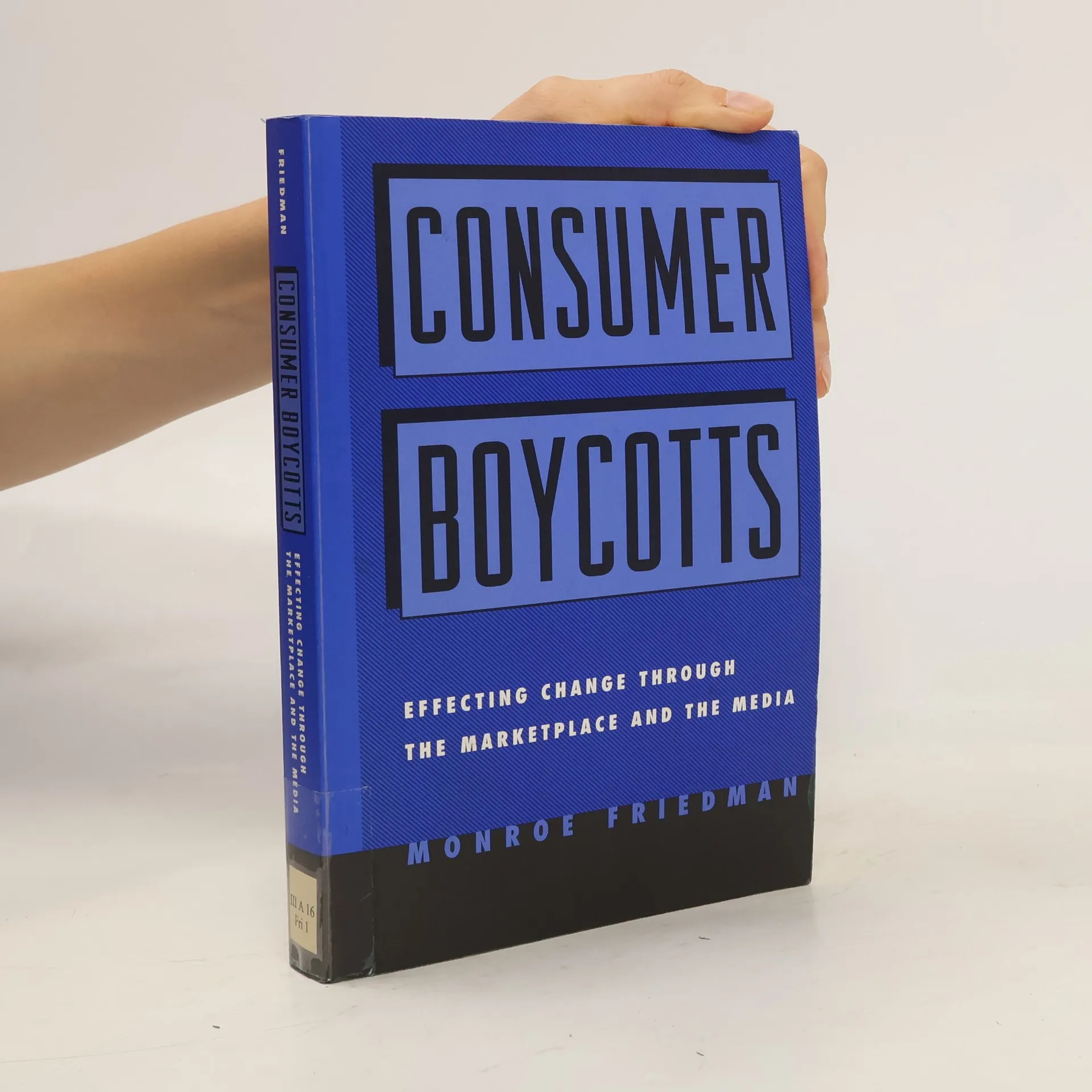
Despite the increasing occurrence of consumer boycotts, little has been written about this form of social and economic protest. This timely volume fills the knowledge gap by examining boycotts both historically and currently. Drawing on both published and unpublished material as well as personal interviews with boycott groups and their targets, Monroe Friedman discusses different types of boycotts-from their historical focus on labor and economic concerns to the more recent inclusion of issues such as minority rights, animal welfare, and environmental protection. He also documents the shift in strategic emphasis from the marketplace (cutting consumer sales) to the media (securing news coverage to air criticism of a targeted firm). In turn, these changes in boycott substance and style offer insights into larger upheavals in the social and economic fabric of 20th century America.
Compra de libros
Consumer Boycotts, Monroe Friedman
- Idioma

- Publicado en
- 1999
- Encuadernación
- (Tapa blanda)
Métodos de pago
Nos falta tu reseña aquí
- Título
- Consumer Boycotts
- Subtítulo
- Effecting Change Through the Marketplace and the Media
- Idioma
- Inglés
- Autores
- Monroe Friedman
- Editorial
- Routledge
- Publicado en
- 1999
- Formato
- Tapa blanda
- Páginas
- 304
- ISBN10
- 041592457X
- ISBN13
- 9780415924573
- Serie
- Categorías
- Etiquetas
- Comercio
- Calificación
- 3 de 5
- Descripción
- Despite the increasing occurrence of consumer boycotts, little has been written about this form of social and economic protest. This timely volume fills the knowledge gap by examining boycotts both historically and currently. Drawing on both published and unpublished material as well as personal interviews with boycott groups and their targets, Monroe Friedman discusses different types of boycotts-from their historical focus on labor and economic concerns to the more recent inclusion of issues such as minority rights, animal welfare, and environmental protection. He also documents the shift in strategic emphasis from the marketplace (cutting consumer sales) to the media (securing news coverage to air criticism of a targeted firm). In turn, these changes in boycott substance and style offer insights into larger upheavals in the social and economic fabric of 20th century America.