

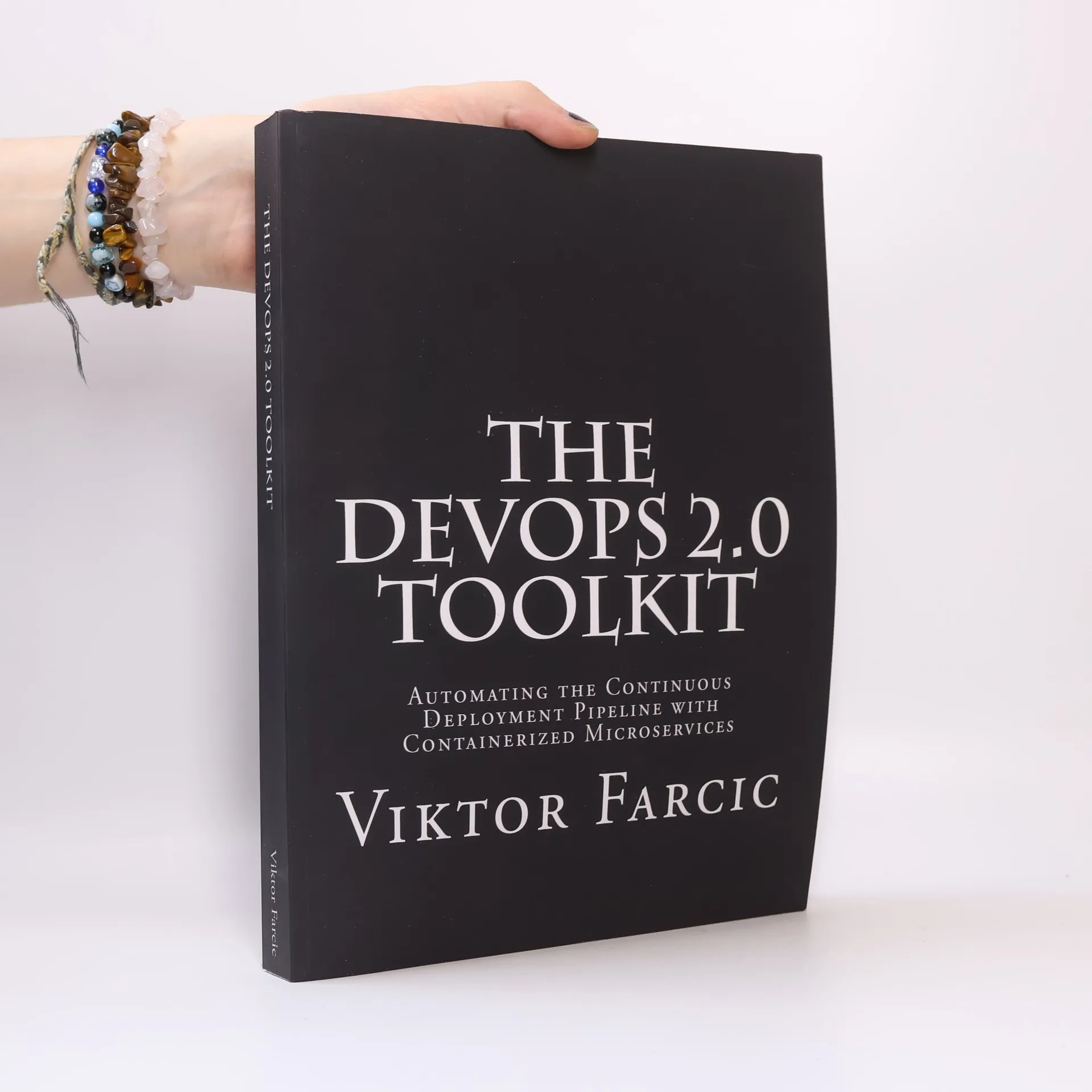


The DevOps 2.0 Toolkit
Automating the Continuous Deployment Pipeline with Containerized Microservices
Autores
Valoración del libro
Más información sobre el libro
"This book is about techniques that help us architect software in a better and more efficient way: With microservices packed as immutable containers, then tested and deployed continuously to servers that are automatically provisioned with configuration management tools. It's about fast, reliable and continuous deployments with zero-downtime and the ability to roll-back. It's about scaling to any number of servers, designing self-healing systems capable of recovering from both hardware and software failures, and about centralized logging and monitoring of a cluster. We will cover some of the latest and greatest practices and a variety of tools such as: Docker, Kubernetes, Ansible, Ubuntu, Docker Swarm, Docker Compose, and Consul."--Back cover.
Compra de libros
The DevOps 2.0 Toolkit, Farcic Viktor
- Idioma

- Publicado en
- 2016
- Encuadernación
- (Tapa blanda)
Métodos de pago
Nos falta tu reseña aquí
- Título
- The DevOps 2.0 Toolkit
- Subtítulo
- Automating the Continuous Deployment Pipeline with Containerized Microservices
- Idioma
- Inglés
- Autores
- Farcic Viktor
- Publicado en
- 2016
- Formato
- Tapa blanda
- Páginas
- 414
- ISBN10
- 152391744X
- ISBN13
- 9781523917440
- Serie
- Etiquetas
- Tecnología
- Calificación
- 3,35 de 5
- Descripción
- "This book is about techniques that help us architect software in a better and more efficient way: With microservices packed as immutable containers, then tested and deployed continuously to servers that are automatically provisioned with configuration management tools. It's about fast, reliable and continuous deployments with zero-downtime and the ability to roll-back. It's about scaling to any number of servers, designing self-healing systems capable of recovering from both hardware and software failures, and about centralized logging and monitoring of a cluster. We will cover some of the latest and greatest practices and a variety of tools such as: Docker, Kubernetes, Ansible, Ubuntu, Docker Swarm, Docker Compose, and Consul."--Back cover.