

¡Agotado, pero muy deseado!
Más información sobre el libro
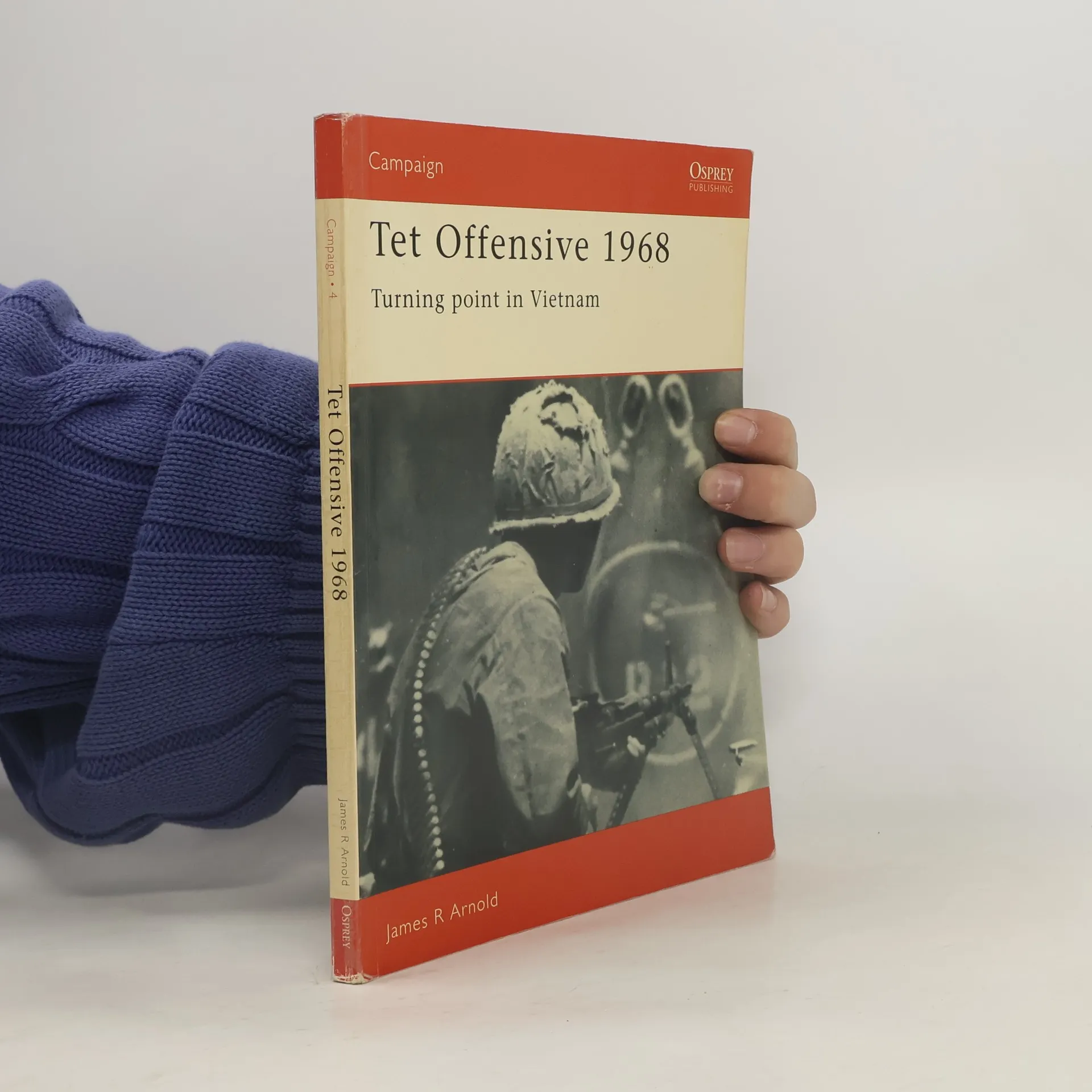
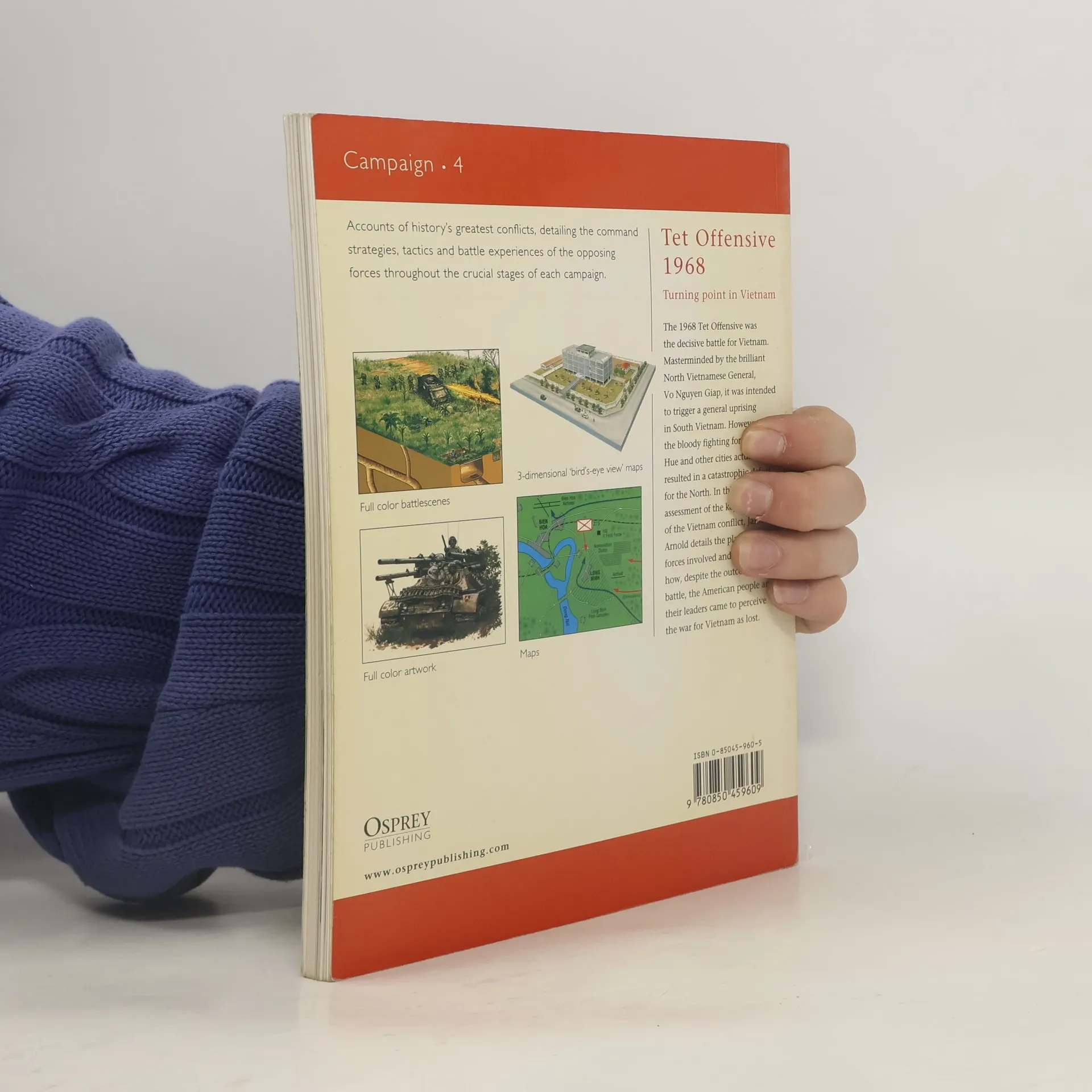
Osprey's study of the 1968 Tet Offensive, which was the decisive battle for Vietnam (1955-1975). Masterminded by the brilliant North Vietnamese General, Vo Nguyen Giap, it was intended to trigger a general uprising in South Vietnam. However, the bloody fighting for Saigon, Hue and other cities actually resulted in a catastrophic defeat for the North. In this excellent assessment of the key battle of the Vietnam conflict, James Arnold details the plans and forces involved and explains how, despite the outcome of the battle, the American people and their leaders came to perceive the war for Vietnam as lost.
Compra de libros
Campaign - 4: Tet Offensive 1968, James R. Arnold
- Idioma

- Publicado en
- 1990
- Encuadernación
- (Tapa blanda)
Te avisaremos por correo electrónico en cuanto lo localicemos.
Métodos de pago
Nos falta tu reseña aquí
- Título
- Campaign - 4: Tet Offensive 1968
- Subtítulo
- Turning Point in Vietnam
- Idioma
- Inglés
- Autores
- James R. Arnold
- Editorial
- Osprey Publishing
- Publicado en
- 1990
- Formato
- Tapa blanda
- Páginas
- 96
- ISBN10
- 0850459605
- ISBN13
- 9780850459609
- Serie
- Categorías
- Etiquetas
- Tema histórico, EE.UU., Prosa bélica, Siglo XX, Guerras, Tecnología, Literatura americana, Literatura especializada, Asia, Historia de EE. UU., Estrategia, Ejército, Revuelta, Vietnam, Sudeste Asiático
- Calificación
- 3,85 de 5
- Descripción
- Osprey's study of the 1968 Tet Offensive, which was the decisive battle for Vietnam (1955-1975). Masterminded by the brilliant North Vietnamese General, Vo Nguyen Giap, it was intended to trigger a general uprising in South Vietnam. However, the bloody fighting for Saigon, Hue and other cities actually resulted in a catastrophic defeat for the North. In this excellent assessment of the key battle of the Vietnam conflict, James Arnold details the plans and forces involved and explains how, despite the outcome of the battle, the American people and their leaders came to perceive the war for Vietnam as lost.