


Más información sobre el libro
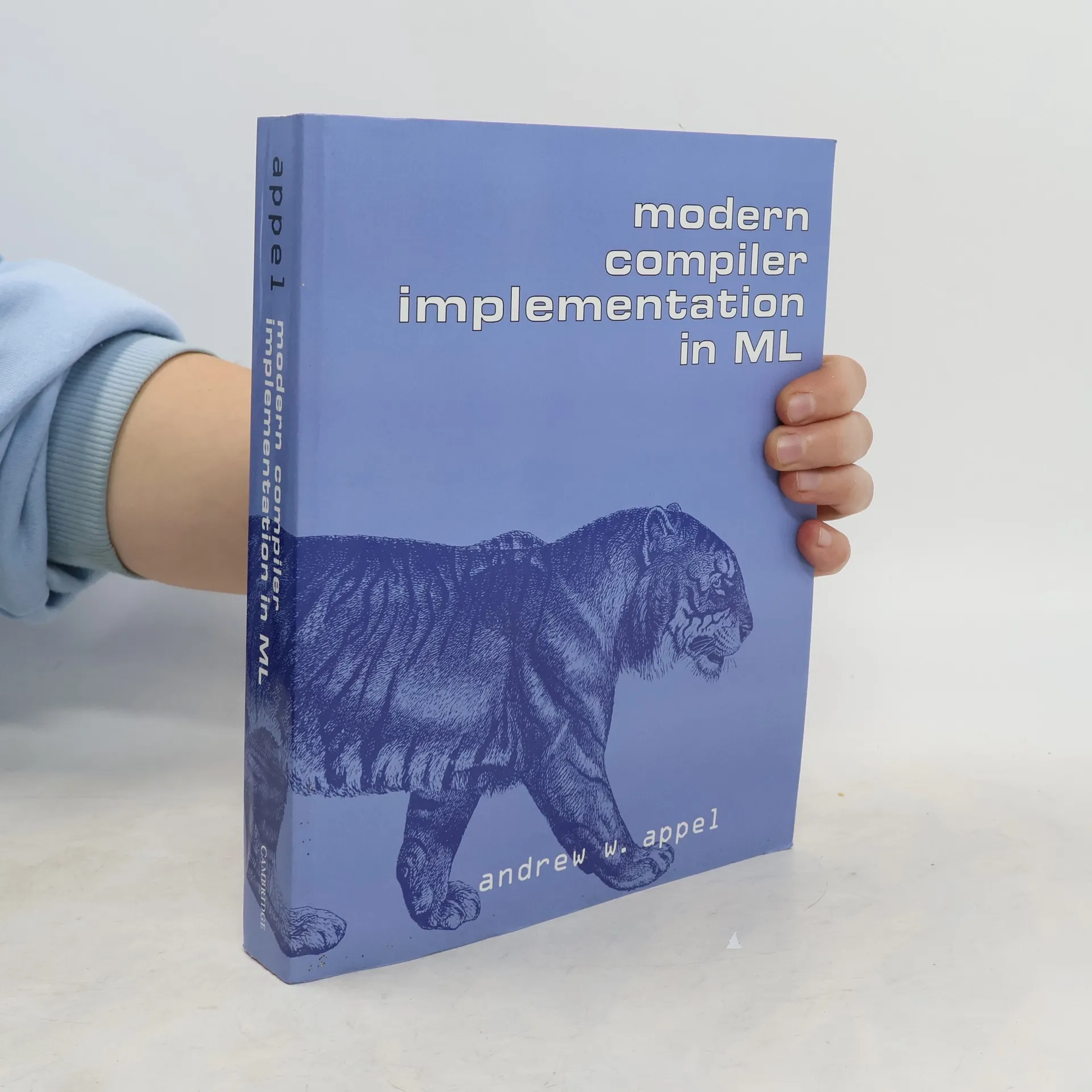
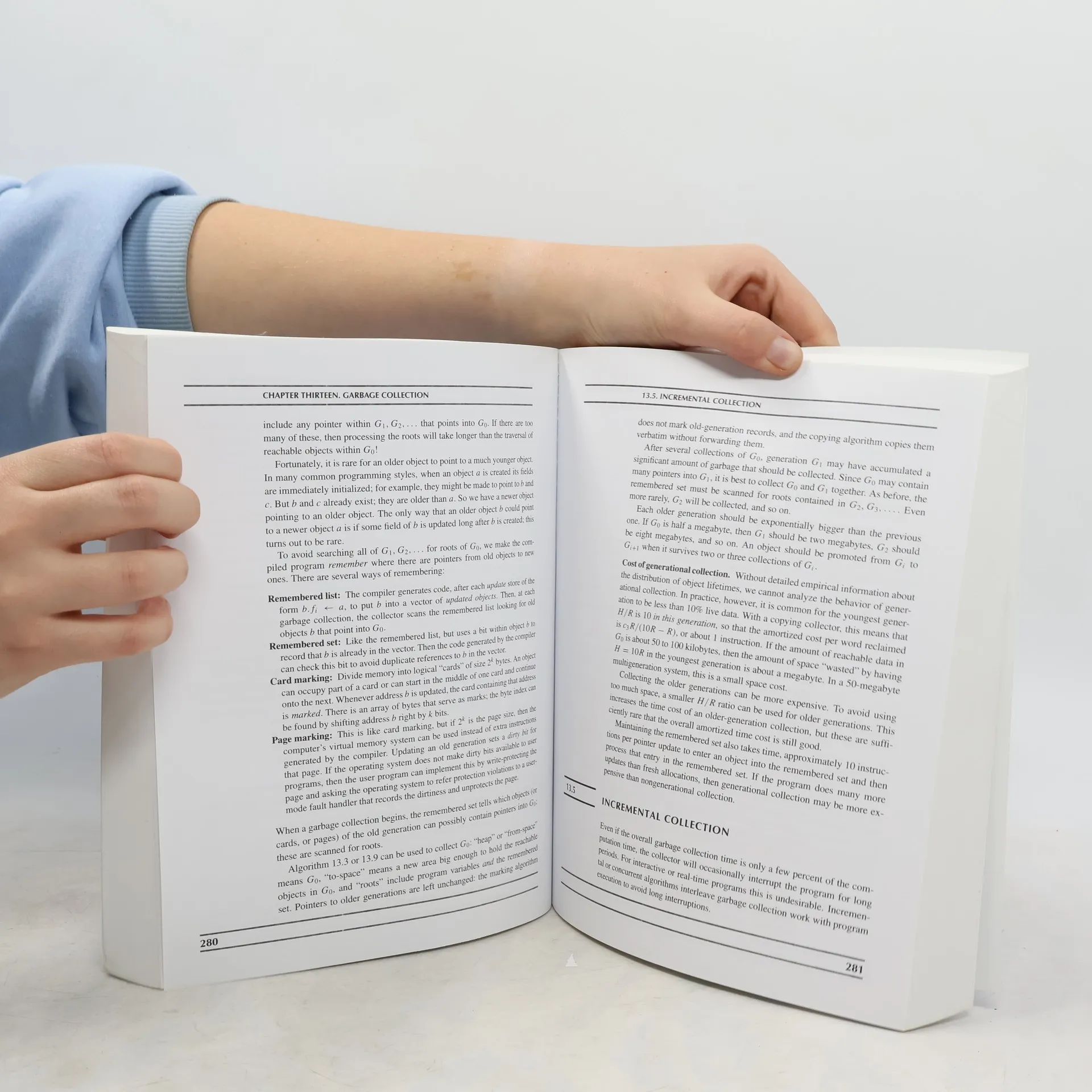
This new, expanded textbook describes all phases of a modern compiler: lexical analysis, parsing, abstract syntax, semantic actions, intermediate representations, instruction selection via tree matching, dataflow analysis, graph-coloring register allocation, and runtime systems. It includes good coverage of current techniques in code generation and register allocation, as well as functional and object-oriented languages, that are missing from most books. In addition, more advanced chapters are now included so that it can be used as the basis for two-semester or graduate course. The most accepted and successful techniques are described in a concise way, rather than as an exhaustive catalog of every possible variant. Detailed descriptions of the interfaces between modules of a compiler are illustrated with actual C header files. The first part of the book, Fundamentals of Compilation, is suitable for a one-semester first course in compiler design. The second part, Advanced Topics, which includes the advanced chapters, covers the compilation of object-oriented and functional languages, garbage collection, loop optimizations, SSA form, loop scheduling, and optimization for cache-memory hierarchies.
Compra de libros
Modern Compiler Implementation in ML, Andrew W. Appel
- Idioma

- Publicado en
- 2004
- Encuadernación
- (Tapa blanda)
Métodos de pago
Nos falta tu reseña aquí
- Título
- Modern Compiler Implementation in ML
- Idioma
- Inglés
- Autores
- Andrew W. Appel
- Editorial
- Cambridge University Press
- Publicado en
- 2004
- Formato
- Tapa blanda
- Páginas
- 548
- ISBN10
- 0521607647
- ISBN13
- 9780521607643
- Serie
- Etiquetas
- Guías y Manuales, Tecnología, Software
- Calificación
- 4,05 de 5
- Descripción
- This new, expanded textbook describes all phases of a modern compiler: lexical analysis, parsing, abstract syntax, semantic actions, intermediate representations, instruction selection via tree matching, dataflow analysis, graph-coloring register allocation, and runtime systems. It includes good coverage of current techniques in code generation and register allocation, as well as functional and object-oriented languages, that are missing from most books. In addition, more advanced chapters are now included so that it can be used as the basis for two-semester or graduate course. The most accepted and successful techniques are described in a concise way, rather than as an exhaustive catalog of every possible variant. Detailed descriptions of the interfaces between modules of a compiler are illustrated with actual C header files. The first part of the book, Fundamentals of Compilation, is suitable for a one-semester first course in compiler design. The second part, Advanced Topics, which includes the advanced chapters, covers the compilation of object-oriented and functional languages, garbage collection, loop optimizations, SSA form, loop scheduling, and optimization for cache-memory hierarchies.