

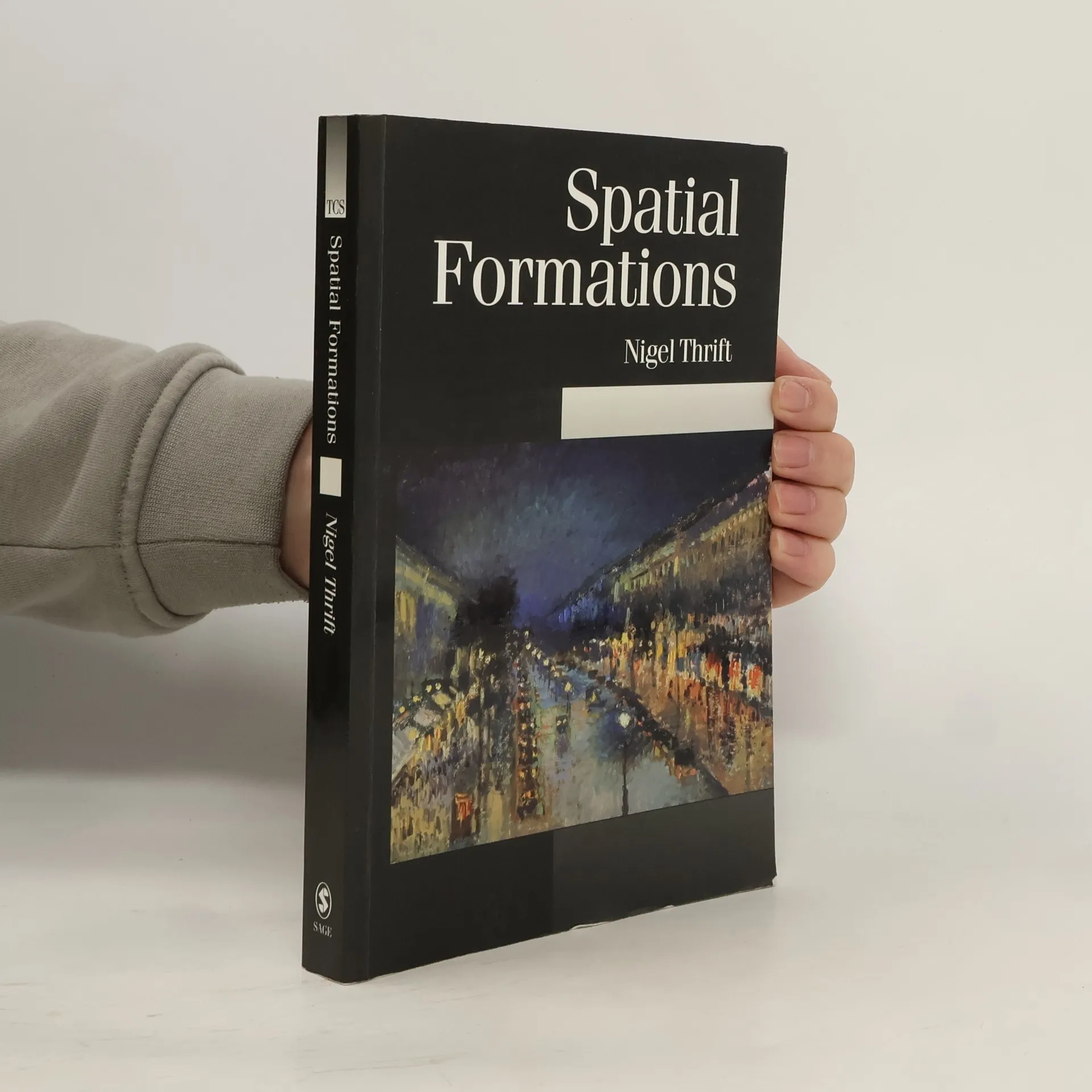


Más información sobre el libro
This essential guide to social theory and space is written by one of the leading writers in the field. Nigel Thrift explores the interconnections among people, places and things and demonstrates why they must be examined in relation to each other rather than in isolation - as is too often the case. Spatial Formations presents a formidable analysis of how space is socially constructed, unmade and reconstructed. Thrift provides the reader with a direct understanding of how social theory can be used to make sense of spatial forms and practices, and how spatial relations are made durable over space and time. These themes are developed through case studies, ranging from medieval time consciousness to the modern usage of m
Compra de libros
Theory, Culture & Society: Spatial Formations, Nigel Thrift
- Idioma

- Publicado en
- 1996
- Encuadernación
- (Tapa blanda)
Métodos de pago
Nos falta tu reseña aquí
- Título
- Theory, Culture & Society: Spatial Formations
- Idioma
- Inglés
- Autores
- Nigel Thrift
- Editorial
- SAGE Publications Ltd
- Publicado en
- 1996
- Formato
- Tapa blanda
- Páginas
- 384
- ISBN10
- 0803985460
- ISBN13
- 9780803985469
- Serie
- Categorías
- Etiquetas
- Temática filosófica
- Calificación
- 3,45 de 5
- Descripción
- This essential guide to social theory and space is written by one of the leading writers in the field. Nigel Thrift explores the interconnections among people, places and things and demonstrates why they must be examined in relation to each other rather than in isolation - as is too often the case. Spatial Formations presents a formidable analysis of how space is socially constructed, unmade and reconstructed. Thrift provides the reader with a direct understanding of how social theory can be used to make sense of spatial forms and practices, and how spatial relations are made durable over space and time. These themes are developed through case studies, ranging from medieval time consciousness to the modern usage of m