

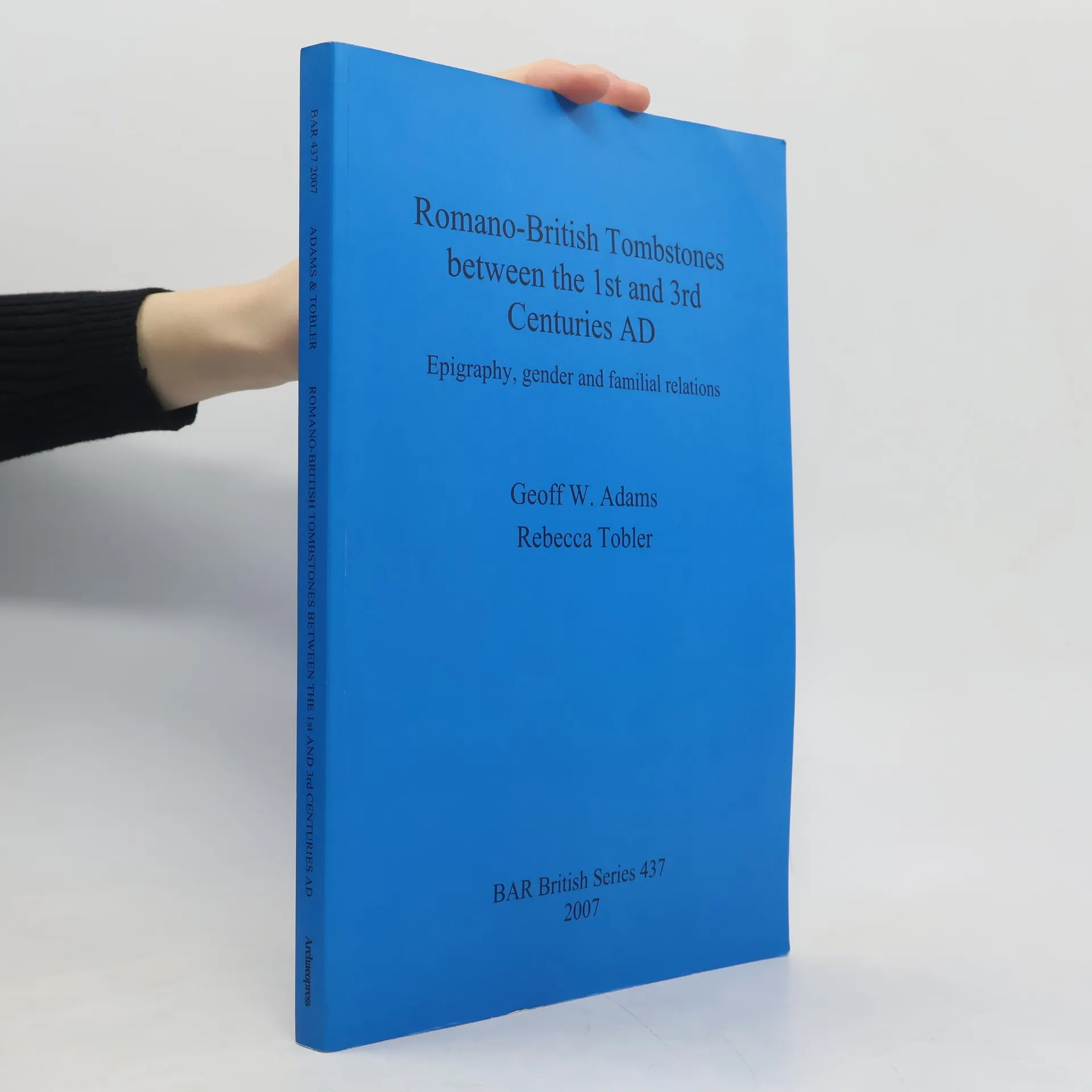


Romano-British Tombstones Between the 1st and 3rd Centuries AD
Epigraphy, Gender and Familial Relations
Valoración del libro
Más información sobre el libro
For one of the most isolated provinces in the Roman Empire, the archaeology of Roman Britain has been one of the most researched areas. However, the coverage is not complete and this study focuses on one of the neglected areas - what the tombstones of Roman Britain reveal about epigraphy, gender and familial relations throughout the 1st and 3rd centuries AD. Much of this study refers to the Romanisation of Britain during this period of time. Chapter 1 looks at the social significance of tombstones and burial customs; Chapter 2 contains the analysis by categorization of gender and age; Chapter 3 details the dedicators of Romano-British tombstones; Chapter 4 discusses the epigraphic and artistic significance of the tombstones; Chapter 5 details the materials and dimensions. There are six data Appendices presenting the chronological analyses, and separate studies of civilian and military tombstones.
Compra de libros
Romano-British Tombstones Between the 1st and 3rd Centuries AD, Rebecca Tobler, Geoffrey William Adams
- Idioma

- Publicado en
- 2007
- Encuadernación
- (Tapa blanda)
Métodos de pago
Nos falta tu reseña aquí
- Título
- Romano-British Tombstones Between the 1st and 3rd Centuries AD
- Subtítulo
- Epigraphy, Gender and Familial Relations
- Idioma
- Inglés
- Autores
- Rebecca Tobler, Geoffrey William Adams
- Editorial
- British Archaeological Reports
- Publicado en
- 2007
- Formato
- Tapa blanda
- Páginas
- 217
- ISBN10
- 1407300873
- ISBN13
- 9781407300870
- Serie
- Etiquetas
- Europa, Gran Bretaña, Arqueología, Monumentos sepulcrales
- Calificación
- 3 de 5
- Descripción
- For one of the most isolated provinces in the Roman Empire, the archaeology of Roman Britain has been one of the most researched areas. However, the coverage is not complete and this study focuses on one of the neglected areas - what the tombstones of Roman Britain reveal about epigraphy, gender and familial relations throughout the 1st and 3rd centuries AD. Much of this study refers to the Romanisation of Britain during this period of time. Chapter 1 looks at the social significance of tombstones and burial customs; Chapter 2 contains the analysis by categorization of gender and age; Chapter 3 details the dedicators of Romano-British tombstones; Chapter 4 discusses the epigraphic and artistic significance of the tombstones; Chapter 5 details the materials and dimensions. There are six data Appendices presenting the chronological analyses, and separate studies of civilian and military tombstones.