

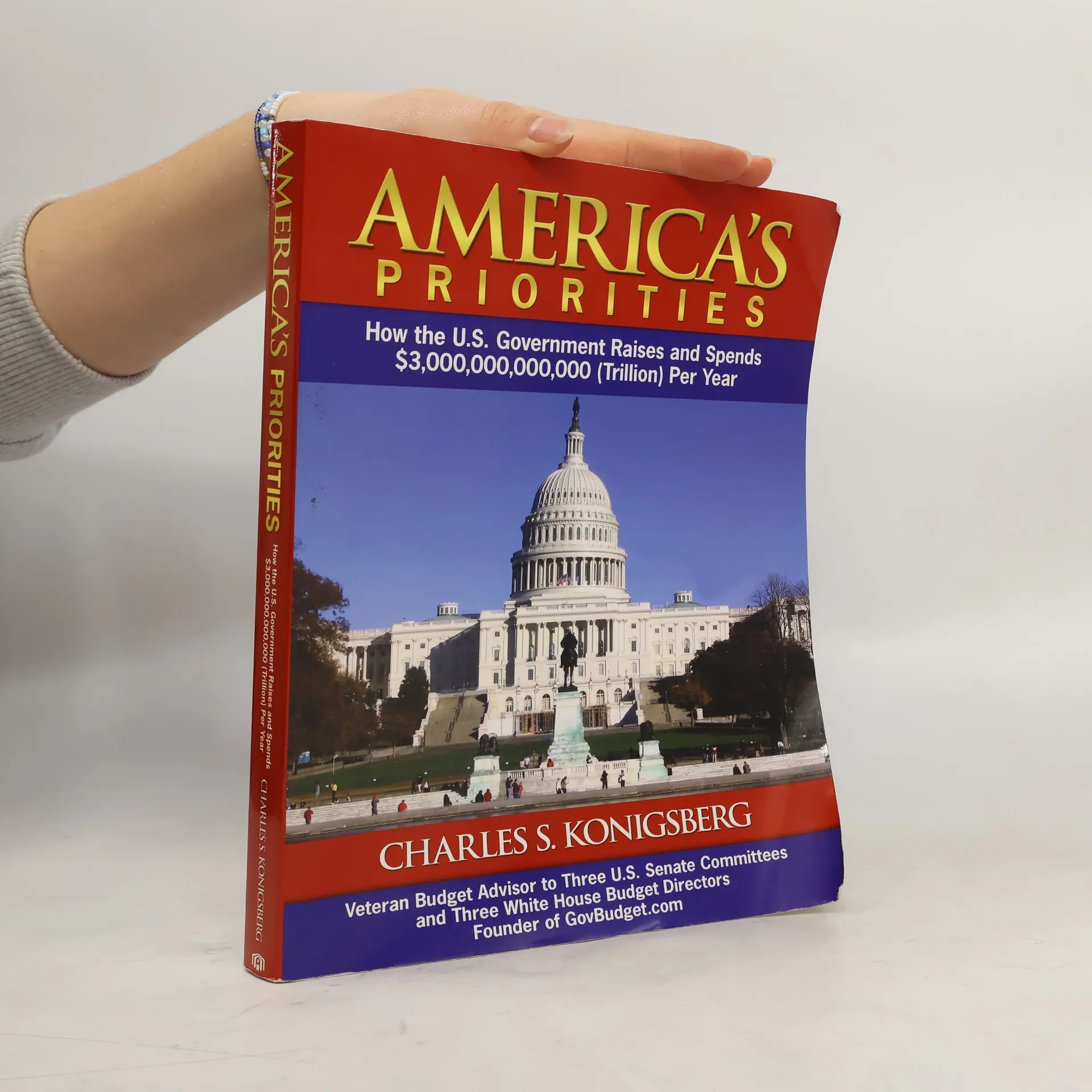
America's Priorities
How the U.S. Government Raises and Spends $3,000,000,000,000 (Trillion) Per Year
Autores
Más información sobre el libro
America's Priorities explains in clear, concise, nonpartisan language how the U.S. government raises and spends $3 trillion per year. The book provides plain English explanations of the budget process, major Federal spending programs, Federal taxes, and the reasons for the major swing from deficits in the 1980s to surpluses in the late 1990s and back to rapidly increasing debt in the current decade. A broad spectrum of readers will value the book as a vital journalists, political and financial commentators, the government and financial sectors, the academic community, and voters looking for a nonpartisan explanation of how our elected officials are prioritizing public resources.
Compra de libros
America's Priorities, Charles S. Konigsberg
- Idioma

- Publicado en
- 2007
- Encuadernación
- (Tapa blanda)
Métodos de pago
Nadie lo ha calificado todavía.
- Título
- America's Priorities
- Subtítulo
- How the U.S. Government Raises and Spends $3,000,000,000,000 (Trillion) Per Year
- Idioma
- Inglés
- Autores
- Charles S. Konigsberg
- Editorial
- AuthorHouse
- Publicado en
- 2007
- Formato
- Tapa blanda
- Páginas
- 452
- ISBN10
- 143436013X
- ISBN13
- 9781434360137
- Serie
- Categorías
- Etiquetas
- Comercio, Temática jurídica, EE.UU., Teorías Políticas
- Descripción
- America's Priorities explains in clear, concise, nonpartisan language how the U.S. government raises and spends $3 trillion per year. The book provides plain English explanations of the budget process, major Federal spending programs, Federal taxes, and the reasons for the major swing from deficits in the 1980s to surpluses in the late 1990s and back to rapidly increasing debt in the current decade. A broad spectrum of readers will value the book as a vital journalists, political and financial commentators, the government and financial sectors, the academic community, and voters looking for a nonpartisan explanation of how our elected officials are prioritizing public resources.