

Más información sobre el libro
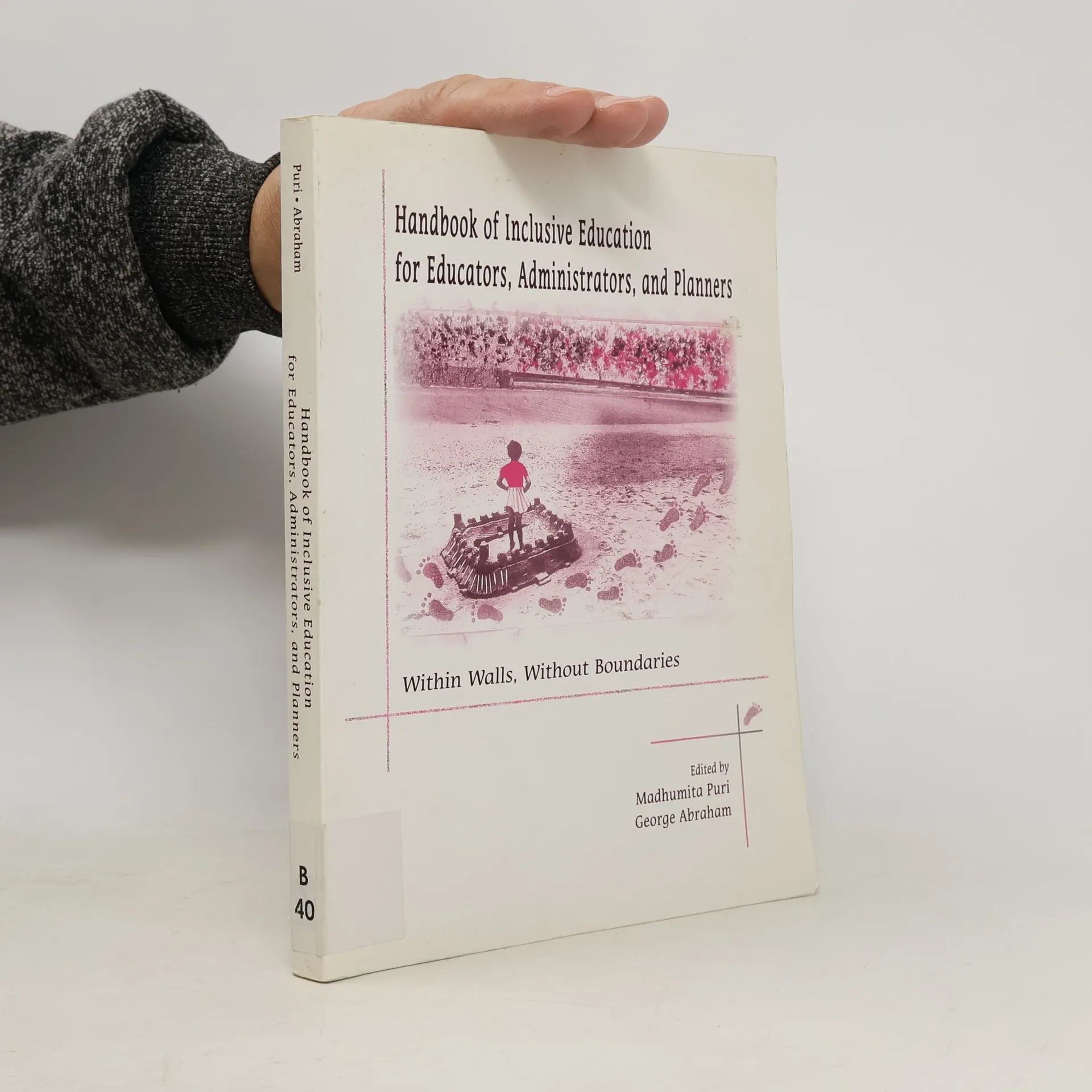
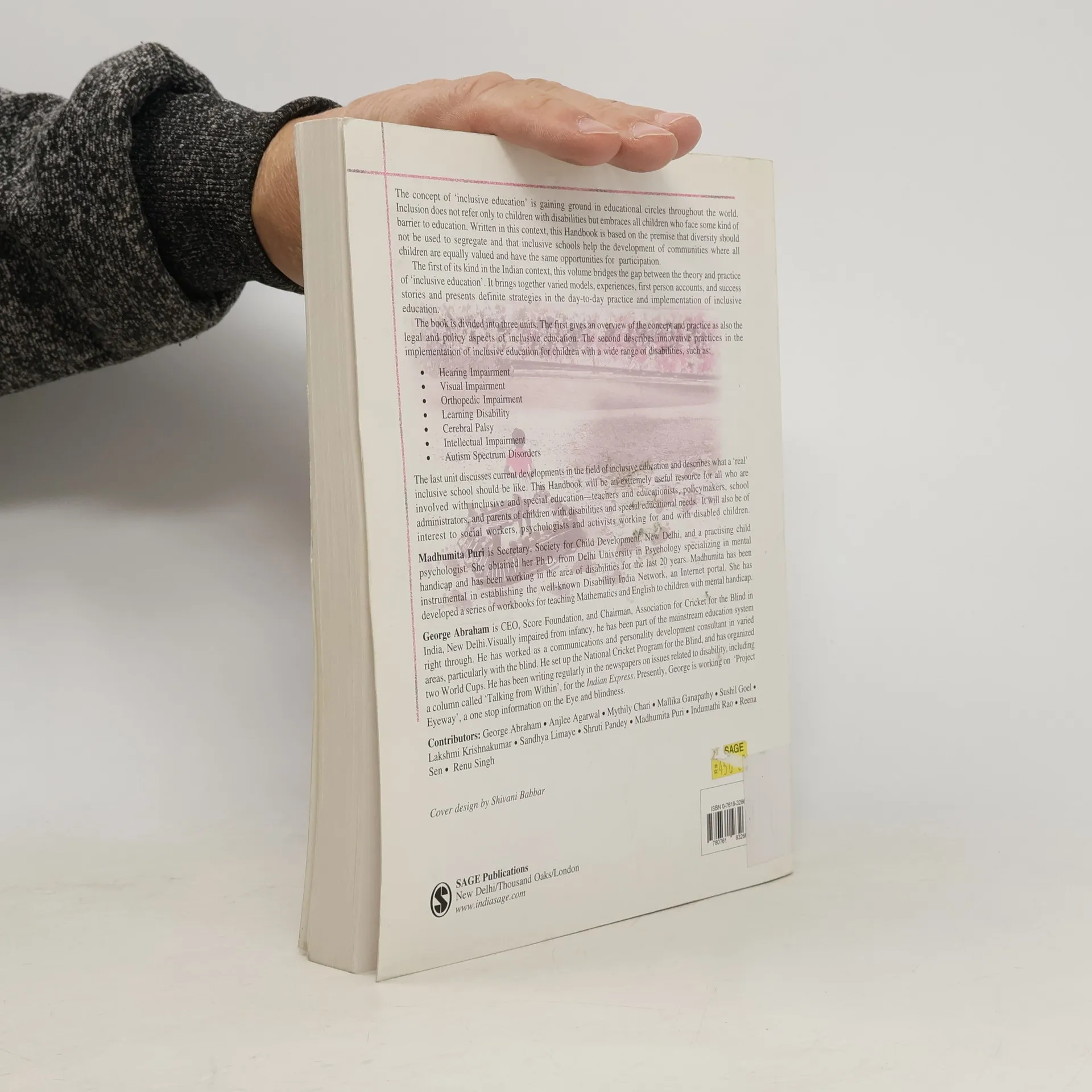
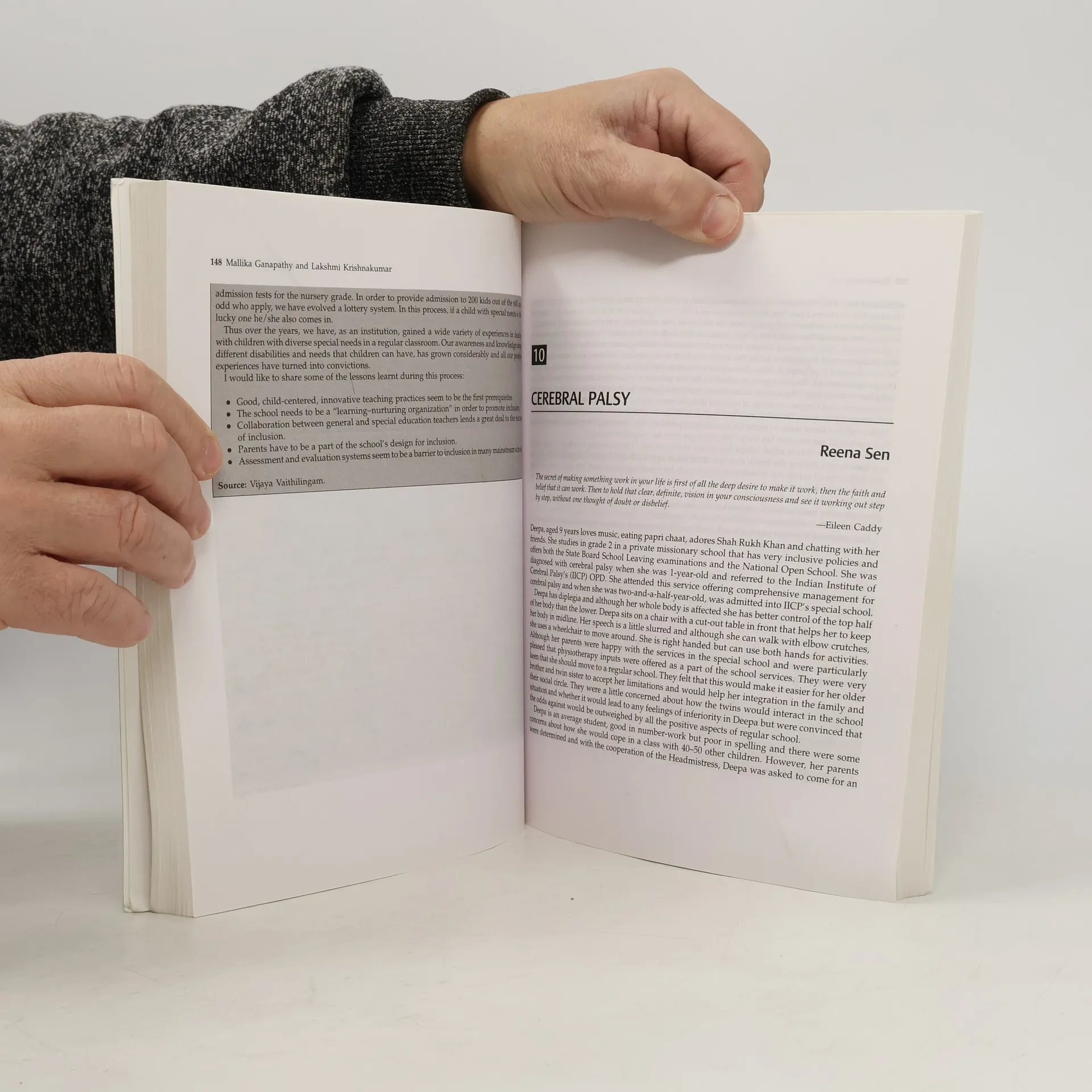
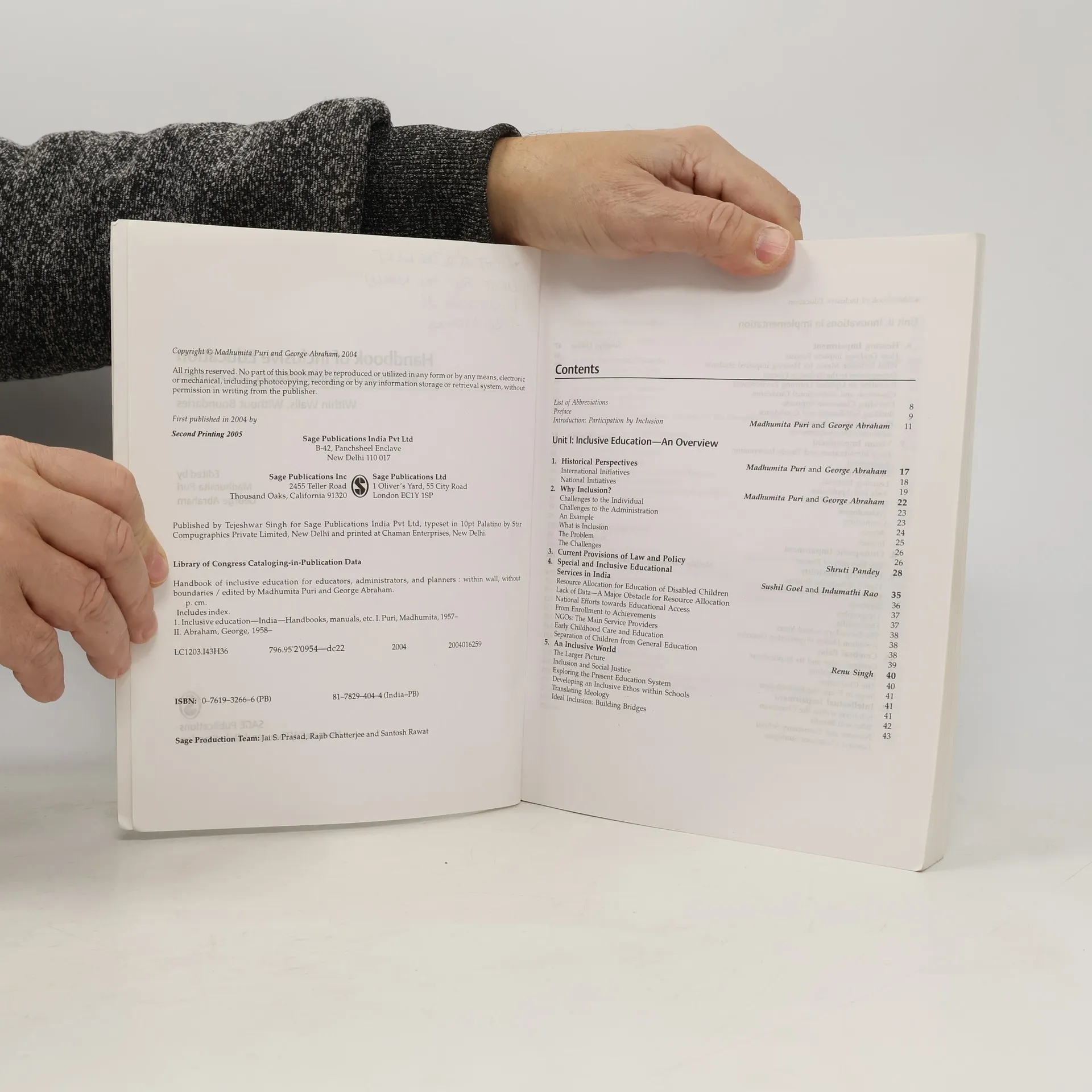
The Handbook of Inclusive Education advocates the importance of inclusive education. It presents a collection of various models, practices, experiences, first-hand accounts and success stories from India, where inclusive education has been implemented. It also identifies and analyzes challenges to the Indian education system, while offering possible strategies and solutions for all education systems implementing inclusion policies. The book is divided into three parts. Part one gives an overview of the concept and practice of inclusive education and also discusses legal and policy aspects. Part two describes innovative practices in the implementation of inclusive education for children with a wide range of disabilities, such - Hearing Impairment - Visual Impairment - Orthopedic Impairment - Learning Disability - Cerebral Palsy - Intellectual Impairment - Autism Spectrum Disorders. Part three discusses current developments in the fields of inclusive education and describes what a `real′ inclusive school should be like.
Compra de libros
Handbook of Inclusive Education for Educators, Administrators and Planners, Madhumita Puri, George Abraham
- Idioma

- Publicado en
- 2004
- Encuadernación
- (Tapa blanda)
Métodos de pago
Nadie lo ha calificado todavía.
- Título
- Handbook of Inclusive Education for Educators, Administrators and Planners
- Subtítulo
- Within Walls, Without Boundaries
- Idioma
- Inglés
- Autores
- Madhumita Puri, George Abraham
- Editorial
- SAGE Publications Pvt. Ltd
- Publicado en
- 2004
- Formato
- Tapa blanda
- Páginas
- 292
- ISBN10
- 0761932666
- ISBN13
- 9780761932666
- Serie
- Categorías
- Etiquetas
- Educación, India, Pedagogía especial, Educación Inclusiva
- Descripción
- The Handbook of Inclusive Education advocates the importance of inclusive education. It presents a collection of various models, practices, experiences, first-hand accounts and success stories from India, where inclusive education has been implemented. It also identifies and analyzes challenges to the Indian education system, while offering possible strategies and solutions for all education systems implementing inclusion policies. The book is divided into three parts. Part one gives an overview of the concept and practice of inclusive education and also discusses legal and policy aspects. Part two describes innovative practices in the implementation of inclusive education for children with a wide range of disabilities, such - Hearing Impairment - Visual Impairment - Orthopedic Impairment - Learning Disability - Cerebral Palsy - Intellectual Impairment - Autism Spectrum Disorders. Part three discusses current developments in the fields of inclusive education and describes what a `real′ inclusive school should be like.