



Más información sobre el libro
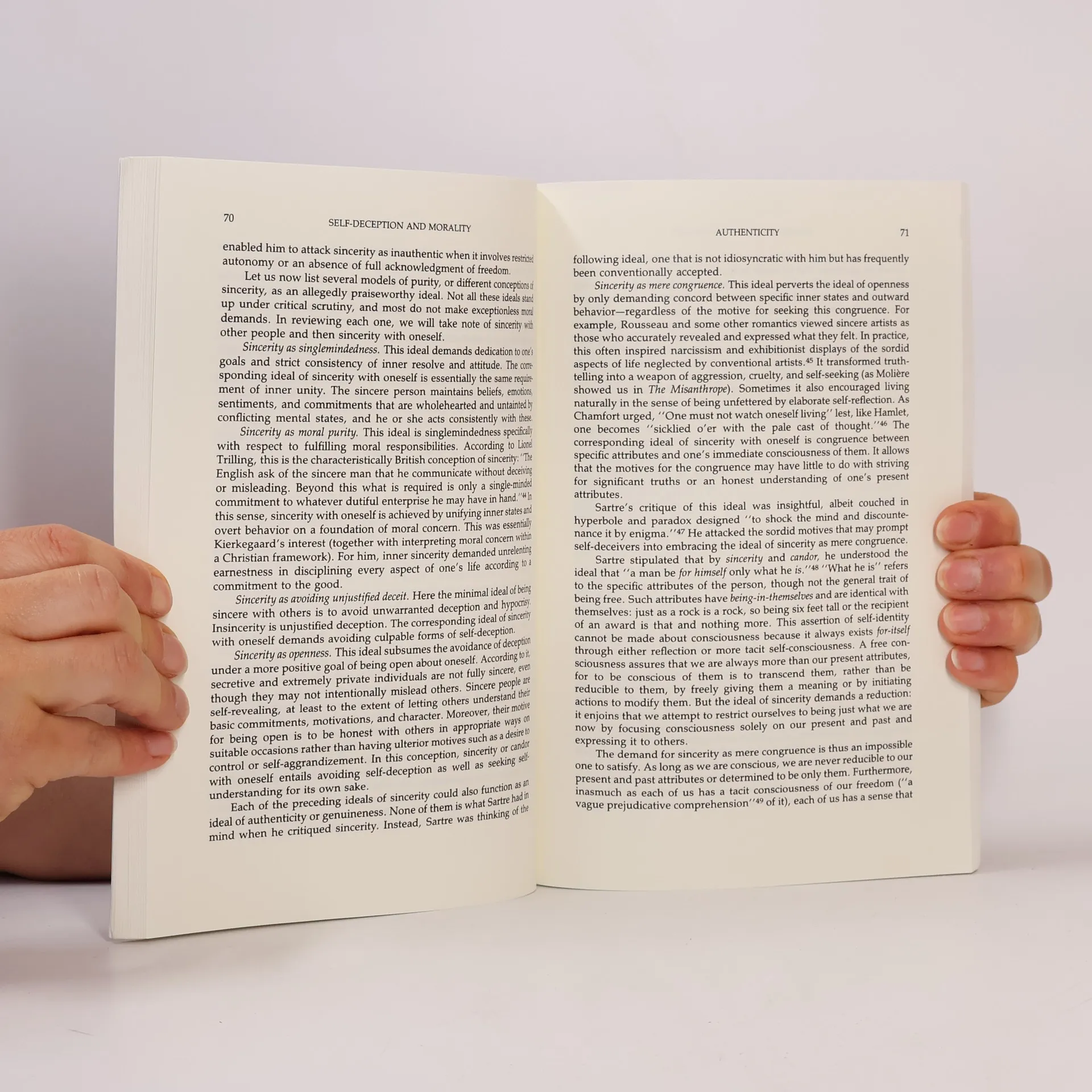
This book systematically examines the moral complexities of self-deception, emphasizing its significance in both ethical theory and applied ethics. It raises critical questions about self-deception's moral implications: Does it inherently involve guilt, and is it among the most serious evils? Is it sometimes acceptable, especially when it leads to negative outcomes? Can self-deception be seen as a form of innocence that warrants compassion? Or, paradoxically, are self-deceivers both culpable and innocent? The author develops a framework that defines self-deception as the intentional avoidance of acknowledging truths. He explores various moral perspectives from Western philosophy, clarifying related concepts such as sincerity, authenticity, and hypocrisy. By engaging with both philosophical figures like Kant and Kierkegaard and non-philosophical sources like Freud and Ibsen, the book illustrates the moral intricacies of self-deception. Its broad appeal challenges professional philosophers and psychologists while remaining accessible to students in ethics, philosophy of mind, and literature. Additionally, the rich literary examples provided will attract literary critics, making this a relevant and thought-provoking work for a diverse audience.
Compra de libros
Self-Deception and Morality, Mike W. Martin
- Idioma

- Publicado en
- 1986
- Encuadernación
- (Tapa blanda)
Métodos de pago
Nos falta tu reseña aquí
- Título
- Self-Deception and Morality
- Idioma
- Inglés
- Autores
- Mike W. Martin
- Editorial
- University Press of Kansas
- Publicado en
- 1986
- Formato
- Tapa blanda
- Páginas
- 192
- ISBN10
- 0700603530
- ISBN13
- 9780700603534
- Serie
- Categorías
- Etiquetas
- Temas psicológicos, Temática filosófica, Ética, Racionalidad
- Calificación
- 3,75 de 5
- Descripción
- This book systematically examines the moral complexities of self-deception, emphasizing its significance in both ethical theory and applied ethics. It raises critical questions about self-deception's moral implications: Does it inherently involve guilt, and is it among the most serious evils? Is it sometimes acceptable, especially when it leads to negative outcomes? Can self-deception be seen as a form of innocence that warrants compassion? Or, paradoxically, are self-deceivers both culpable and innocent? The author develops a framework that defines self-deception as the intentional avoidance of acknowledging truths. He explores various moral perspectives from Western philosophy, clarifying related concepts such as sincerity, authenticity, and hypocrisy. By engaging with both philosophical figures like Kant and Kierkegaard and non-philosophical sources like Freud and Ibsen, the book illustrates the moral intricacies of self-deception. Its broad appeal challenges professional philosophers and psychologists while remaining accessible to students in ethics, philosophy of mind, and literature. Additionally, the rich literary examples provided will attract literary critics, making this a relevant and thought-provoking work for a diverse audience.