

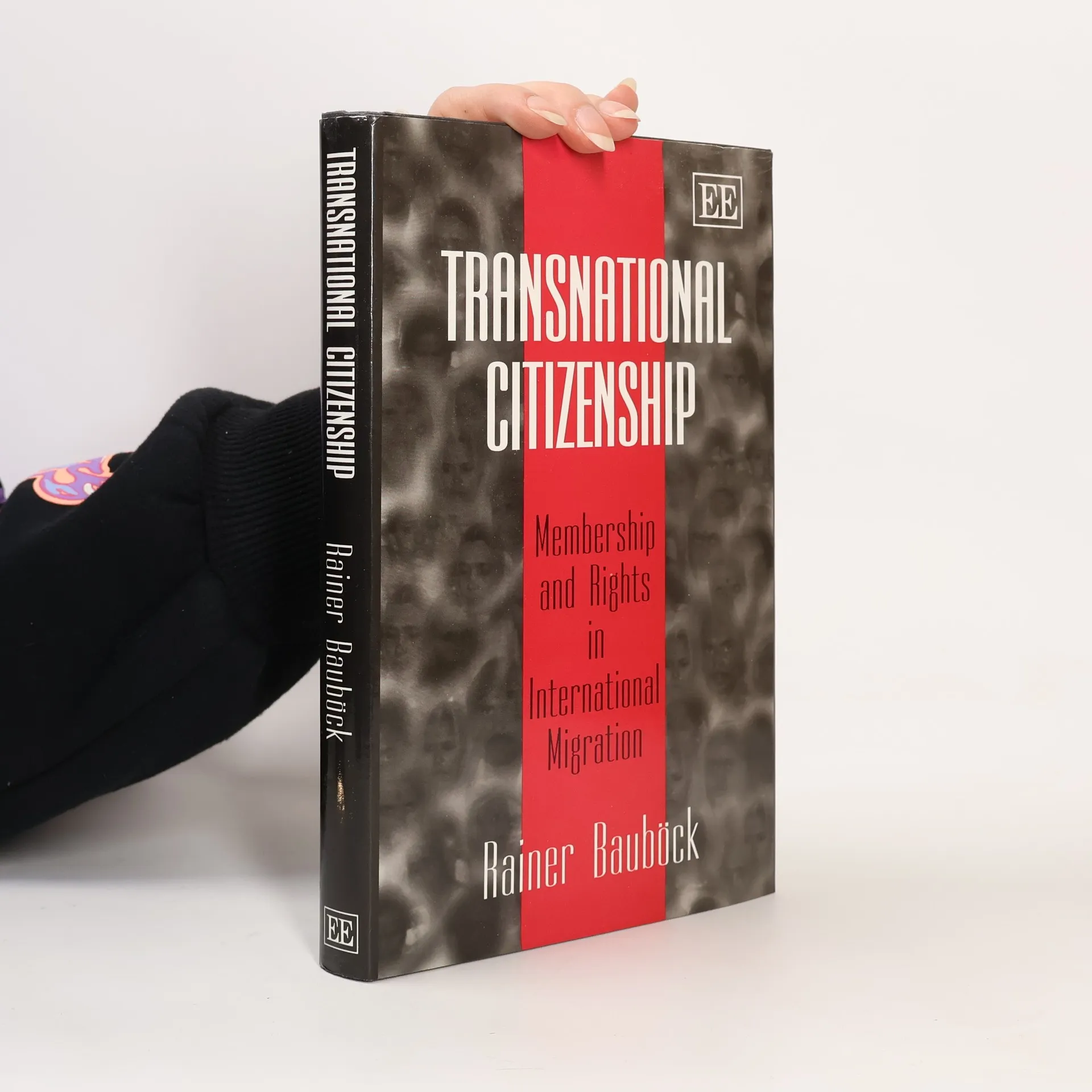
Transnational Citizenship
Membership and Rights in International Migration
Autores
Valoración del libro
Parámetros
- 348 páginas
- 13 horas de lectura
Más información sobre el libro
Regional integration, mass migration, and the rise of transnational organizations challenge traditional citizenship definitions. Rainer Baubock argues that citizenship rights must extend beyond nationality and state territory for liberal democracies to uphold their principles of inclusive membership and equal rights. This work combines theoretical discussions on citizenship rights with comparative policy analyses of naturalization and expatriation in liberal democracies. A key distinction is made between nominal citizenship, which pertains to legal membership status, and substantial citizenship, which addresses the distribution of basic rights within a state. The author identifies three areas where states can become more inclusive: naturalization processes, extending citizenship rights to non-citizens, and admitting immigrants. While Baubock views citizenship as membership in territorially defined states, he contends it should not be limited to the model of national communities. By examining the implications of accepting migrants as members of liberal democracies, Baubock significantly enhances our understanding of citizenship and migration rights. This innovative yet realistic work will resonate with political and sociological theorists, migration researchers, and legal experts focused on migration and naturalization issues.
Compra de libros
Transnational Citizenship, Rainer Bauböck
- Idioma

- Publicado en
- 1994
- Encuadernación
- (Tapa dura)
Métodos de pago
Nos falta tu reseña aquí
- Título
- Transnational Citizenship
- Subtítulo
- Membership and Rights in International Migration
- Idioma
- Inglés
- Autores
- Rainer Bauböck
- Editorial
- Edward Elgar Publishing
- Publicado en
- 1994
- Formato
- Tapa dura
- Páginas
- 348
- ISBN10
- 1852789425
- ISBN13
- 9781852789428
- Serie
- Categorías
- Etiquetas
- Comercio, Temática jurídica, Política, Literatura especializada, Sociedad, Teorías Políticas, Extraterrestres, Derecho Internacional, Extranjeros
- Calificación
- 2 de 5
- Descripción
- Regional integration, mass migration, and the rise of transnational organizations challenge traditional citizenship definitions. Rainer Baubock argues that citizenship rights must extend beyond nationality and state territory for liberal democracies to uphold their principles of inclusive membership and equal rights. This work combines theoretical discussions on citizenship rights with comparative policy analyses of naturalization and expatriation in liberal democracies. A key distinction is made between nominal citizenship, which pertains to legal membership status, and substantial citizenship, which addresses the distribution of basic rights within a state. The author identifies three areas where states can become more inclusive: naturalization processes, extending citizenship rights to non-citizens, and admitting immigrants. While Baubock views citizenship as membership in territorially defined states, he contends it should not be limited to the model of national communities. By examining the implications of accepting migrants as members of liberal democracies, Baubock significantly enhances our understanding of citizenship and migration rights. This innovative yet realistic work will resonate with political and sociological theorists, migration researchers, and legal experts focused on migration and naturalization issues.