



Más información sobre el libro
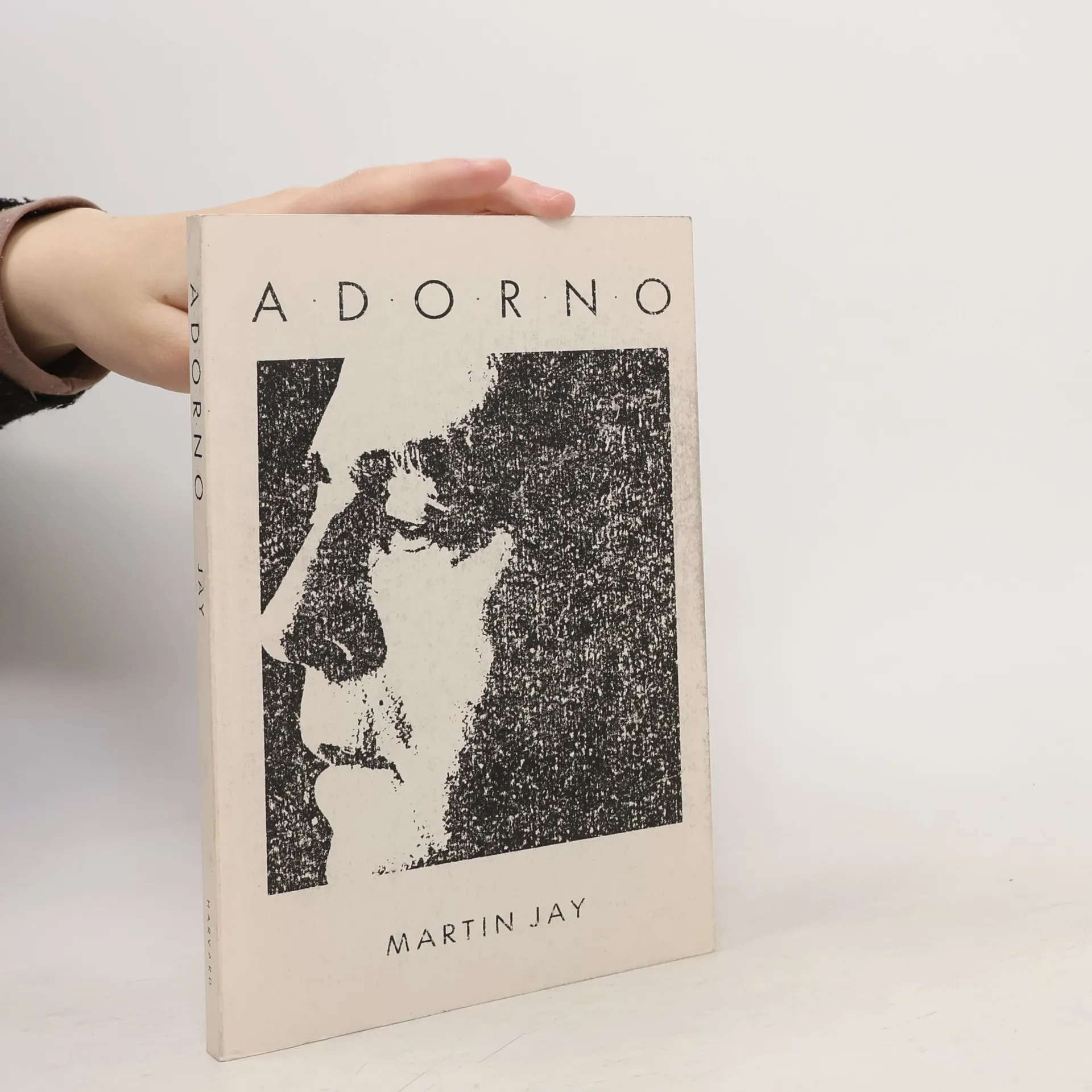
Theodor W. Adorno (1903-1969) was a leading figure in the Frankfurt School and one of this century's most demanding intellectuals. His works, always informed by his variant of Critical Theory that he called Negative Dialectics, is notoriously difficult to understand bu has had an enormous impact on philosophy, sociology, musicology, literary criticism, psychology, and the study of culture. In an introductory section, Martin Jay gives a brief, lucid account of Adorno's notion of force-field, and of Adorno's extension of Walter Benjamin's concept of constellation. He distinguishes five impulses in Adorno's thinking: his Marxism, his aesthetic modernism, his mandarin cultural conservatism, his anticipation of deconstructionism, and the self-conscious Jewishness that led him to look for redemption and at the same time to refuse any definition of paradise. Professor Jay devotes the central sections of his book to the major aspects of Adorno's thoughthis philosophy, his social theory, and his view of modern culture and aesthetic theory. He has succeeded brilliantly in the task of presenting Adorno's theories in understandable form while remaining true to their unresolved tensions.
Compra de libros
Adorno, Martin Jay
- Idioma

- Publicado en
- 1984
- Encuadernación
- (Tapa blanda)
Métodos de pago
Nos falta tu reseña aquí
- Título
- Adorno
- Idioma
- Inglés
- Autores
- Martin Jay
- Editorial
- Harvard University Press
- Publicado en
- 1984
- Formato
- Tapa blanda
- Páginas
- 200
- ISBN10
- 0674005155
- ISBN13
- 9780674005150
- Serie
- Etiquetas
- Calificación
- 3,95 de 5
- Descripción
- Theodor W. Adorno (1903-1969) was a leading figure in the Frankfurt School and one of this century's most demanding intellectuals. His works, always informed by his variant of Critical Theory that he called Negative Dialectics, is notoriously difficult to understand bu has had an enormous impact on philosophy, sociology, musicology, literary criticism, psychology, and the study of culture. In an introductory section, Martin Jay gives a brief, lucid account of Adorno's notion of force-field, and of Adorno's extension of Walter Benjamin's concept of constellation. He distinguishes five impulses in Adorno's thinking: his Marxism, his aesthetic modernism, his mandarin cultural conservatism, his anticipation of deconstructionism, and the self-conscious Jewishness that led him to look for redemption and at the same time to refuse any definition of paradise. Professor Jay devotes the central sections of his book to the major aspects of Adorno's thoughthis philosophy, his social theory, and his view of modern culture and aesthetic theory. He has succeeded brilliantly in the task of presenting Adorno's theories in understandable form while remaining true to their unresolved tensions.