



Más información sobre el libro
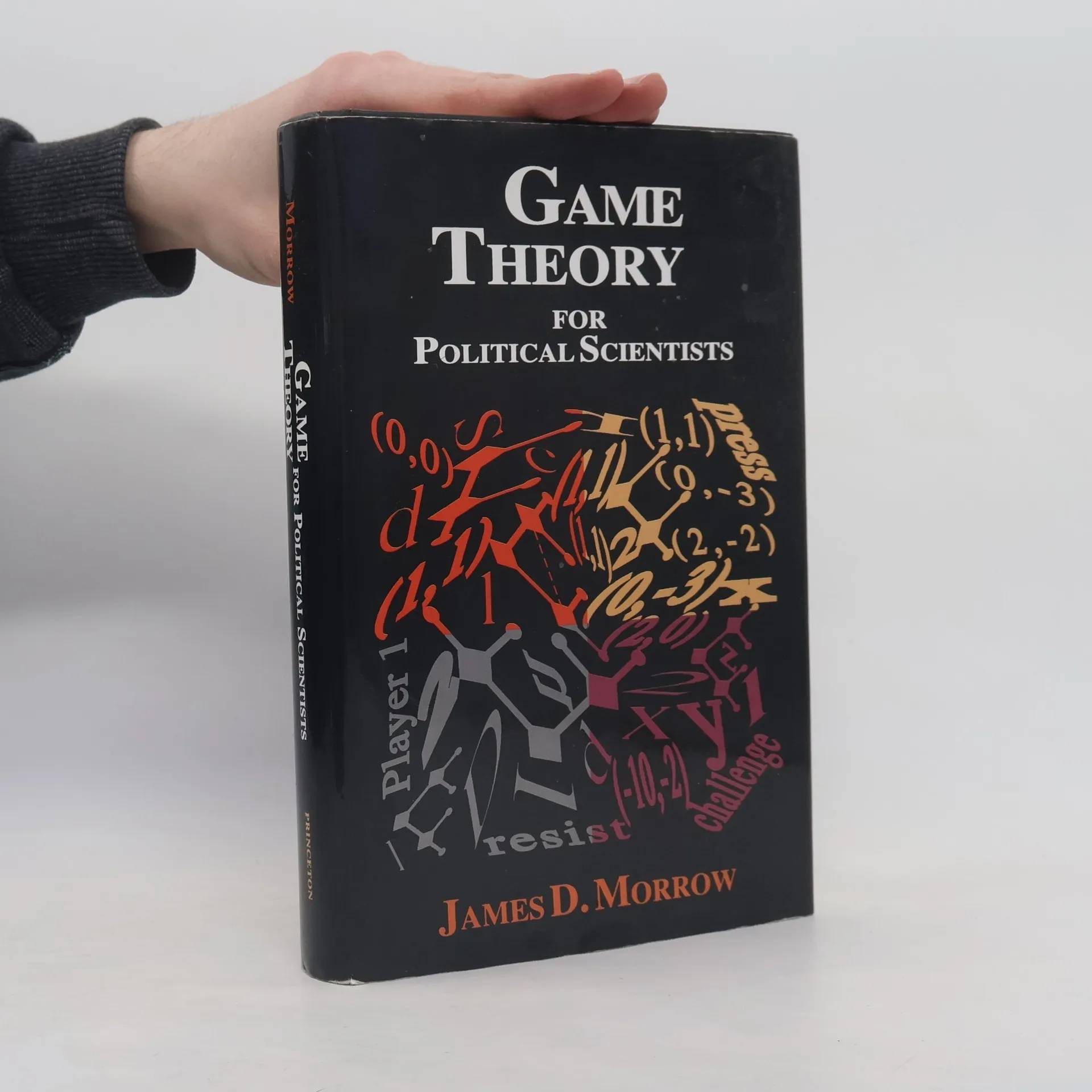
Game theory, the mathematical analysis of strategic interaction, has significantly impacted economics since the seminal work of von Neumann and Morgenstern. However, its application in political science has been overlooked due to the complexity of economic methodologies. This book serves as the first standard text to adapt contemporary game theory for political analysis, utilizing minimal mathematics to convey essential concepts. It includes problems and solutions tailored for advanced undergraduates and graduate students across political science disciplines. Beginning with classical utility and game theory, the text progresses to contemporary research on repeated games and incomplete information. It emphasizes noncooperative game theory and its relevance to international relations, political economy, and both American and comparative politics. Key models explored include bargaining, legislative voting rules, mass election voting, and deterrence. An appendix provides a review of necessary mathematical techniques, while bibliographic essays at each chapter's end recommend further readings, organized by difficulty. This rigorous yet accessible introduction is valuable not only for political scientists but also for psychologists, sociologists, and other social science scholars.
Compra de libros
Game Theory for Political Scientists, James D. Morrow
- Idioma

- Publicado en
- 1994
- Encuadernación
- (Tapa dura)
Métodos de pago
Nos falta tu reseña aquí
- Título
- Game Theory for Political Scientists
- Idioma
- Inglés
- Autores
- James D. Morrow
- Editorial
- Princeton University Press
- Publicado en
- 1994
- Formato
- Tapa dura
- Páginas
- 376
- ISBN10
- 0691034303
- ISBN13
- 9780691034300
- Serie
- Categorías
- Calificación
- 4 de 5
- Descripción
- Game theory, the mathematical analysis of strategic interaction, has significantly impacted economics since the seminal work of von Neumann and Morgenstern. However, its application in political science has been overlooked due to the complexity of economic methodologies. This book serves as the first standard text to adapt contemporary game theory for political analysis, utilizing minimal mathematics to convey essential concepts. It includes problems and solutions tailored for advanced undergraduates and graduate students across political science disciplines. Beginning with classical utility and game theory, the text progresses to contemporary research on repeated games and incomplete information. It emphasizes noncooperative game theory and its relevance to international relations, political economy, and both American and comparative politics. Key models explored include bargaining, legislative voting rules, mass election voting, and deterrence. An appendix provides a review of necessary mathematical techniques, while bibliographic essays at each chapter's end recommend further readings, organized by difficulty. This rigorous yet accessible introduction is valuable not only for political scientists but also for psychologists, sociologists, and other social science scholars.