



Más información sobre el libro
First published in 1977, this is a volume about the scientific study of thinking: its possibility, its part state and its future prospects. The editors have brought together a set of readings which draw on work in cognitive psychology, artificial intelligence, psycholinguistics and philosophy. It is not, however, a mechanical or merely routine collection. At the time of publication there had been rapid and important advances in several different disciplines concerned with human thinking; many of these advances seem to be fundamental and convergent, to point towards a genuine cognitive science. The editors have tried to capture this sense of readiness, excitement and impetus in their selection of readings and their presentation of them. There are substantial introductions to each of the seven parts of the book as a whole to connect and explain the material, with the student and general reader particularly in mind.
Compra de libros
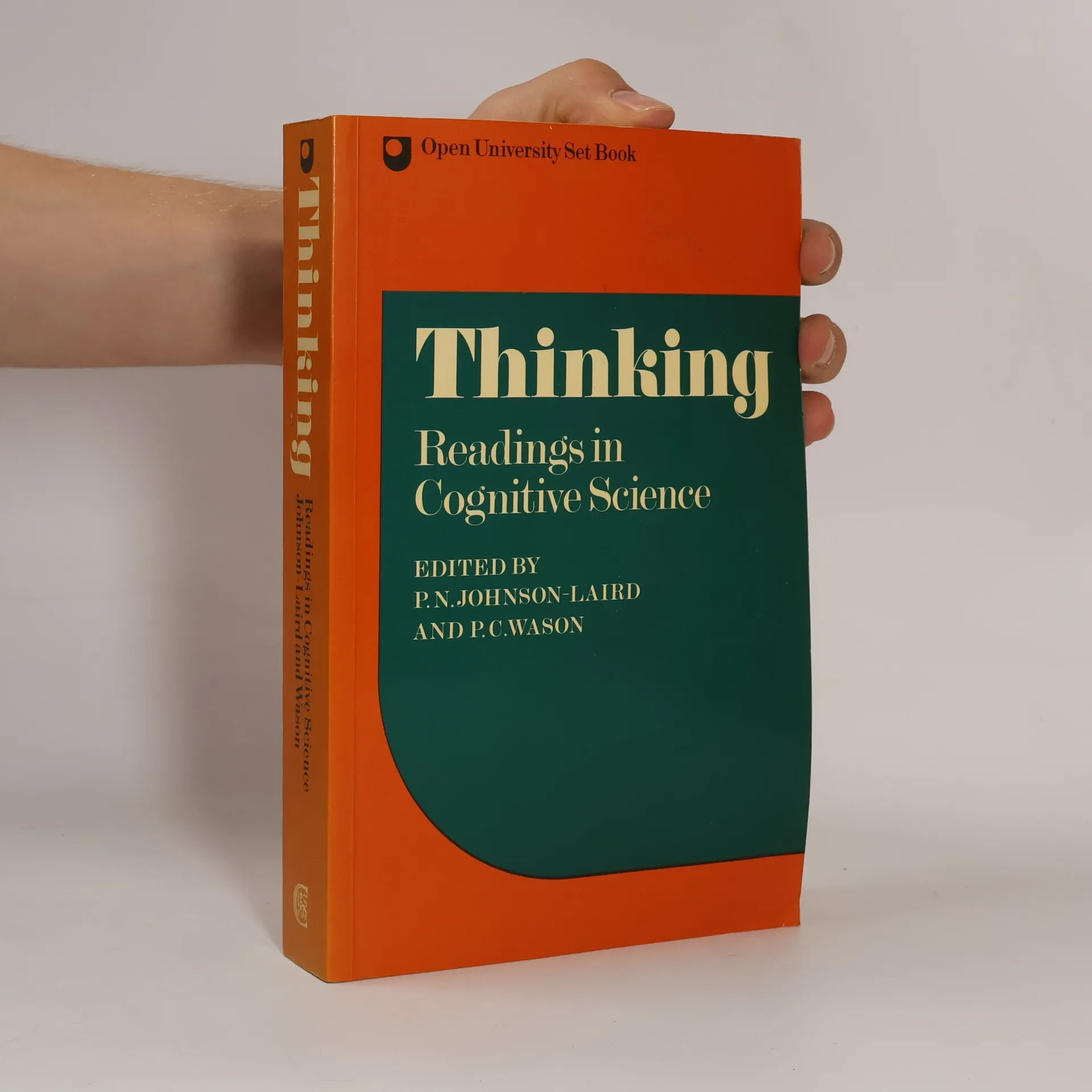
Thinking, Philip N. Johnson Laird, P. C. Wason
- Idioma

- Publicado en
- 1977
- Encuadernación
- (Tapa blanda)
Métodos de pago
Nos falta tu reseña aquí
- Título
- Thinking
- Subtítulo
- Readings in Cognitive Science
- Idioma
- Inglés
- Autores
- Philip N. Johnson Laird, P. C. Wason
- Editorial
- Cambridge University Press
- Publicado en
- 1977
- Formato
- Tapa blanda
- Páginas
- 632
- ISBN10
- 0521292670
- ISBN13
- 9780521292672
- Serie
- Etiquetas
- Ciencia, Inteligencia Artificial
- Calificación
- 4,25 de 5
- Descripción
- First published in 1977, this is a volume about the scientific study of thinking: its possibility, its part state and its future prospects. The editors have brought together a set of readings which draw on work in cognitive psychology, artificial intelligence, psycholinguistics and philosophy. It is not, however, a mechanical or merely routine collection. At the time of publication there had been rapid and important advances in several different disciplines concerned with human thinking; many of these advances seem to be fundamental and convergent, to point towards a genuine cognitive science. The editors have tried to capture this sense of readiness, excitement and impetus in their selection of readings and their presentation of them. There are substantial introductions to each of the seven parts of the book as a whole to connect and explain the material, with the student and general reader particularly in mind.