


Más información sobre el libro
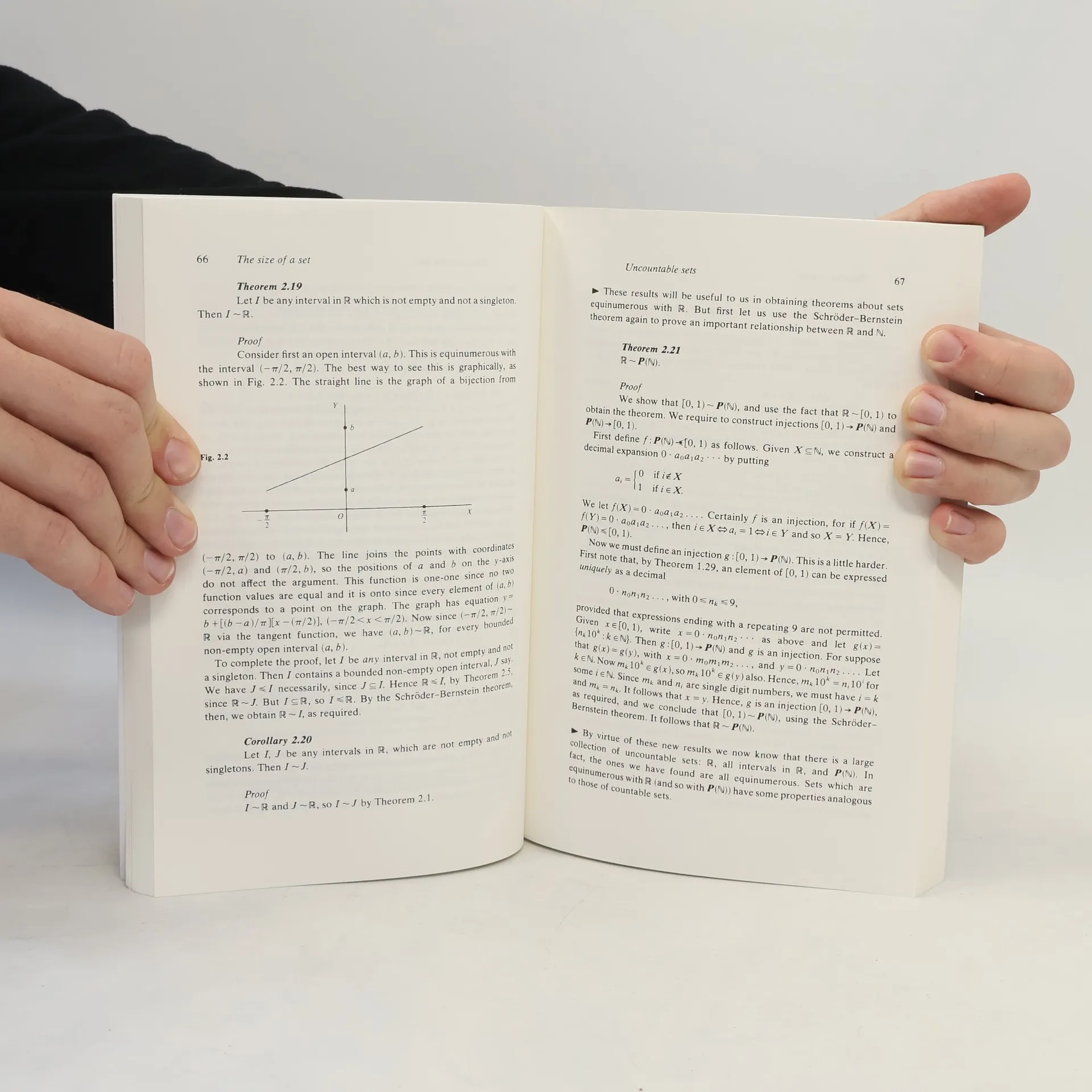
Following the success of Logic for Mathematicians, Dr Hamilton has written a text for mathematicians and students of mathematics that contains a description and discussion of the fundamental conceptual and formal apparatus upon which modern pure mathematics relies. The author's intention is to remove some of the mystery that surrounds the foundations of mathematics. He emphasises the intuitive basis of mathematics; the basic notions are numbers and sets and they are considered both informally and formally. The role of axiom systems is part of the discussion but their limitations are pointed out. Formal set theory has its place in the book but Dr Hamilton recognises that this is a part of mathematics and not the basis on which it rests. Throughout, the abstract ideas are liberally illustrated by examples so this account should be well-suited, both specifically as a course text and, more broadly, as background reading. The reader is presumed to have some mathematical experience but no knowledge of mathematical logic is required.
Compra de libros
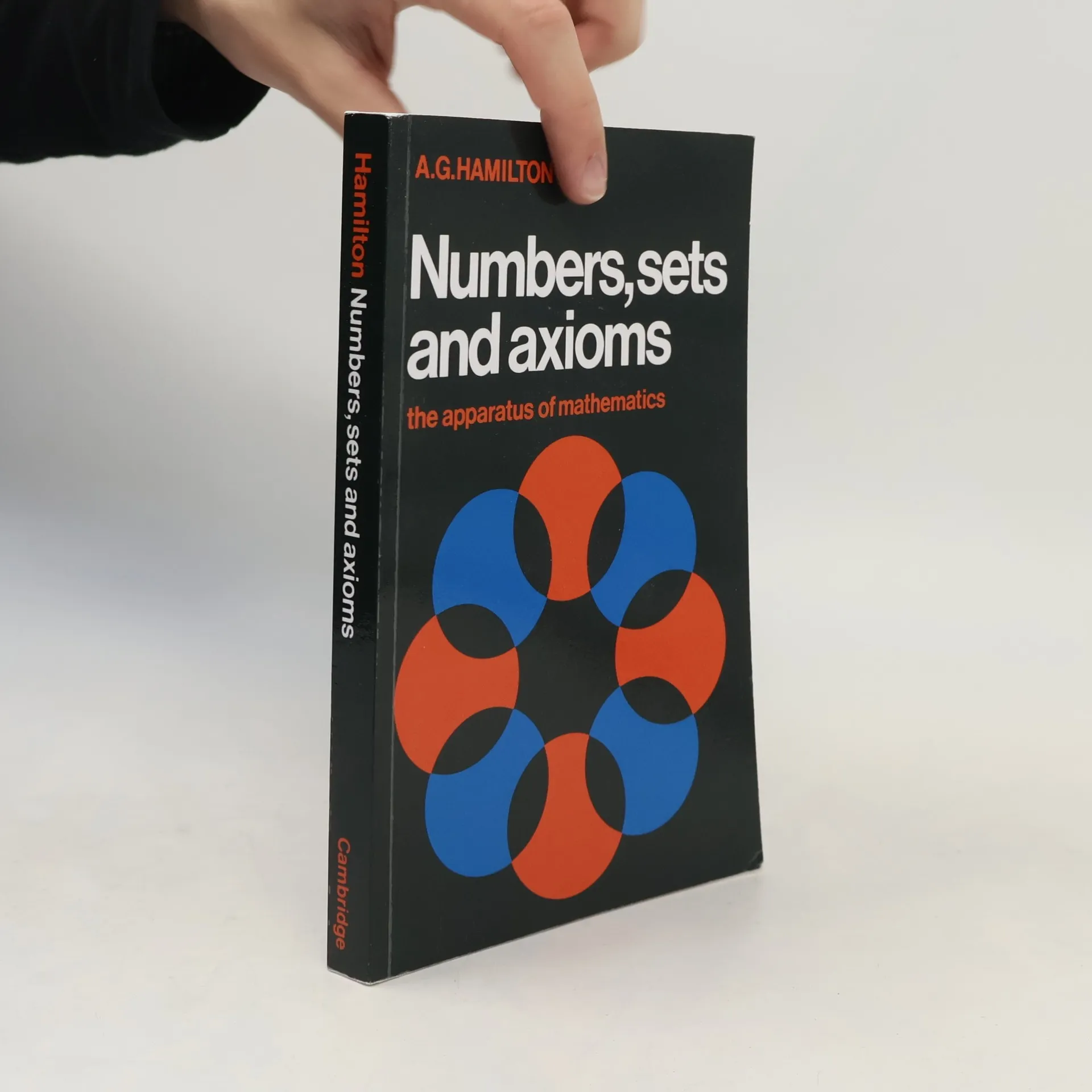
Numbers, Sets and Axioms, A. G. Hamilton
- Idioma

- Publicado en
- 1982
- Encuadernación
- (Tapa blanda)
Métodos de pago
Nadie lo ha calificado todavía.
- Título
- Numbers, Sets and Axioms
- Subtítulo
- The Apparatus of Mathematics
- Idioma
- Inglés
- Autores
- A. G. Hamilton
- Editorial
- Cambridge University Press
- Publicado en
- 1982
- Formato
- Tapa blanda
- Páginas
- 265
- ISBN10
- 0521287618
- ISBN13
- 9780521287616
- Serie
- Etiquetas
- Ciencia, Lógica, Aritmética, Teoría de números, Combinatoria, Teoría de Conjuntos
- Descripción
- Following the success of Logic for Mathematicians, Dr Hamilton has written a text for mathematicians and students of mathematics that contains a description and discussion of the fundamental conceptual and formal apparatus upon which modern pure mathematics relies. The author's intention is to remove some of the mystery that surrounds the foundations of mathematics. He emphasises the intuitive basis of mathematics; the basic notions are numbers and sets and they are considered both informally and formally. The role of axiom systems is part of the discussion but their limitations are pointed out. Formal set theory has its place in the book but Dr Hamilton recognises that this is a part of mathematics and not the basis on which it rests. Throughout, the abstract ideas are liberally illustrated by examples so this account should be well-suited, both specifically as a course text and, more broadly, as background reading. The reader is presumed to have some mathematical experience but no knowledge of mathematical logic is required.