




Parámetros
- 536 páginas
- 19 horas de lectura
Más información sobre el libro
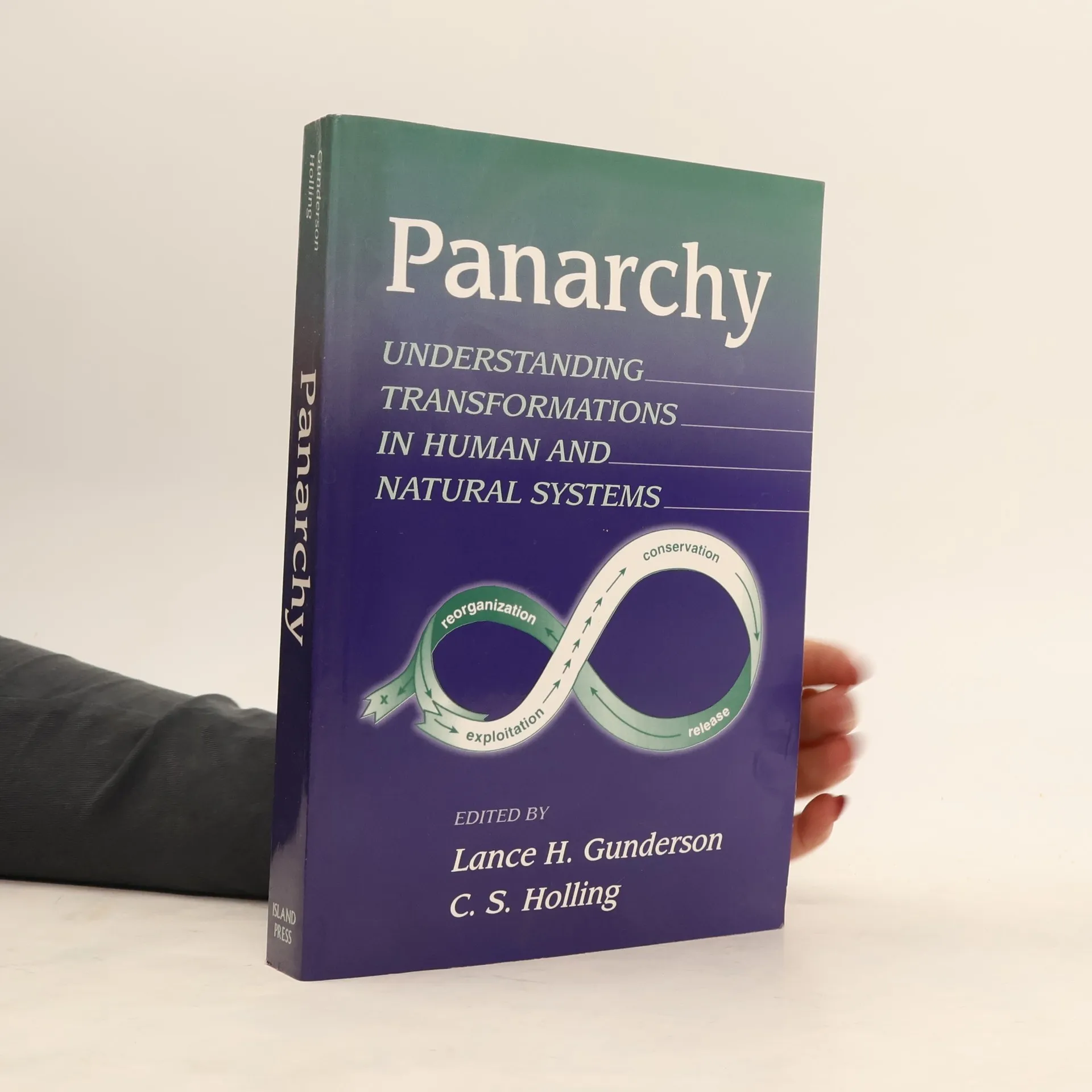
Creating institutions to address sustainability is a complex challenge involving ecological, economic, and social elements. Despite ongoing efforts, researchers struggle to integrate these disciplines effectively. The concept of panarchy provides a new framework for understanding this issue. Panarchy describes evolving hierarchical systems, where natural systems (like forests) and human systems (such as capitalism) are interconnected in adaptive cycles of growth, accumulation, restructuring, and renewal. These cycles occur at various scales, from a drop of water to the entire biosphere, and over timeframes ranging from days to geological epochs. By understanding these cycles, researchers can pinpoint opportunities for positive change, enhancing resilience and sustainability. This volume gathers insights from leading thinkers, including Fikret Berkes, Buz Brock, and others, to explore panarchy's application to human, natural, and combined systems. Contributors emphasize adaptive management approaches that embrace uncertainty and promote innovation while fostering resilience. This work represents a significant advancement in integrating disciplinary knowledge for managing human-natural systems across diverse scales, providing a foundational resource for students, researchers, and professionals in ecology, conservation, ecological economics, environmental policy, and related fields.
Compra de libros
Panarchy, Lance H. Gunderson, C. S. Holling
- Idioma

- Publicado en
- 2002
- Encuadernación
- (Tapa blanda)
Métodos de pago
Nadie lo ha calificado todavía.
- Título
- Panarchy
- Subtítulo
- Understanding Transformations in Human and Natural Systems
- Idioma
- Inglés
- Autores
- Lance H. Gunderson, C. S. Holling
- Editorial
- Island Press
- Publicado en
- 2002
- Formato
- Tapa blanda
- Páginas
- 536
- ISBN10
- 1559638575
- ISBN13
- 9781559638579
- Serie
- Categorías
- Etiquetas
- Comercio, Naturaleza, Temática filosófica, Ciencia, Tecnología, Temática ecológica, Teorías Políticas, Sostenibilidad, Desarrollo, Ciencias ambientales, Ecología social
- Descripción
- Creating institutions to address sustainability is a complex challenge involving ecological, economic, and social elements. Despite ongoing efforts, researchers struggle to integrate these disciplines effectively. The concept of panarchy provides a new framework for understanding this issue. Panarchy describes evolving hierarchical systems, where natural systems (like forests) and human systems (such as capitalism) are interconnected in adaptive cycles of growth, accumulation, restructuring, and renewal. These cycles occur at various scales, from a drop of water to the entire biosphere, and over timeframes ranging from days to geological epochs. By understanding these cycles, researchers can pinpoint opportunities for positive change, enhancing resilience and sustainability. This volume gathers insights from leading thinkers, including Fikret Berkes, Buz Brock, and others, to explore panarchy's application to human, natural, and combined systems. Contributors emphasize adaptive management approaches that embrace uncertainty and promote innovation while fostering resilience. This work represents a significant advancement in integrating disciplinary knowledge for managing human-natural systems across diverse scales, providing a foundational resource for students, researchers, and professionals in ecology, conservation, ecological economics, environmental policy, and related fields.