



Más información sobre el libro
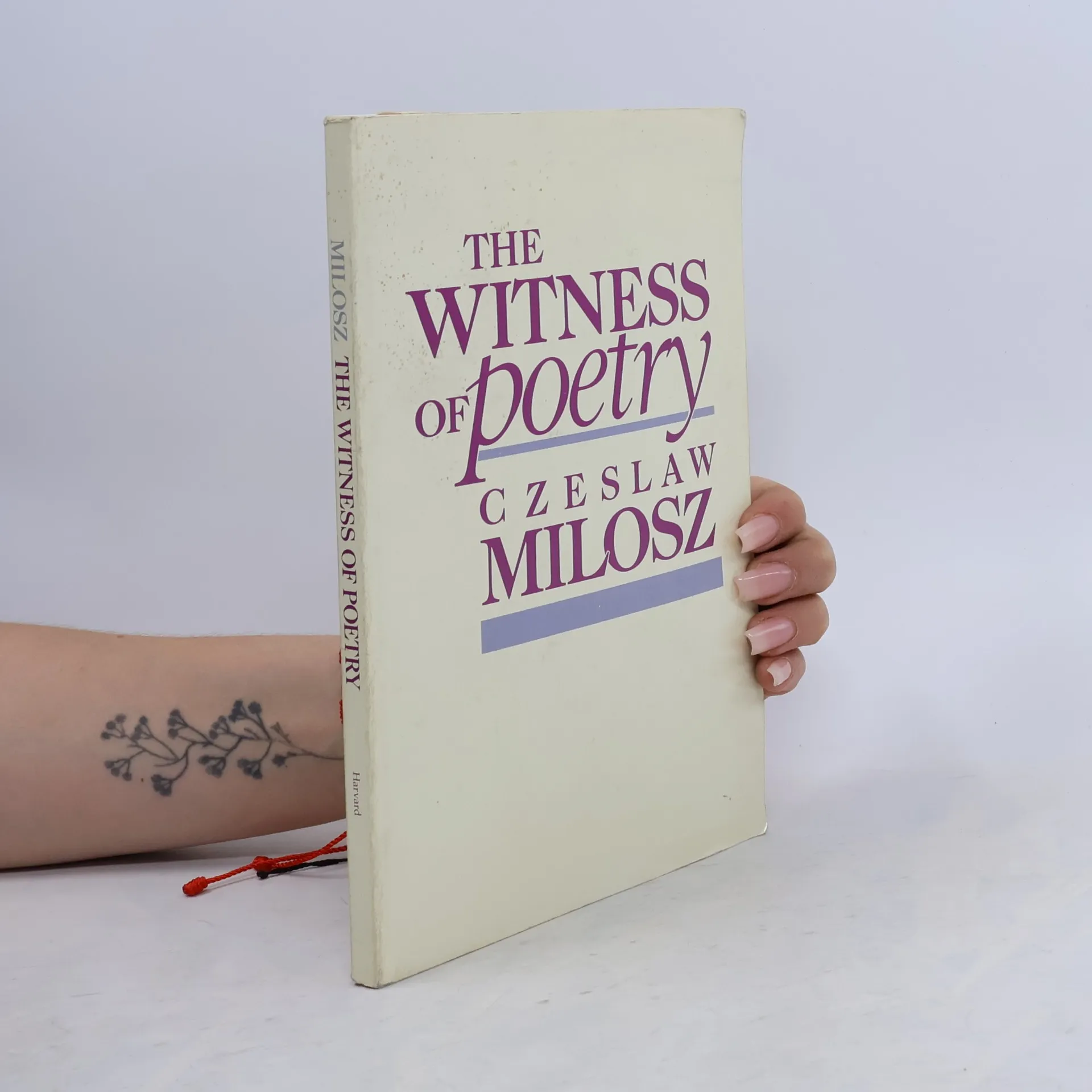
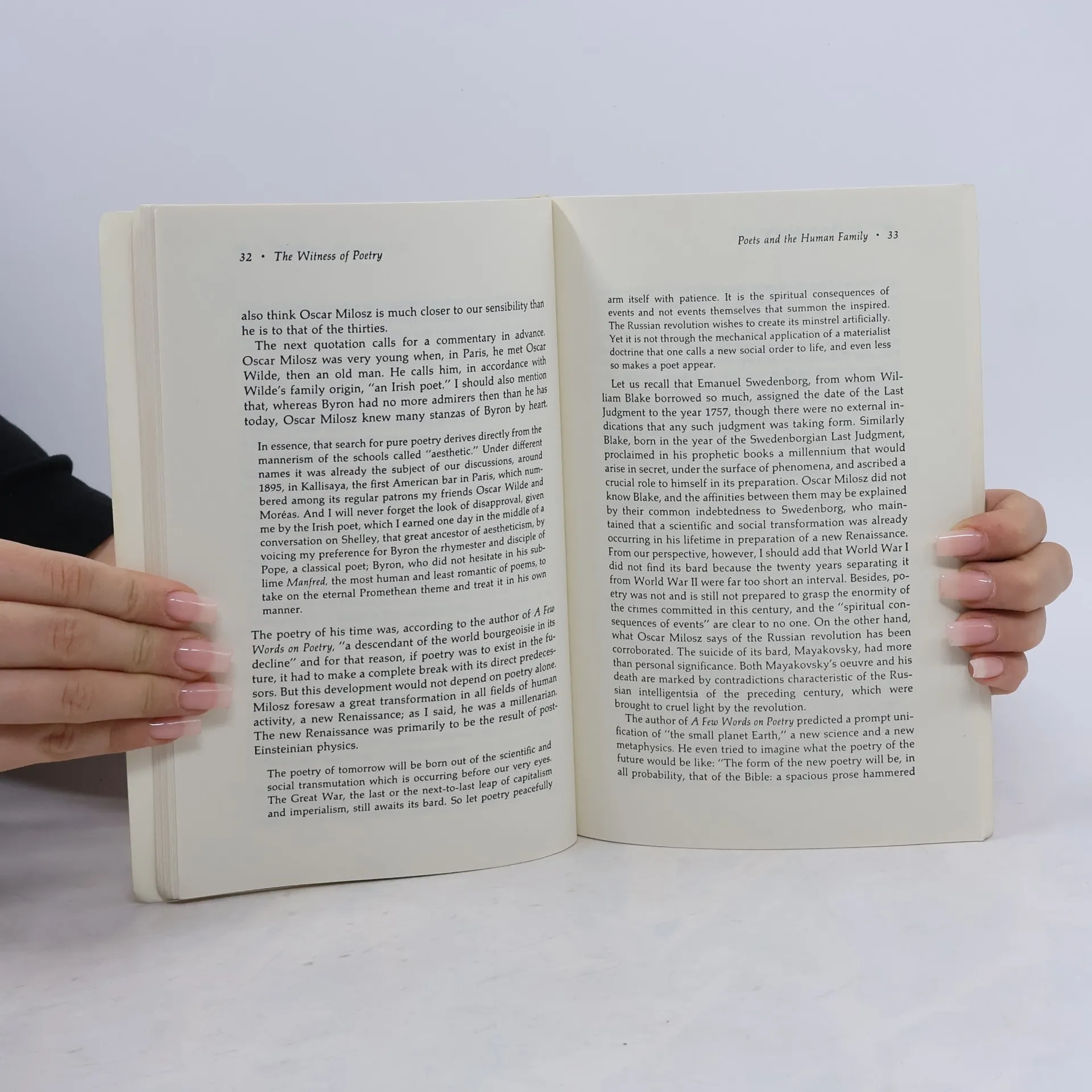
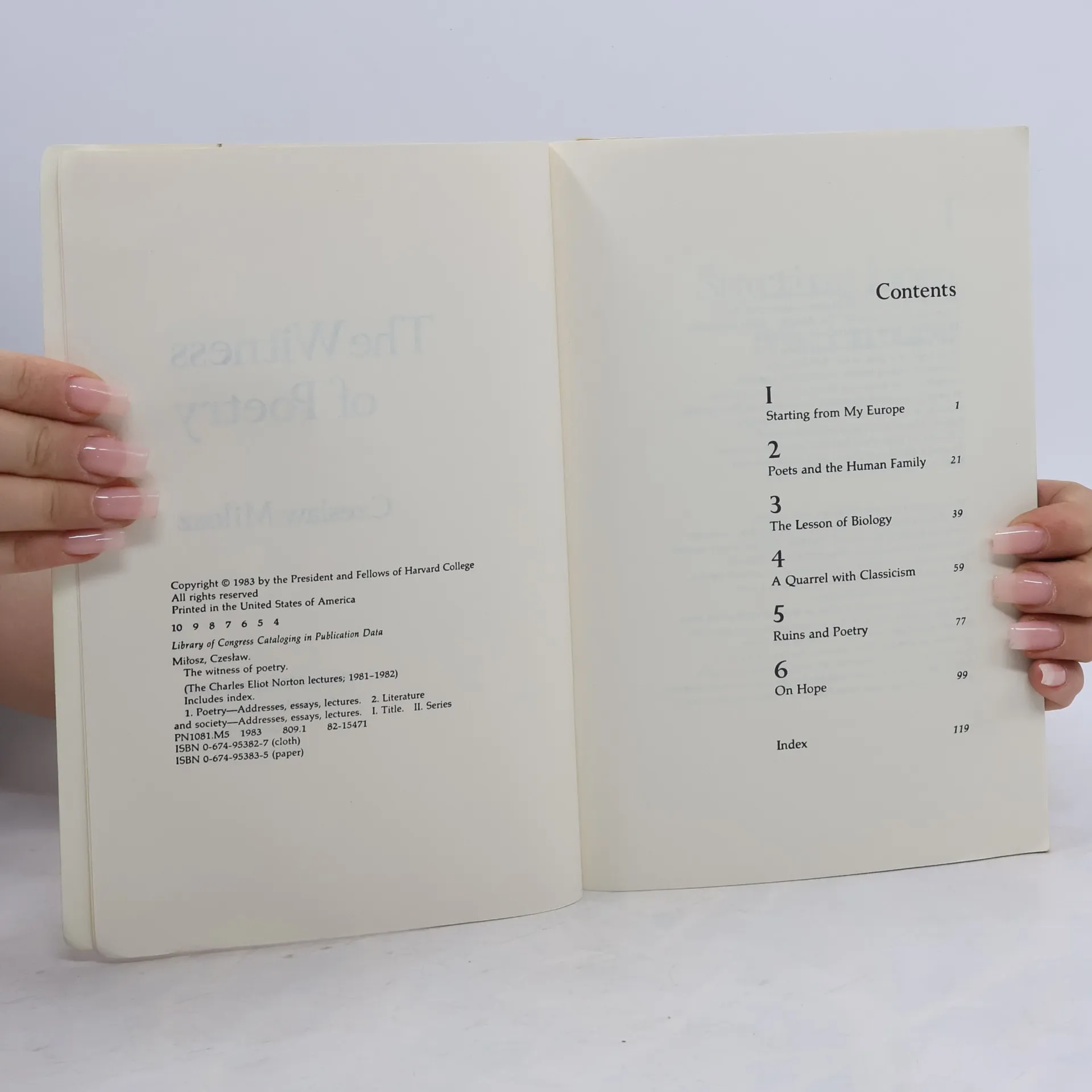
Czeslaw Milosz, winner of the 1980 Nobel Prize for Literature, reflects upon poetry’s testimony to the events of our tumultuous time. From the special perspectives of “my corner of Europe,” a classical and Catholic education, a serious encounter with Marxism, and a life marked by journeys and exiles, Milosz has developed a sensibility at once warm and detached, flooded with specific memory yet never hermetic or provincial.Milosz addresses many of the major problems of contemporary poetry, beginning with the pessimism and negativism prompted by reductionist interpretations of man’s animal origins. He examines the tendency of poets since Mallarmé to isolate themselves from society, and stresses the need for the poet to make himself part of the great human family. One chapter is devoted to the tension between classicism and realism; Milosz believes poetry should be “a passionate pursuit of the real.” In “Ruins and Poetry” he looks at poems constructed from the wreckage of a civilization, specifically that of Poland after the horrors of World War II. Finally, he expresses optimism for the world, based on a hoped-for better understanding of the lessons of modern science, on the emerging recognition of humanity’s oneness, and on mankind’s growing awareness of its own history.
Compra de libros
The Charles Eliot Norton Lectures: The Witness of Poetry, Czeslaw Milosz
- Idioma

- Publicado en
- 1983
- Encuadernación
- (Tapa blanda),
- Estado del libro
- Dañado
- Precio
- 3,26 €
Métodos de pago
Nadie lo ha calificado todavía.
- Título
- The Charles Eliot Norton Lectures: The Witness of Poetry
- Idioma
- Inglés
- Autores
- Czeslaw Milosz
- Editorial
- Harvard University Press
- Publicado en
- 1983
- Formato
- Tapa blanda
- Páginas
- 128
- ISBN10
- 0674953835
- ISBN13
- 9780674953833
- Serie
- Etiquetas
- Literatura polaca, Crítica
- Descripción
- Czeslaw Milosz, winner of the 1980 Nobel Prize for Literature, reflects upon poetry’s testimony to the events of our tumultuous time. From the special perspectives of “my corner of Europe,” a classical and Catholic education, a serious encounter with Marxism, and a life marked by journeys and exiles, Milosz has developed a sensibility at once warm and detached, flooded with specific memory yet never hermetic or provincial.Milosz addresses many of the major problems of contemporary poetry, beginning with the pessimism and negativism prompted by reductionist interpretations of man’s animal origins. He examines the tendency of poets since Mallarmé to isolate themselves from society, and stresses the need for the poet to make himself part of the great human family. One chapter is devoted to the tension between classicism and realism; Milosz believes poetry should be “a passionate pursuit of the real.” In “Ruins and Poetry” he looks at poems constructed from the wreckage of a civilization, specifically that of Poland after the horrors of World War II. Finally, he expresses optimism for the world, based on a hoped-for better understanding of the lessons of modern science, on the emerging recognition of humanity’s oneness, and on mankind’s growing awareness of its own history.