


Más información sobre el libro
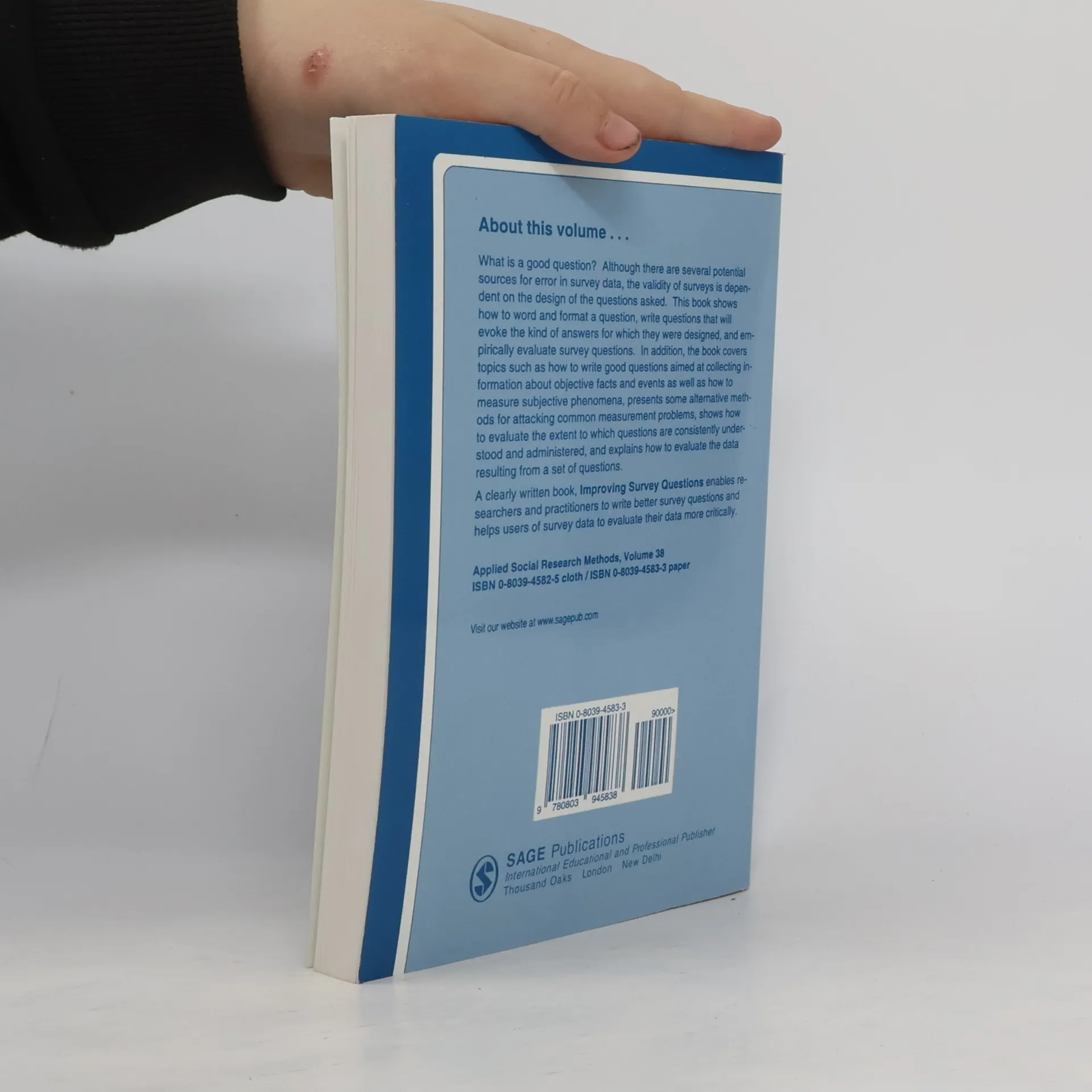
What is a good question? Although there are several potential sources for error in survey data, the validity of surveys is dependent upon the design of the question asked. This invaluable book shows how to word and format questions that will evoke the kind of answers for which they are designed and how to evaluate empirically survey questions. In addition, the book covers how to write good questions aimed at collecting information about objective facts and events, measuring subjective phenomena, some alternative methods for attacking common measurement problems, how to evaluate the extent to which questions are consistently understood and administered, and how to evaluate the data resulting from a set of questions.
Compra de libros
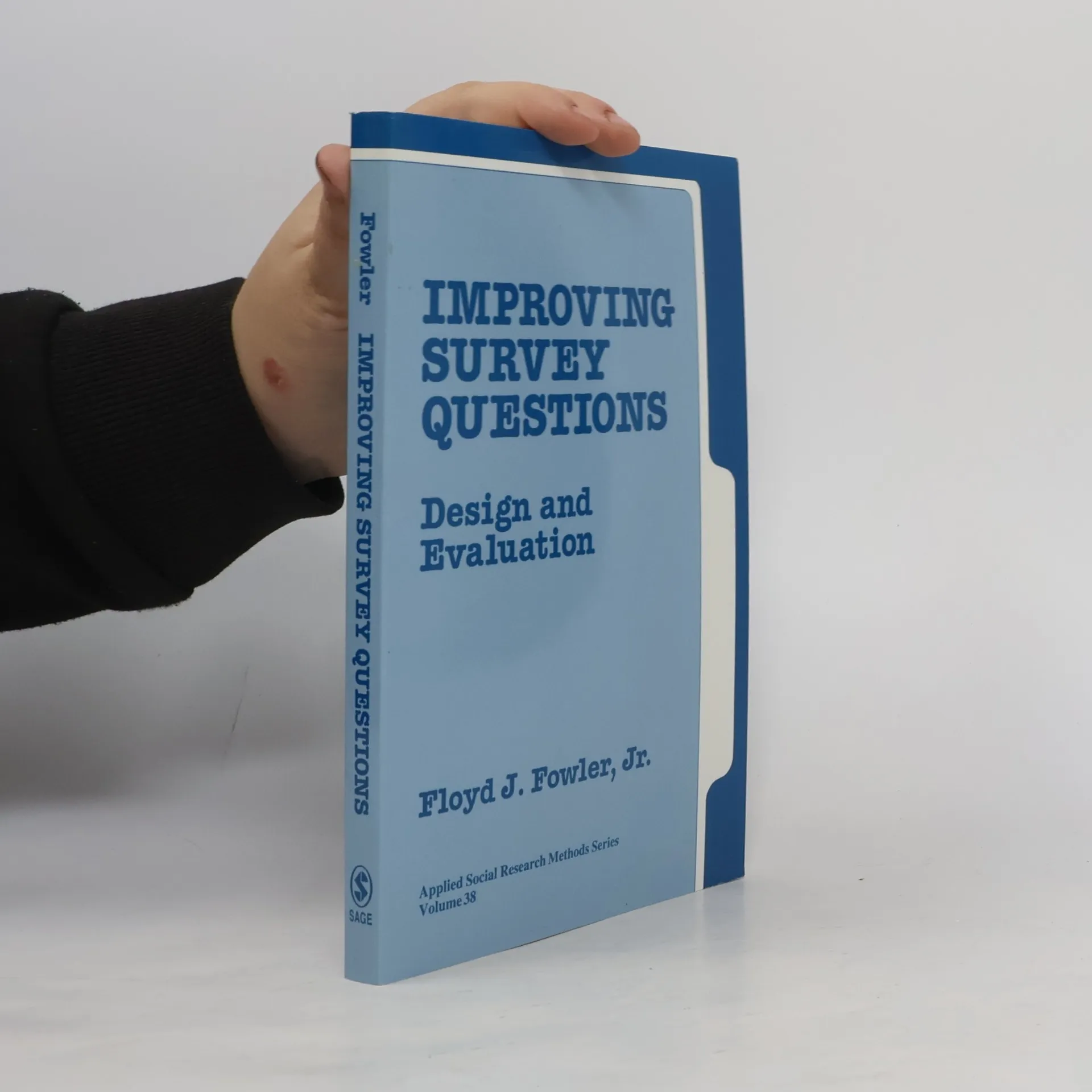
Applied Social Research Methods Series - 38: Improving Survey Questions, Floyd J. Fowler Jr.
- Idioma

- Publicado en
- 1995
- Encuadernación
- (Tapa blanda),
- Estado del libro
- Muy Bueno
- Precio
- 5,29 €
Métodos de pago
Nadie lo ha calificado todavía.
- Título
- Applied Social Research Methods Series - 38: Improving Survey Questions
- Subtítulo
- Design and Evaluation
- Idioma
- Inglés
- Autores
- Floyd J. Fowler Jr.
- Editorial
- SAGE Publications, Inc
- Publicado en
- 1995
- Formato
- Tapa blanda
- Páginas
- 200
- ISBN10
- 0803945833
- ISBN13
- 9780803945838
- Serie
- Categorías
- Descripción
- What is a good question? Although there are several potential sources for error in survey data, the validity of surveys is dependent upon the design of the question asked. This invaluable book shows how to word and format questions that will evoke the kind of answers for which they are designed and how to evaluate empirically survey questions. In addition, the book covers how to write good questions aimed at collecting information about objective facts and events, measuring subjective phenomena, some alternative methods for attacking common measurement problems, how to evaluate the extent to which questions are consistently understood and administered, and how to evaluate the data resulting from a set of questions.