

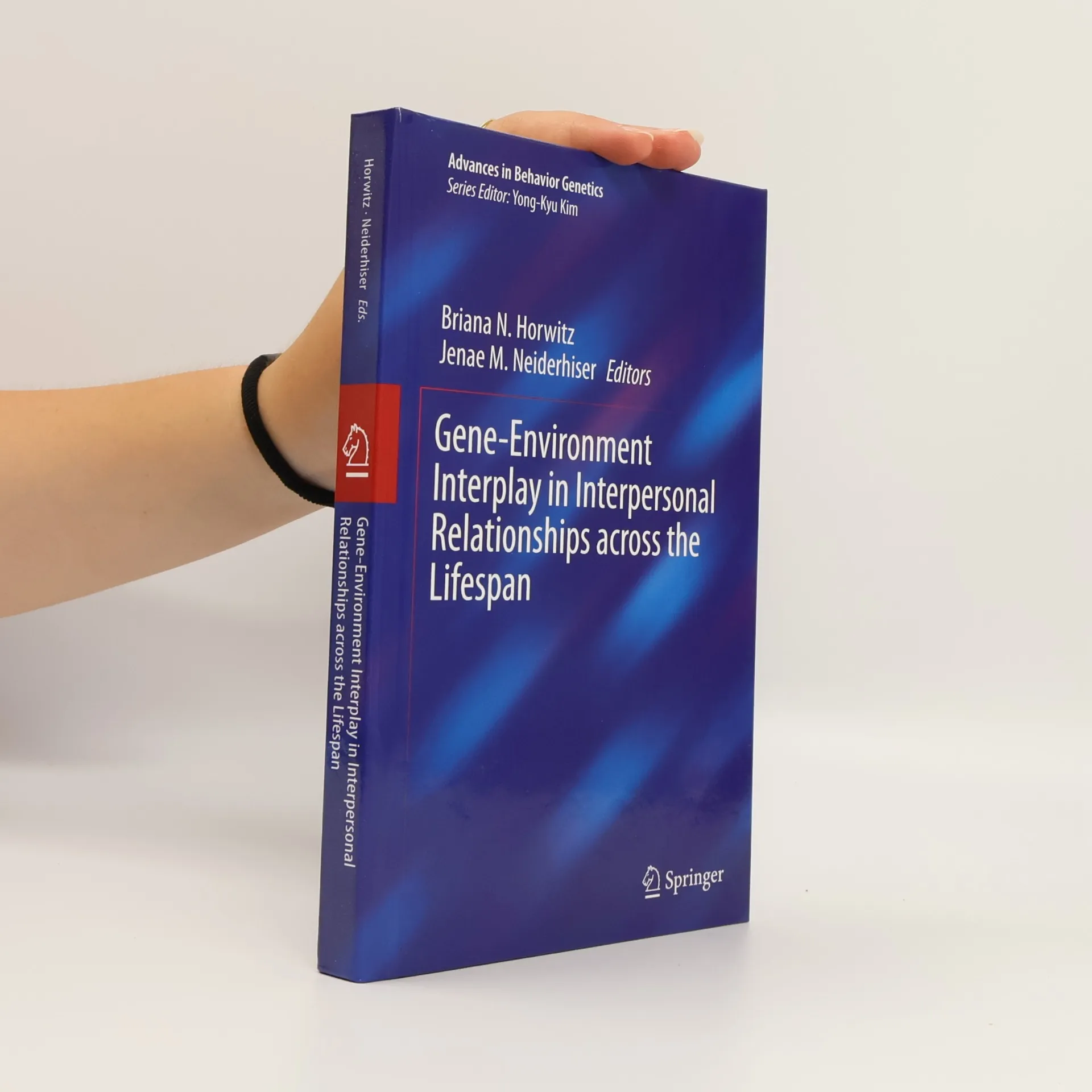
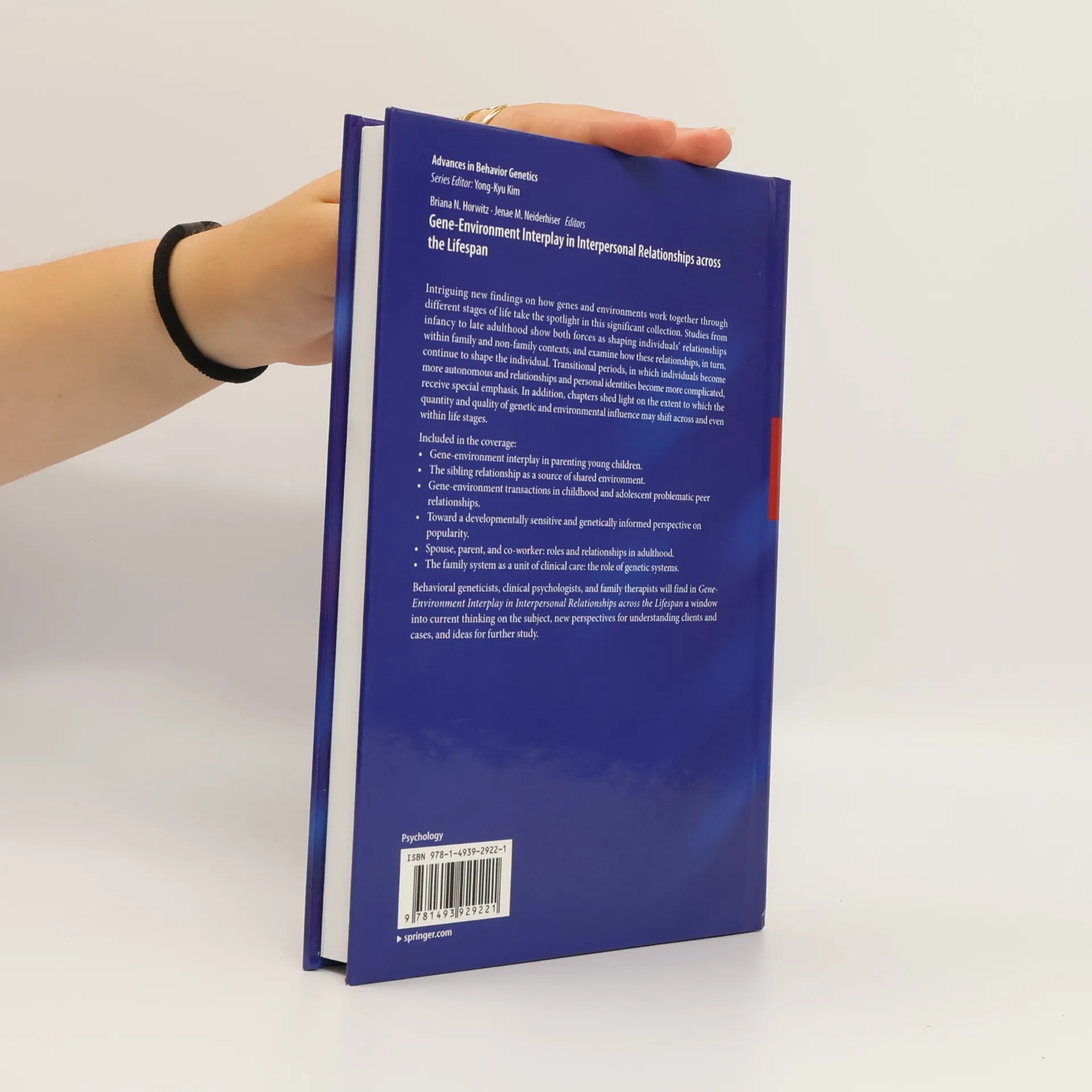

Más información sobre el libro
Intriguing new findings on how genes and environments work together through different stages of life take the spotlight in this significant collection. Studies from infancy to late adulthood show both forces as shaping individuals' relationships within family and non-family contexts, and examine how these relationships, in turn, continue to shape the individual. Transitional periods, in which individuals become more autonomous and relationships and personal identities become more complicated, receive special emphasis. In addition, chapters shed light on the extent to which the quantity and quality of genetic and environmental influence may shift across and even within life stages. Included in the Behavioral geneticists, clinical psychologists, and family therapists will find in Gene-Environment Interplay in Interpersonal Relationships across the Lifespan a window into current thinking on the subject, new perspectives for understanding clients and cases, and ideas for further study.
Compra de libros
Gene-Environment Interplay in Interpersonal Relationships across the Lifespan, Briana N. Horwitz, Jenae M. Neiderhiser
- Idioma

- Publicado en
- 2015
- Encuadernación
- (Tapa dura),
- Estado del libro
- Muy Bueno
- Precio
- 6,89 €
Métodos de pago
Nadie lo ha calificado todavía.
- Título
- Gene-Environment Interplay in Interpersonal Relationships across the Lifespan
- Idioma
- Inglés
- Editorial
- Springer New York
- Publicado en
- 2015
- Formato
- Tapa dura
- Páginas
- 292
- ISBN10
- 1493929224
- ISBN13
- 9781493929221
- Serie
- Categorías
- Etiquetas
- Temas psicológicos, Ciencia, EE.UU., Relaciones, Medicina, Psiquiatría, Neurociencia, Genética
- Descripción
- Intriguing new findings on how genes and environments work together through different stages of life take the spotlight in this significant collection. Studies from infancy to late adulthood show both forces as shaping individuals' relationships within family and non-family contexts, and examine how these relationships, in turn, continue to shape the individual. Transitional periods, in which individuals become more autonomous and relationships and personal identities become more complicated, receive special emphasis. In addition, chapters shed light on the extent to which the quantity and quality of genetic and environmental influence may shift across and even within life stages. Included in the Behavioral geneticists, clinical psychologists, and family therapists will find in Gene-Environment Interplay in Interpersonal Relationships across the Lifespan a window into current thinking on the subject, new perspectives for understanding clients and cases, and ideas for further study.