

Más información sobre el libro
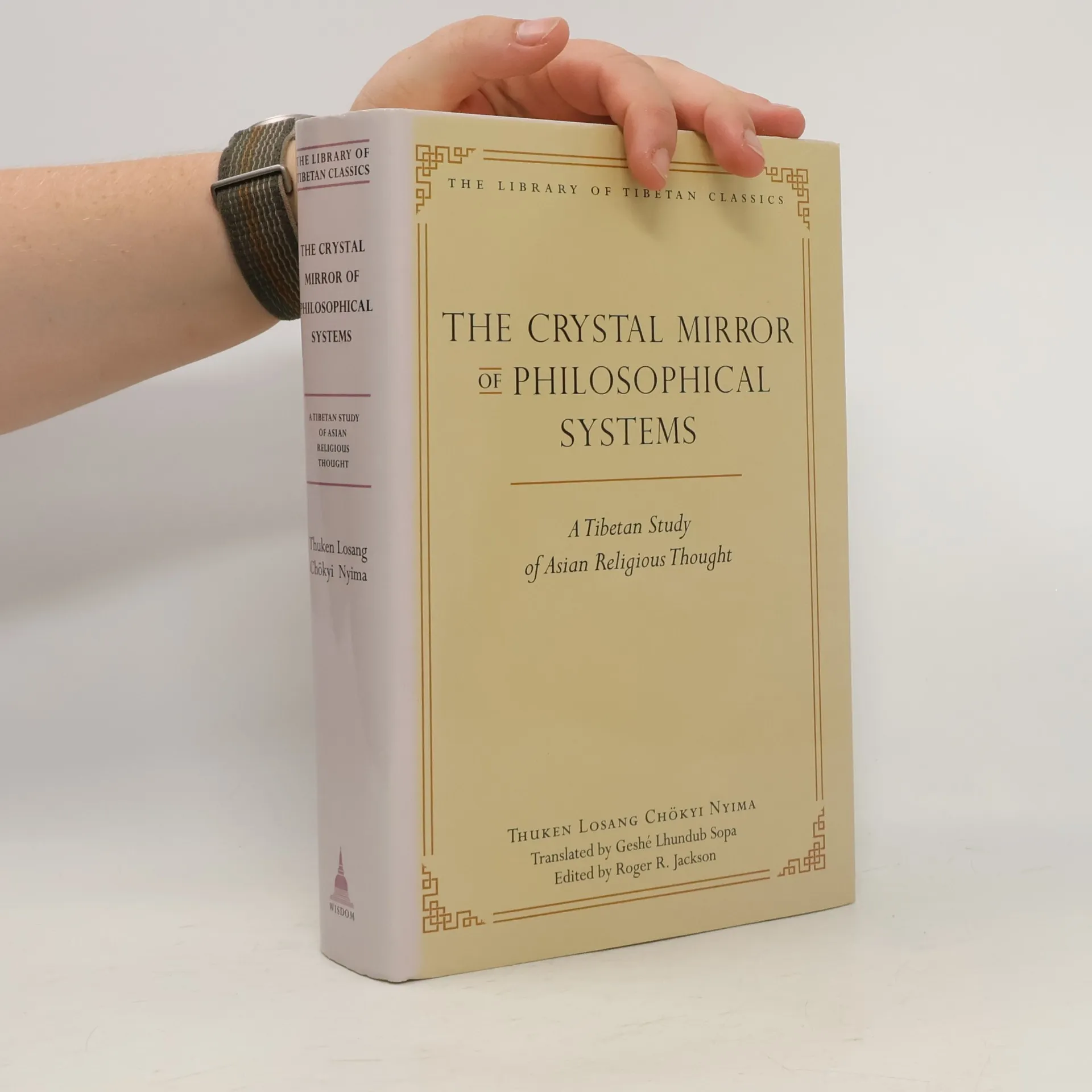
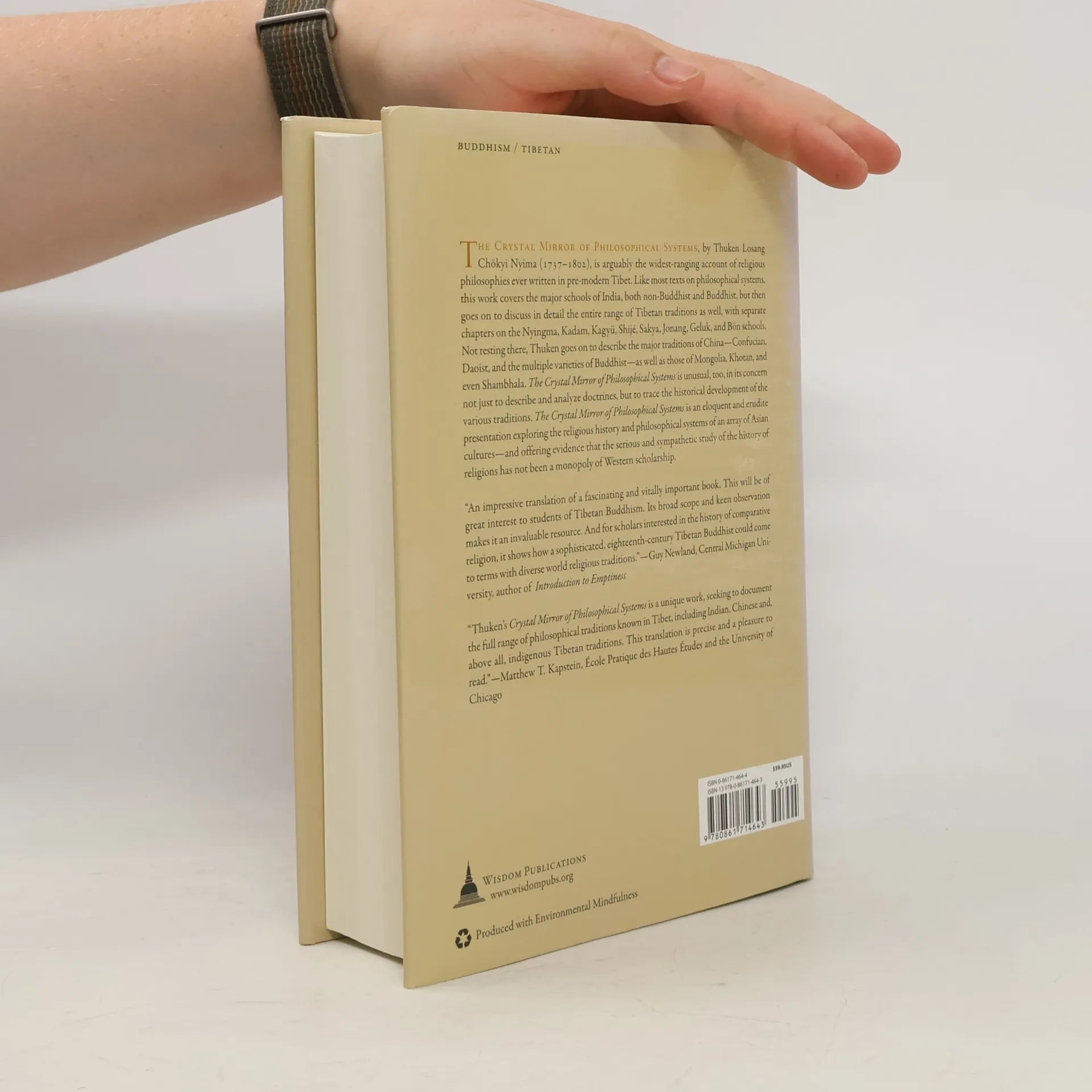
The Crystal Mirror of Philosophical Systems , by Thuken Losang Chokyi Nyima (1737-1802), is arguably the widest-ranging account of religious philosophies ever written in pre-modern Tibet. Like most Tibetan texts on philosophical systems, this work covers the major schools of India, both Buddhist and non-Buddhist, but then goes on to discuss in detail the entire range of Tibetan traditions as well, with separate chapters on the Nyingma, Kadam, Kagyu, Shije, Sakya, Jonang, Geluk, and Bon schools. Not resting there, Thuken goes on to describe the major traditions of China--Confucian, Daoist, and the multiple varieties of Buddhist--as well as those of Mongolia, Khotan, and even Shambhala. The Crystal Mirror of Philosophical Systems is unusual, too, in its concern not just to describe and analyze doctrines, but to trace the historical development of the various traditions. The Crystal Mirror of Philosophical Systems is an eloquent and erudite presentation exploring the religious history and philosophical systems of an array of Asian Cultures--and offering evidence that the serious and sympathetic study of the history of religions has not been a monopoly of Western scholarship.
Compra de libros
The Library of Tibetan Classics - 25: The Crystal Mirror of Philosophical Systems, Thuken Losang Chökyi Nyima, Geshe Lhundub Sopa, Roger R. Jackson
- Idioma

- Publicado en
- 2009
- Encuadernación
- (Tapa dura)
Métodos de pago
Nadie lo ha calificado todavía.
- Título
- The Library of Tibetan Classics - 25: The Crystal Mirror of Philosophical Systems
- Subtítulo
- A Tibetan Study of Asian Religious Thought
- Idioma
- Inglés
- Editorial
- Wisdom Publications,U.S.
- Publicado en
- 2009
- Formato
- Tapa dura
- Páginas
- 696
- ISBN10
- 0861714644
- ISBN13
- 9780861714643
- Serie
- Categorías
- Etiquetas
- Descripción
- The Crystal Mirror of Philosophical Systems , by Thuken Losang Chokyi Nyima (1737-1802), is arguably the widest-ranging account of religious philosophies ever written in pre-modern Tibet. Like most Tibetan texts on philosophical systems, this work covers the major schools of India, both Buddhist and non-Buddhist, but then goes on to discuss in detail the entire range of Tibetan traditions as well, with separate chapters on the Nyingma, Kadam, Kagyu, Shije, Sakya, Jonang, Geluk, and Bon schools. Not resting there, Thuken goes on to describe the major traditions of China--Confucian, Daoist, and the multiple varieties of Buddhist--as well as those of Mongolia, Khotan, and even Shambhala. The Crystal Mirror of Philosophical Systems is unusual, too, in its concern not just to describe and analyze doctrines, but to trace the historical development of the various traditions. The Crystal Mirror of Philosophical Systems is an eloquent and erudite presentation exploring the religious history and philosophical systems of an array of Asian Cultures--and offering evidence that the serious and sympathetic study of the history of religions has not been a monopoly of Western scholarship.