



Parámetros
- 424 páginas
- 15 horas de lectura
Más información sobre el libro
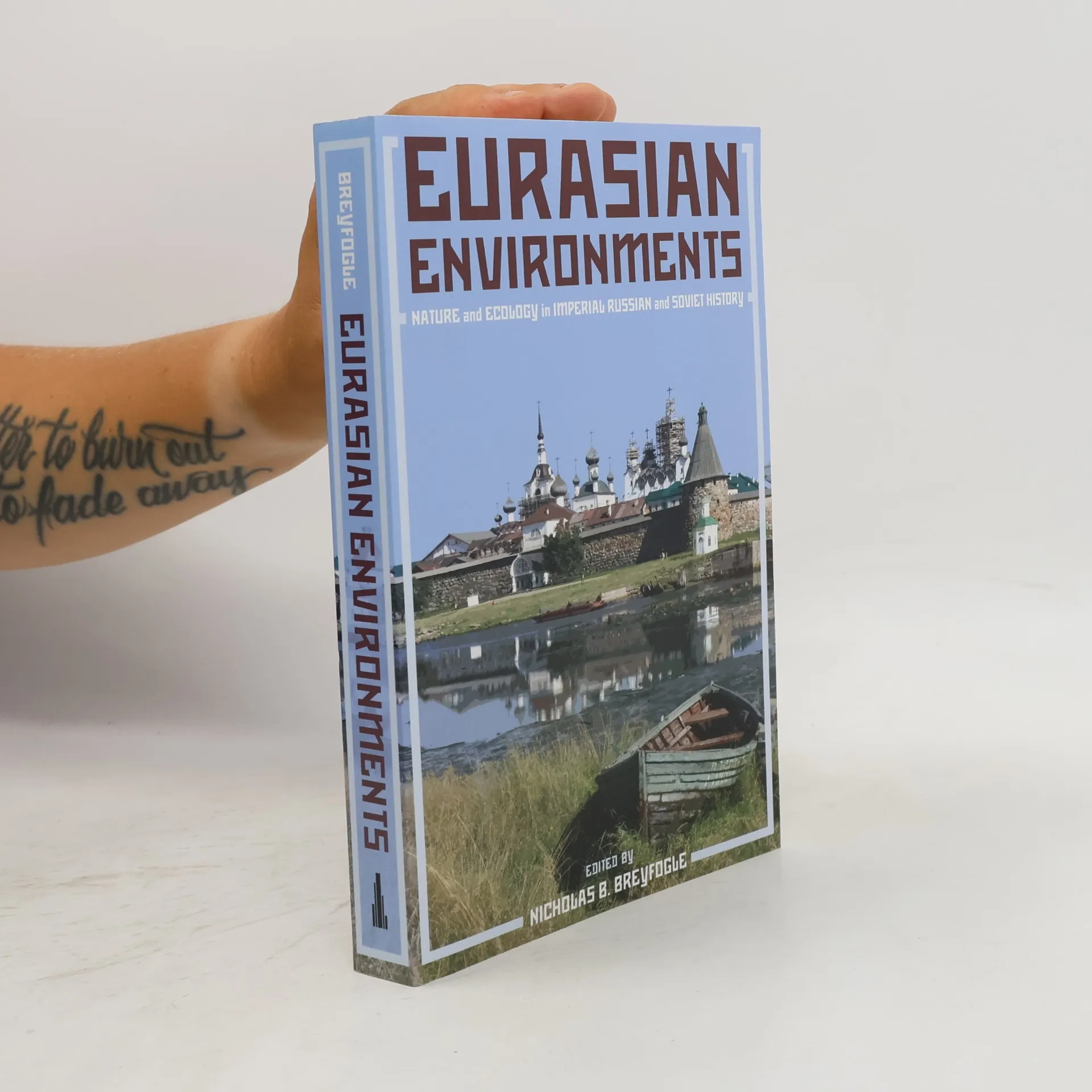
Through a series of essays, Eurasian Environments prompts us to rethink our understanding of tsarist and Soviet history by placing the human experience within the larger environmental context of flora, fauna, geology, and climate. This book is a broad look at the environmental history of Eurasia, specifically examining steppe environments, hydraulic engineering, soil and forestry, water pollution, fishing, and the interaction of the environment and disease vectors. Throughout, the authors place the history of Imperial Russia and the Soviet Union in a trans-chronological, comparative context, seamlessly linking the local and the global. The chapters are rooted in the ecological and geological specificities of place and community while unveiling the broad patterns of human-nature relationships across the planet. Eurasian Environments brings together an international group scholars working on issues of tsarist/Soviet environmental history in an effort to showcase the wave of fascinating and field-changing research currently being written.
Compra de libros
Eurasian Environments, Nicholas B. Breyfogle
- Idioma

- Publicado en
- 2018
- Encuadernación
- (Tapa blanda),
- Estado del libro
- Bueno
- Precio
- 25,99 €
Métodos de pago
Nadie lo ha calificado todavía.
- Título
- Eurasian Environments
- Subtítulo
- Nature and Ecology in Imperial Russian and Soviet History
- Idioma
- Inglés
- Autores
- Nicholas B. Breyfogle
- Editorial
- University of Pittsburgh Press
- Publicado en
- 2018
- Formato
- Tapa blanda
- Páginas
- 424
- ISBN10
- 0822965631
- ISBN13
- 9780822965633
- Serie
- Etiquetas
- Descripción
- Through a series of essays, Eurasian Environments prompts us to rethink our understanding of tsarist and Soviet history by placing the human experience within the larger environmental context of flora, fauna, geology, and climate. This book is a broad look at the environmental history of Eurasia, specifically examining steppe environments, hydraulic engineering, soil and forestry, water pollution, fishing, and the interaction of the environment and disease vectors. Throughout, the authors place the history of Imperial Russia and the Soviet Union in a trans-chronological, comparative context, seamlessly linking the local and the global. The chapters are rooted in the ecological and geological specificities of place and community while unveiling the broad patterns of human-nature relationships across the planet. Eurasian Environments brings together an international group scholars working on issues of tsarist/Soviet environmental history in an effort to showcase the wave of fascinating and field-changing research currently being written.