



Más información sobre el libro
G. Leypoldt introduces a collection examining literary and cultural icons. C. Spahr explores Anne Bradstreet’s literary genealogy as a “fashioned saint.” B. Engler discusses American literary nationalism and the cultural politics of de-nationalizing Shakespeare. A. Alliston and P. Schirmeister analyze James Fenimore Cooper’s reception both domestically and internationally. R. S. Levine highlights Frederick Douglass’s iconic “Little Book.” K. Benesch reflects on Thoreau’s iconicity in relation to place. D. Schulz portrays Ralph Waldo Emerson as a national saint. W. Grünzweig examines Walt Whitman’s Americanness within global culture. M. A. Snyder-Körber addresses sexual and textual iconicity from Henry James to queer interpretations. I. Klaiber investigates the creation of Black icons through Pauline E. Hopkins’ work. G. Hurm discusses James Dean’s rebellion as a post-war American icon. N. Gernalzick analyzes Madonna Ciccone’s performance art. S. Duda focuses on Andy Warhol’s sequences as an icon. P. Löffler critiques the iconization of Miles Davis within ethnic contexts. R. Bauer looks at Squanto’s role in American mythology. J. Stievermann examines Terrence Malick’s Pocahontas iconography. K. Fitz discusses George Washington and Israel Putnam as iconic yeoman farmers. F. Obenland explores Napoleon’s political iconicity in early America. O. Scheiding analyzes Washington Irving’s portrayal of the Indian chief as a Federalist ic
Compra de libros
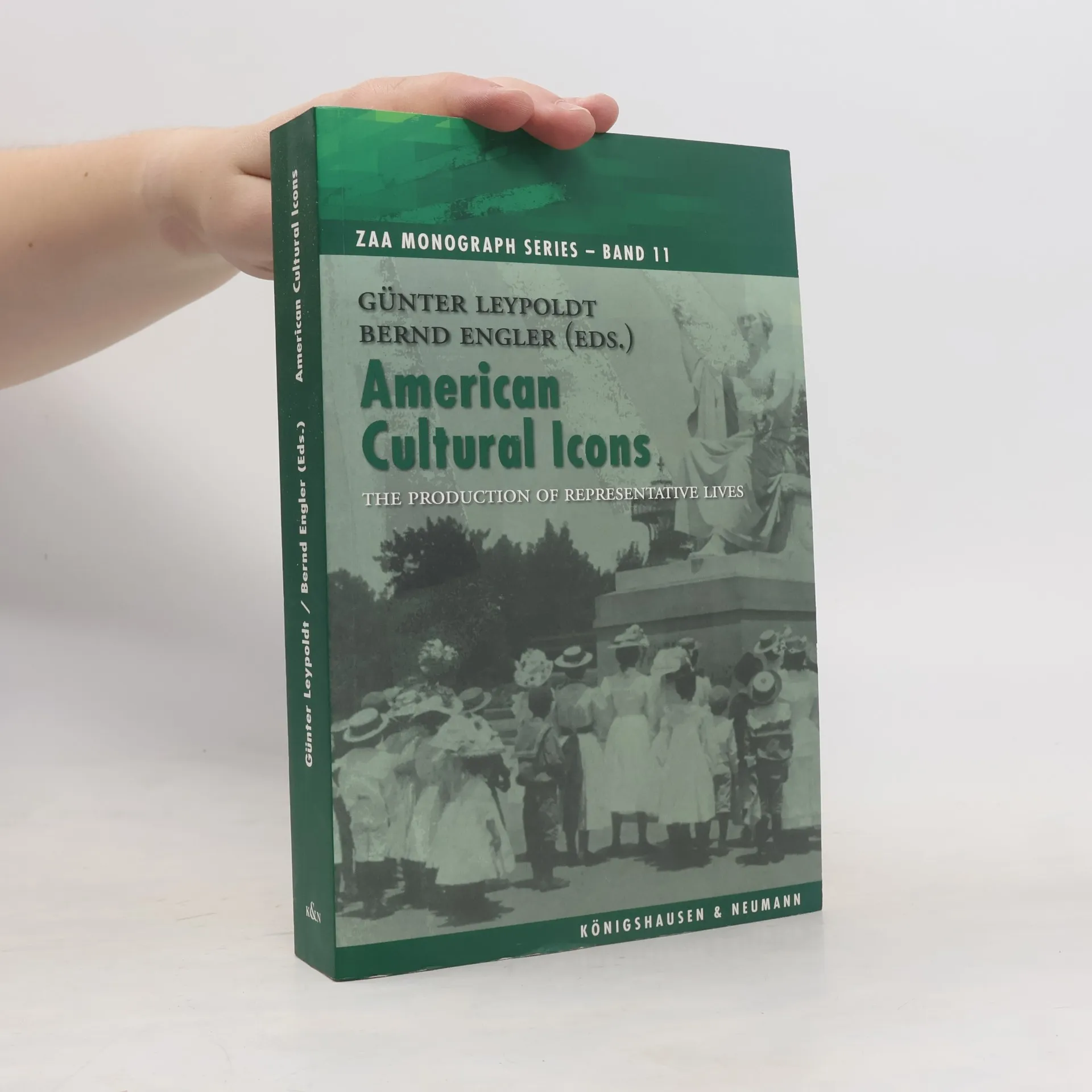
ZAA Monograph Series - 11: American Cultural Icons, Günter Leypoldt, Bernd Engler
- Idioma

- Publicado en
- 2010
- Encuadernación
- (Tapa blanda),
- Estado del libro
- Bueno
- Precio
- 11,99 €
Métodos de pago
Nadie lo ha calificado todavía.
- Título
- ZAA Monograph Series - 11: American Cultural Icons
- Idioma
- Inglés
- Autores
- Günter Leypoldt, Bernd Engler
- Editorial
- Königshausen & Neumann
- Publicado en
- 2010
- Formato
- Tapa blanda
- Páginas
- 501
- ISBN10
- 3826044215
- ISBN13
- 9783826044212
- Serie
- Categorías
- Etiquetas
- Otros libros de texto
- Descripción
- G. Leypoldt introduces a collection examining literary and cultural icons. C. Spahr explores Anne Bradstreet’s literary genealogy as a “fashioned saint.” B. Engler discusses American literary nationalism and the cultural politics of de-nationalizing Shakespeare. A. Alliston and P. Schirmeister analyze James Fenimore Cooper’s reception both domestically and internationally. R. S. Levine highlights Frederick Douglass’s iconic “Little Book.” K. Benesch reflects on Thoreau’s iconicity in relation to place. D. Schulz portrays Ralph Waldo Emerson as a national saint. W. Grünzweig examines Walt Whitman’s Americanness within global culture. M. A. Snyder-Körber addresses sexual and textual iconicity from Henry James to queer interpretations. I. Klaiber investigates the creation of Black icons through Pauline E. Hopkins’ work. G. Hurm discusses James Dean’s rebellion as a post-war American icon. N. Gernalzick analyzes Madonna Ciccone’s performance art. S. Duda focuses on Andy Warhol’s sequences as an icon. P. Löffler critiques the iconization of Miles Davis within ethnic contexts. R. Bauer looks at Squanto’s role in American mythology. J. Stievermann examines Terrence Malick’s Pocahontas iconography. K. Fitz discusses George Washington and Israel Putnam as iconic yeoman farmers. F. Obenland explores Napoleon’s political iconicity in early America. O. Scheiding analyzes Washington Irving’s portrayal of the Indian chief as a Federalist ic