



Parámetros
- 217 páginas
- 8 horas de lectura
Más información sobre el libro
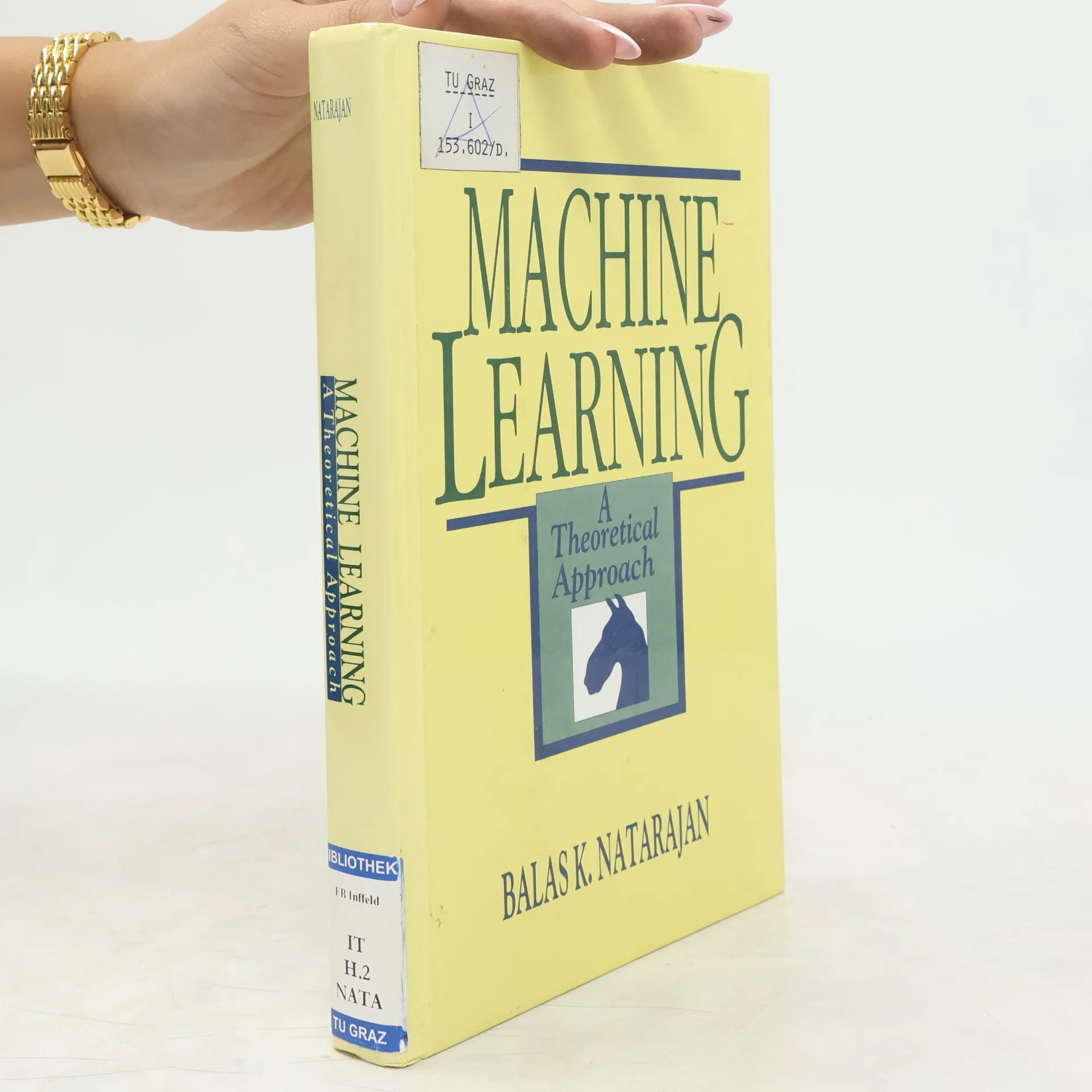
This is the first comprehensive introduction to computational learning theory. The author's uniform presentation of fundamental results and their applications offers AI researchers a theoretical perspective on the problems they study. The book presents tools for the analysis of probabilistic models of learning, tools that crisply classify what is and is not efficiently learnable. After a general introduction to Valiant's PAC paradigm and the important notion of the Vapnik-Chervonenkis dimension, the author explores specific topics such as finite automata and neural networks. The presentation is intended for a broad audience--the author's ability to motivate and pace discussions for beginners has been praised by reviewers. Each chapter contains numerous examples and exercises, as well as a useful summary of important results. An excellent introduction to the area, suitable either for a first course, or as a component in general machine learning and advanced AI courses. Also an important reference for AI researchers.
Compra de libros
Machine Learning, Balas Kausik Natarajan
- Idioma

- Publicado en
- 1991
- Encuadernación
- (Tapa dura)
Métodos de pago
Nadie lo ha calificado todavía.
- Título
- Machine Learning
- Subtítulo
- A Theoretical Approach
- Idioma
- Inglés
- Autores
- Balas Kausik Natarajan
- Editorial
- Morgan Kaufmann
- Publicado en
- 1991
- Formato
- Tapa dura
- Páginas
- 217
- ISBN10
- 1558601481
- ISBN13
- 9781558601482
- Serie
- Descripción
- This is the first comprehensive introduction to computational learning theory. The author's uniform presentation of fundamental results and their applications offers AI researchers a theoretical perspective on the problems they study. The book presents tools for the analysis of probabilistic models of learning, tools that crisply classify what is and is not efficiently learnable. After a general introduction to Valiant's PAC paradigm and the important notion of the Vapnik-Chervonenkis dimension, the author explores specific topics such as finite automata and neural networks. The presentation is intended for a broad audience--the author's ability to motivate and pace discussions for beginners has been praised by reviewers. Each chapter contains numerous examples and exercises, as well as a useful summary of important results. An excellent introduction to the area, suitable either for a first course, or as a component in general machine learning and advanced AI courses. Also an important reference for AI researchers.