

Más información sobre el libro
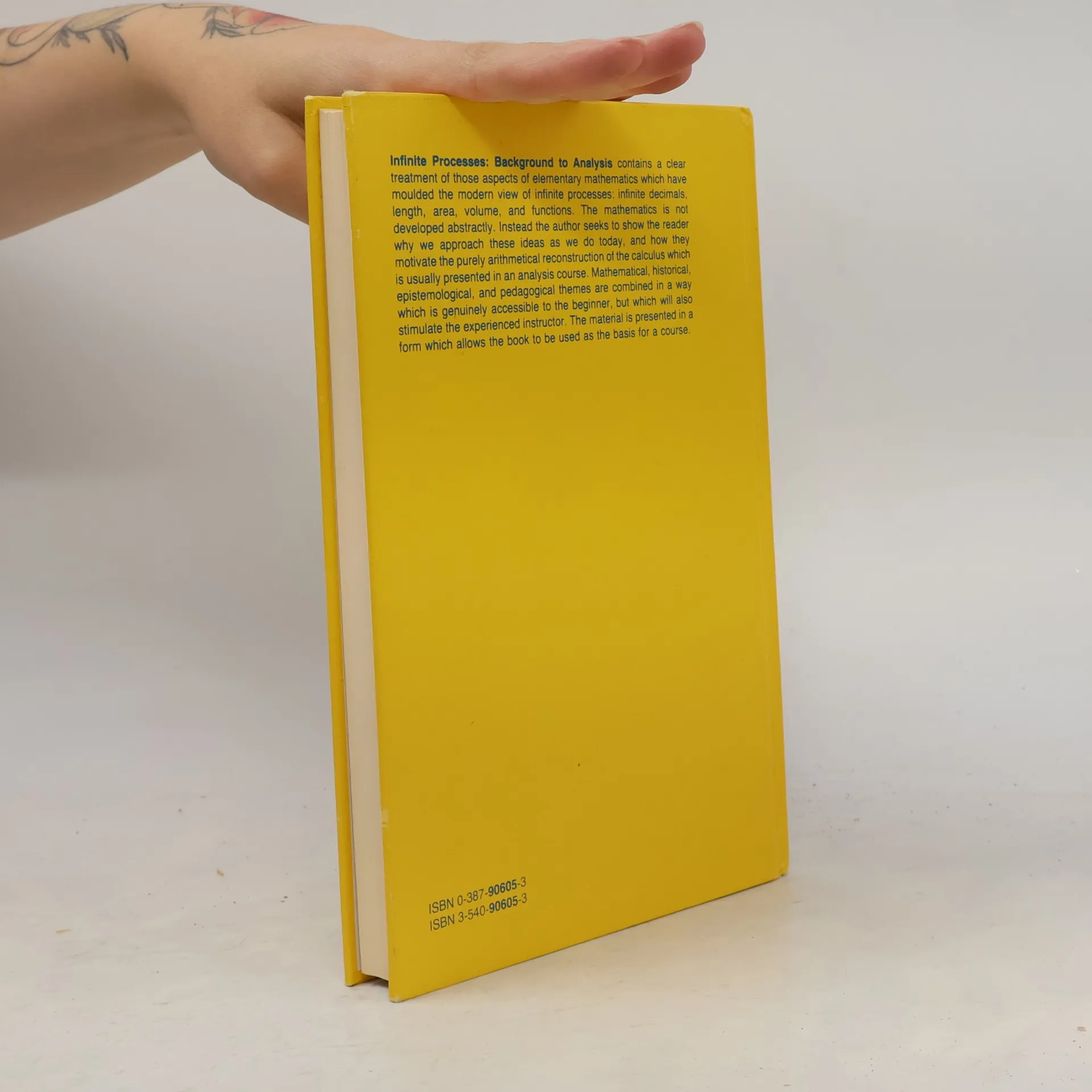
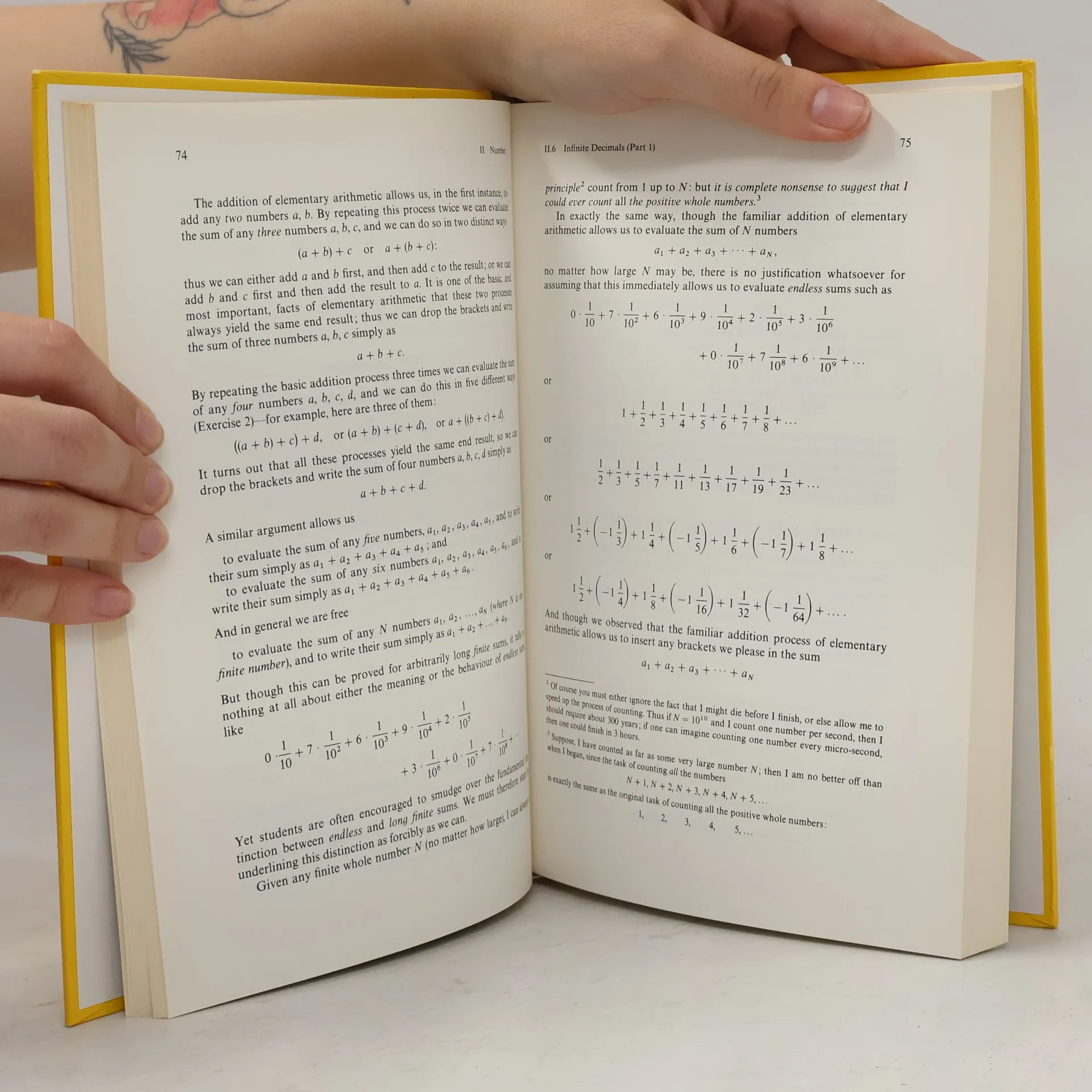
What shall we say of this metamorphosis in passing from finite to infinite? Galileo, Two New Sciences As its title suggests, this book was conceived as a prologue to the study of "Why the calculus works"--otherwise known as analysis. It is in fact a critical reexamination of the infinite processes arising in elementary math Part II reexamines rational and irrational numbers, and their representation as infinite decimals; Part III examines our ideas of length, area, and volume; and Part IV examines the evolution of the modern function-concept. The book may be used in a number of firstly, as a genuine pro logue to analysis; secondly, as a supplementary text within an analysis course, providing a source of elementary motivation, background and ex amples; thirdly, as a kind of postscript to elementary analysis-as in a senior undergraduate course designed to reinforce students' understanding of elementary analysis and of elementary mathematics by considering the mathematical and historical connections between them. But the contents of the book should be of interest to a much wider audience than this including teachers, teachers in training, students in their last year at school, and others interested in mathematics."
Compra de libros
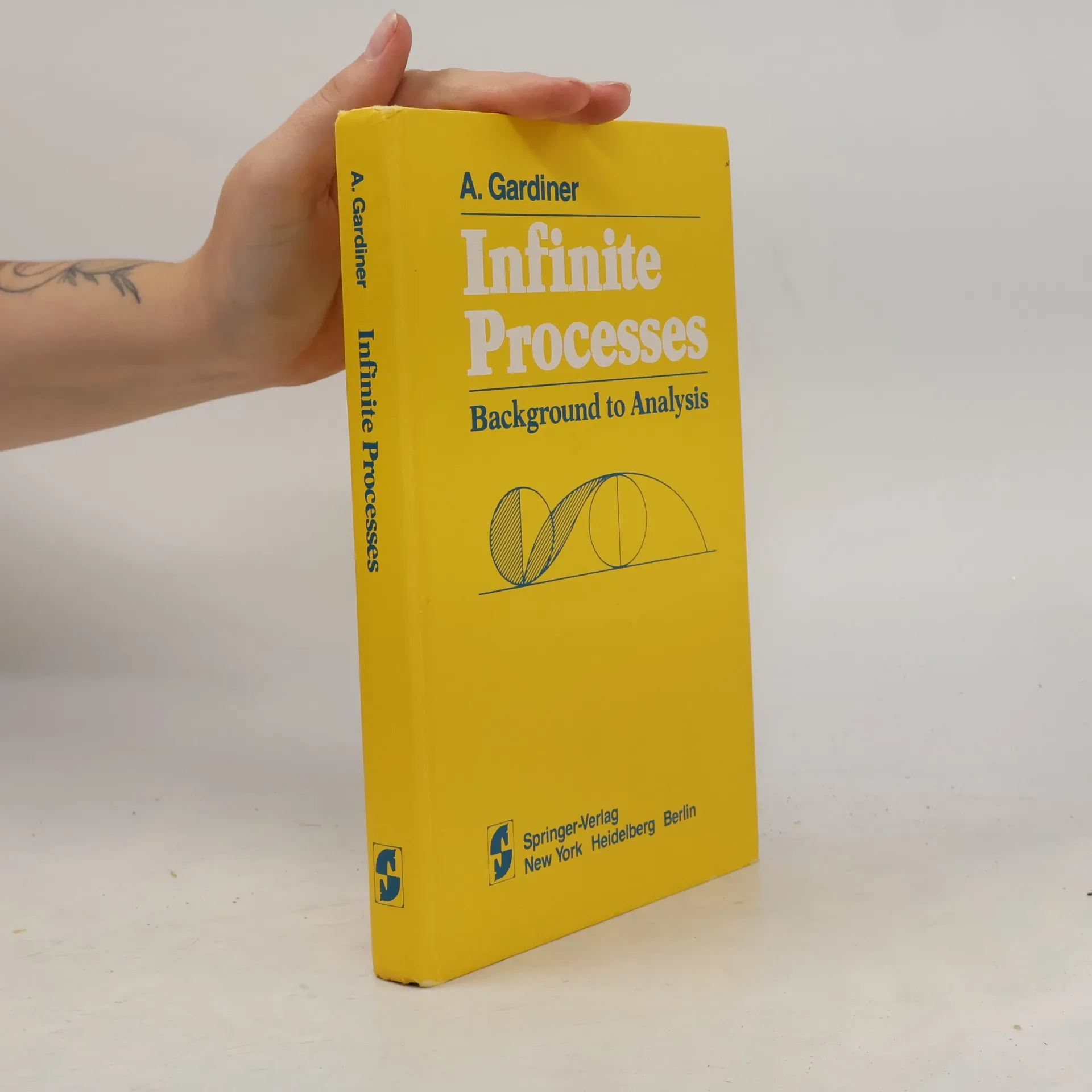
Infinite Processes, Anthony Gardiner
- Idioma

- Publicado en
- 1982
- Encuadernación
- (Tapa dura)
Métodos de pago
Nadie lo ha calificado todavía.
- Título
- Infinite Processes
- Subtítulo
- Background to Analysis
- Idioma
- Inglés
- Autores
- Anthony Gardiner
- Editorial
- Springer
- Publicado en
- 1982
- Formato
- Tapa dura
- Páginas
- 306
- ISBN10
- 0387906053
- ISBN13
- 9780387906058
- Serie
- Etiquetas
- EE.UU., Análisis Matemático
- Descripción
- What shall we say of this metamorphosis in passing from finite to infinite? Galileo, Two New Sciences As its title suggests, this book was conceived as a prologue to the study of "Why the calculus works"--otherwise known as analysis. It is in fact a critical reexamination of the infinite processes arising in elementary math Part II reexamines rational and irrational numbers, and their representation as infinite decimals; Part III examines our ideas of length, area, and volume; and Part IV examines the evolution of the modern function-concept. The book may be used in a number of firstly, as a genuine pro logue to analysis; secondly, as a supplementary text within an analysis course, providing a source of elementary motivation, background and ex amples; thirdly, as a kind of postscript to elementary analysis-as in a senior undergraduate course designed to reinforce students' understanding of elementary analysis and of elementary mathematics by considering the mathematical and historical connections between them. But the contents of the book should be of interest to a much wider audience than this including teachers, teachers in training, students in their last year at school, and others interested in mathematics."