

Parámetros
- 192 páginas
- 7 horas de lectura
Más información sobre el libro
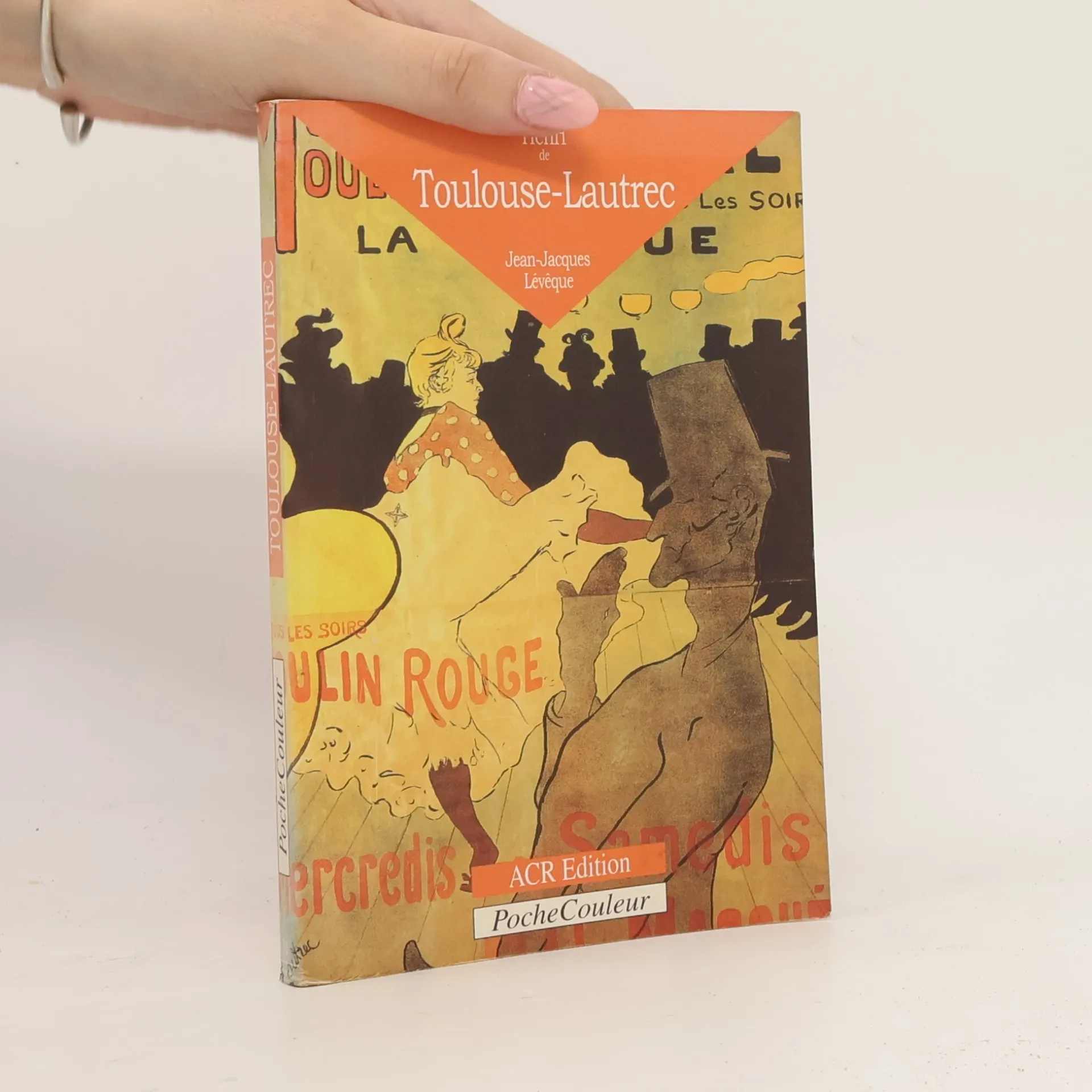
The well-known painter Henri de Toulouse-Lautrec is a symbol of a certain period in the history of Paris - the frivolous time of Montmartre, of pleasure palaces and the fin de siecle that he represents so well. Jane Avril, la Goulue, Aristide Bruant, Yvette Guilbert, and the Moulin Rouge entered history through his works. Yet this restrictive vision of Toulouse-Lautrec is only part of what this great painter left behind, and Jean-Jacques Leveque shows here that the artist was an essential actor in his time, and that, to better understand his work, one needs to examine his relations with the bourgeois society of the l9th century, his intellectual atavism and his infirmity. He also shows that this outstanding portraitist was a forerunner of Expressionism, through his bold, brutal style, and this existential conscience that would dominate 20th-century art, from Giacometti to Francis Bacon. Close to his models, yet merciless and devoid of flattery, he pushed his vision to the limit of caricature. In contrast to society portraits, very popular at the time, he presented subjects with so much detail that they were almost intolerable. Behind the world of glitter, music and pantomime that he depicted with vigor and grace, he examined the pessimistic conscience of the human condition. He was, to this fin de siecle, what Watteau and Fragonard were to the l8th a painter who, beyond appearances, revealed the deep soul of human nature.
Compra de libros
PocheCouleur - 31: Henri De Toulouse-Lautrec, Jean Jacques Lévéque
- Idioma

- Publicado en
- 2001
- Encuadernación
- (Tapa blanda),
- Estado del libro
- Muy Bueno
- Precio
- 6,89 €
Métodos de pago
Nadie lo ha calificado todavía.
- Título
- PocheCouleur - 31: Henri De Toulouse-Lautrec
- Idioma
- Francés
- Autores
- Jean Jacques Lévéque
- Editorial
- Art Creation Realisation
- Publicado en
- 2001
- Formato
- Tapa blanda
- Páginas
- 192
- ISBN10
- 2867701465
- ISBN13
- 9782867701467
- Serie
- Categorías
- Etiquetas
- Arte, Siglo XIX, Historia del arte, París, Monografía artística
- Descripción
- The well-known painter Henri de Toulouse-Lautrec is a symbol of a certain period in the history of Paris - the frivolous time of Montmartre, of pleasure palaces and the fin de siecle that he represents so well. Jane Avril, la Goulue, Aristide Bruant, Yvette Guilbert, and the Moulin Rouge entered history through his works. Yet this restrictive vision of Toulouse-Lautrec is only part of what this great painter left behind, and Jean-Jacques Leveque shows here that the artist was an essential actor in his time, and that, to better understand his work, one needs to examine his relations with the bourgeois society of the l9th century, his intellectual atavism and his infirmity. He also shows that this outstanding portraitist was a forerunner of Expressionism, through his bold, brutal style, and this existential conscience that would dominate 20th-century art, from Giacometti to Francis Bacon. Close to his models, yet merciless and devoid of flattery, he pushed his vision to the limit of caricature. In contrast to society portraits, very popular at the time, he presented subjects with so much detail that they were almost intolerable. Behind the world of glitter, music and pantomime that he depicted with vigor and grace, he examined the pessimistic conscience of the human condition. He was, to this fin de siecle, what Watteau and Fragonard were to the l8th a painter who, beyond appearances, revealed the deep soul of human nature.