

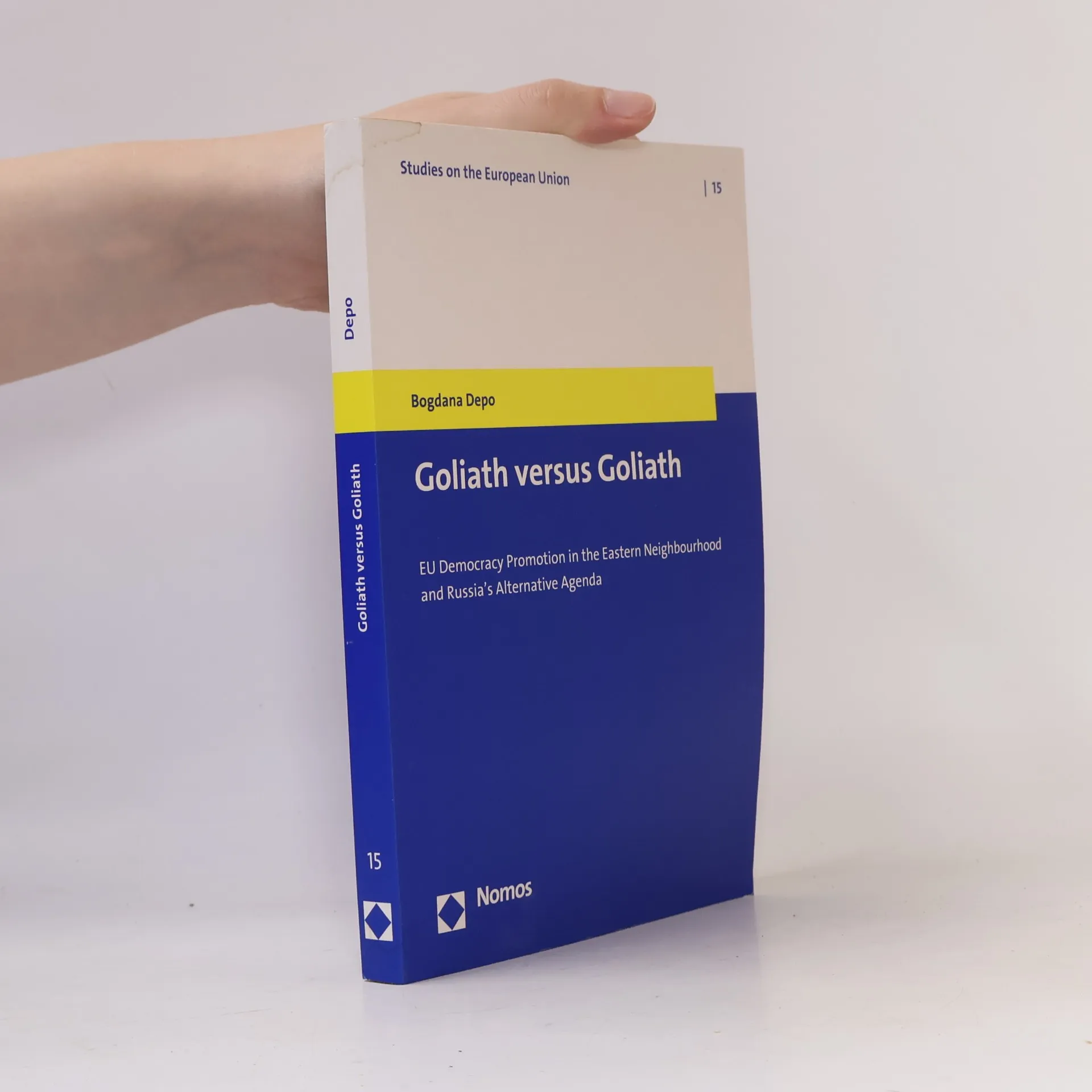
Goliath versus Goliath
EU Democracy Promotion in the Eastern Neighbourhood and Russia's Alternative Agenda
Autores
Más información sobre el libro
Proclamation of the ultimate victory of liberal democracy, which was popular in the 1990s, has clearly become inappropriate today, especially if one looks at the Eastern Partnership countries. This book aims at explaining the reasons for the EU’s lack of success with its democratization agenda in the Eastern Partnership countries by looking into Russia’s competitive agenda. ‘Goliath versus Goliath’ is an apt description of the EU’s and Russia’s countering attempts to promote their respective agendas in their shared neighbourhood. The EU’s democratization process and Russia’s alternative agenda in this region from 1991 to 2016 are compared through the prism of a realist balance of power thesis in normative, economic and military dimensions.
Compra de libros
Goliath versus Goliath, Bogdana Depo
- Idioma

- Publicado en
- 2019
- Encuadernación
- (Tapa blanda)
Métodos de pago
Nadie lo ha calificado todavía.
- Título
- Goliath versus Goliath
- Subtítulo
- EU Democracy Promotion in the Eastern Neighbourhood and Russia's Alternative Agenda
- Idioma
- Inglés
- Autores
- Bogdana Depo
- Editorial
- Nomos
- Publicado en
- 2019
- Formato
- Tapa blanda
- Páginas
- 283
- ISBN10
- 3848758709
- ISBN13
- 9783848758708
- Serie
- Categorías
- Etiquetas
- Libros de texto universitarios, Alemania, Rusia, Relaciones Internacionales, Democracia, Realismo, Unión Europea
- Descripción
- Proclamation of the ultimate victory of liberal democracy, which was popular in the 1990s, has clearly become inappropriate today, especially if one looks at the Eastern Partnership countries. This book aims at explaining the reasons for the EU’s lack of success with its democratization agenda in the Eastern Partnership countries by looking into Russia’s competitive agenda. ‘Goliath versus Goliath’ is an apt description of the EU’s and Russia’s countering attempts to promote their respective agendas in their shared neighbourhood. The EU’s democratization process and Russia’s alternative agenda in this region from 1991 to 2016 are compared through the prism of a realist balance of power thesis in normative, economic and military dimensions.