

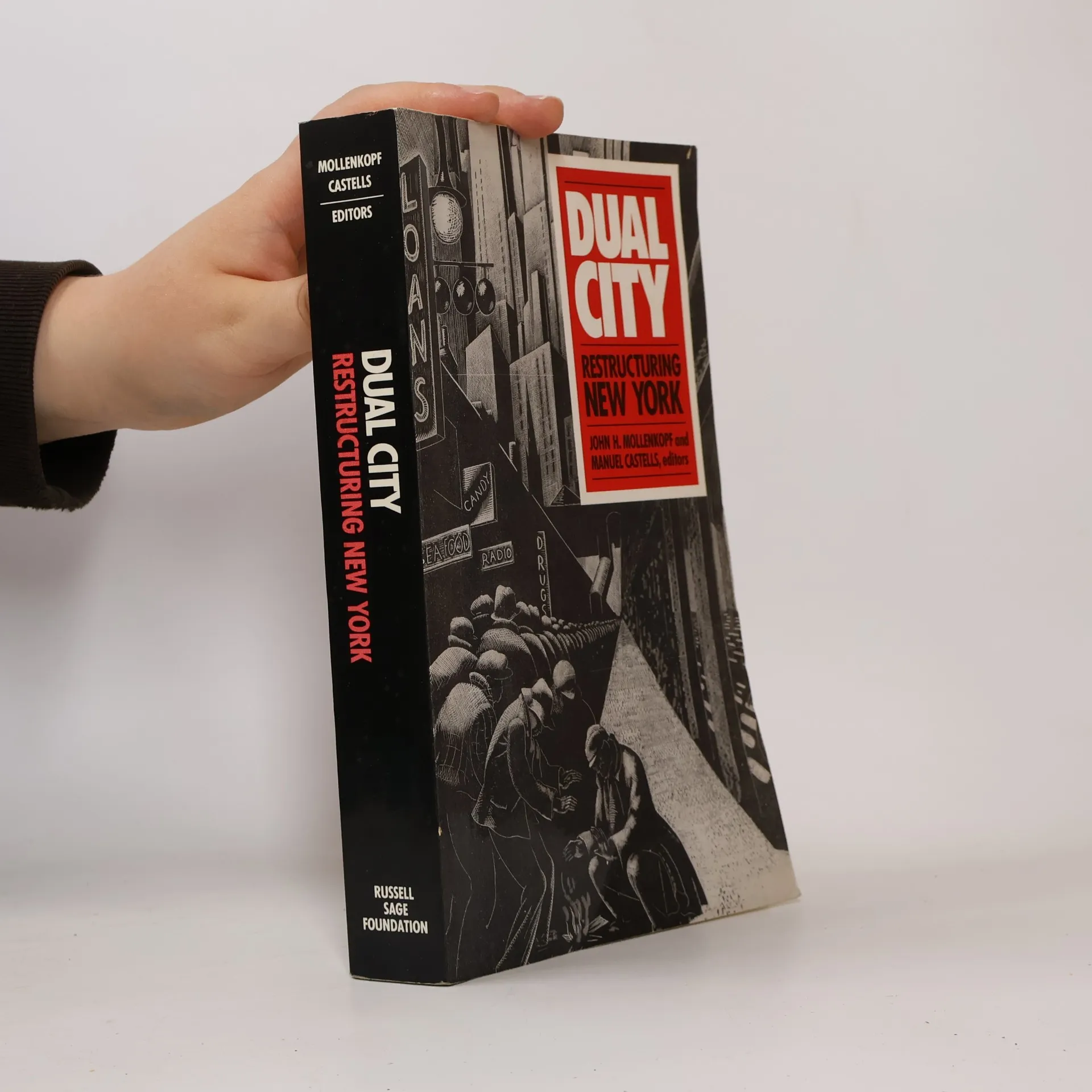

Dual City
Restructuring New York
Más información sobre el libro
Have the last two decades produced a New York composed of two separate and unequal cities? As the contributors to Dual City reveal, the complexity of inequality in New York defies simple distinctions between black and white, the Yuppies and the homeless. The city's changing economic structure has intersected with an increasingly diversified population, providing upward mobility for some groups while isolating others. As race, gender, ethnicity, and class become ever more critical components of the postindustrial city, the New York experience illuminates not just one great city, or indeed all large cities, but the forces affecting most of the globe. "The authors constitute an impressive assemblage of seasoned scholars, representing a wide array of pertinent disciplines. Their product is a pioneering volume in the social sciences and urban studies...the 20-page bibliography is a major research tool on its own." — Choice
Compra de libros
Dual City, Manuel Castells, John H. Mollenkopf
- Idioma

- Publicado en
- 1992
- Encuadernación
- (Tapa blanda)
Métodos de pago
Nadie lo ha calificado todavía.
- Título
- Dual City
- Subtítulo
- Restructuring New York
- Idioma
- Inglés
- Autores
- Manuel Castells, John H. Mollenkopf
- Editorial
- Russell Sage Foundation
- Publicado en
- 1992
- Formato
- Tapa blanda
- Páginas
- 491
- ISBN10
- 0871546086
- ISBN13
- 9780871546081
- Serie
- Categorías
- Etiquetas
- Tema histórico, EE.UU., Nueva York
- Descripción
- Have the last two decades produced a New York composed of two separate and unequal cities? As the contributors to Dual City reveal, the complexity of inequality in New York defies simple distinctions between black and white, the Yuppies and the homeless. The city's changing economic structure has intersected with an increasingly diversified population, providing upward mobility for some groups while isolating others. As race, gender, ethnicity, and class become ever more critical components of the postindustrial city, the New York experience illuminates not just one great city, or indeed all large cities, but the forces affecting most of the globe. "The authors constitute an impressive assemblage of seasoned scholars, representing a wide array of pertinent disciplines. Their product is a pioneering volume in the social sciences and urban studies...the 20-page bibliography is a major research tool on its own." — Choice