



Más información sobre el libro
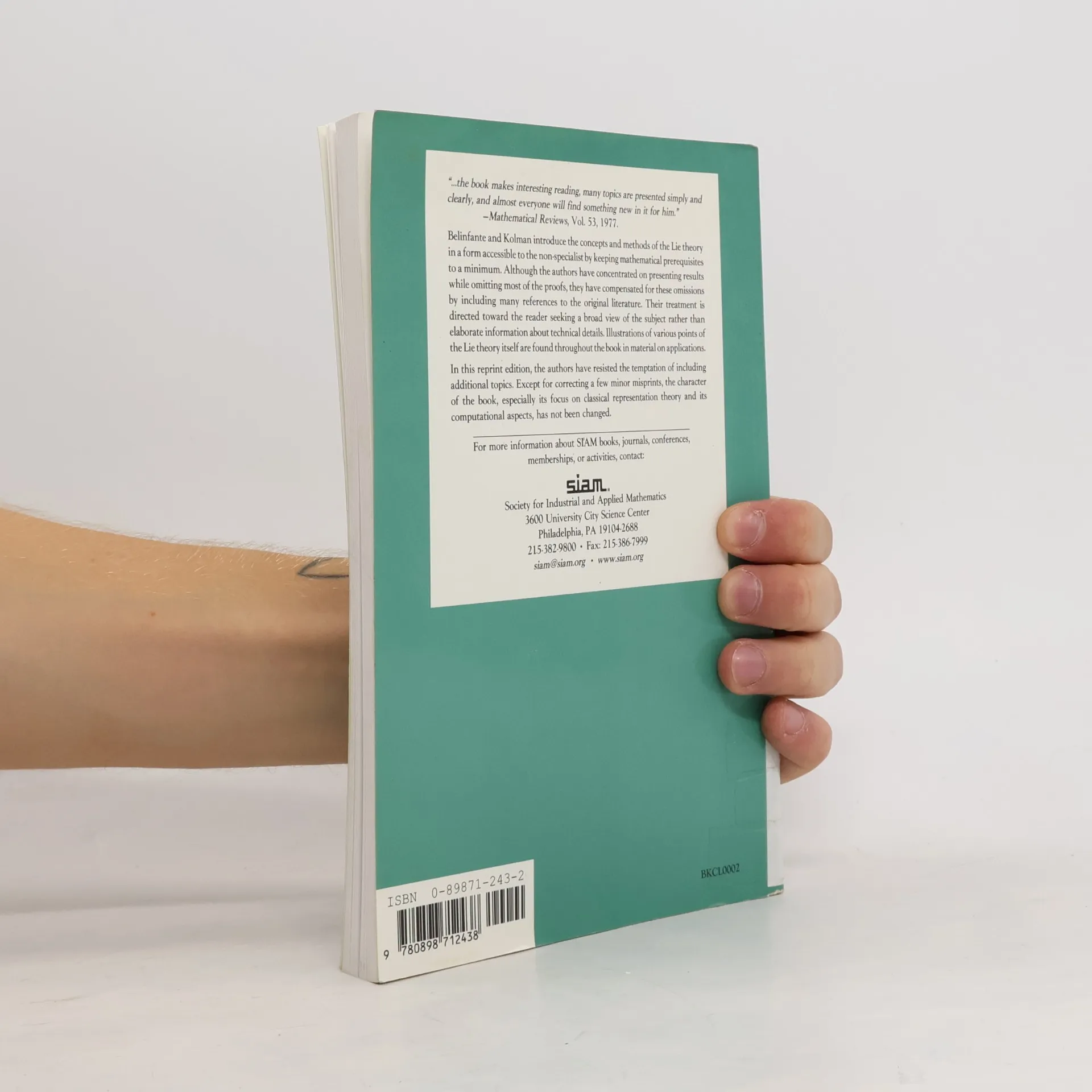
Introduces the concepts and methods of the Lie theory in a form accessible to the nonspecialist by keeping mathematical prerequisites to a minimum. Although the authors have concentrated on presenting results while omitting most of the proofs, they have compensated for these omissions by including many references to the original literature. Their treatment is directed toward the reader seeking a broad view of the subject rather than elaborate information about technical details. Illustrations of various points of the Lie theory itself are found throughout the book in material on applications. In this reprint edition, the authors have resisted the temptation of including additional topics. Except for correcting a few minor misprints, the character of the book, especially its focus on classical representation theory and its computational aspects, has not been changed.
Compra de libros
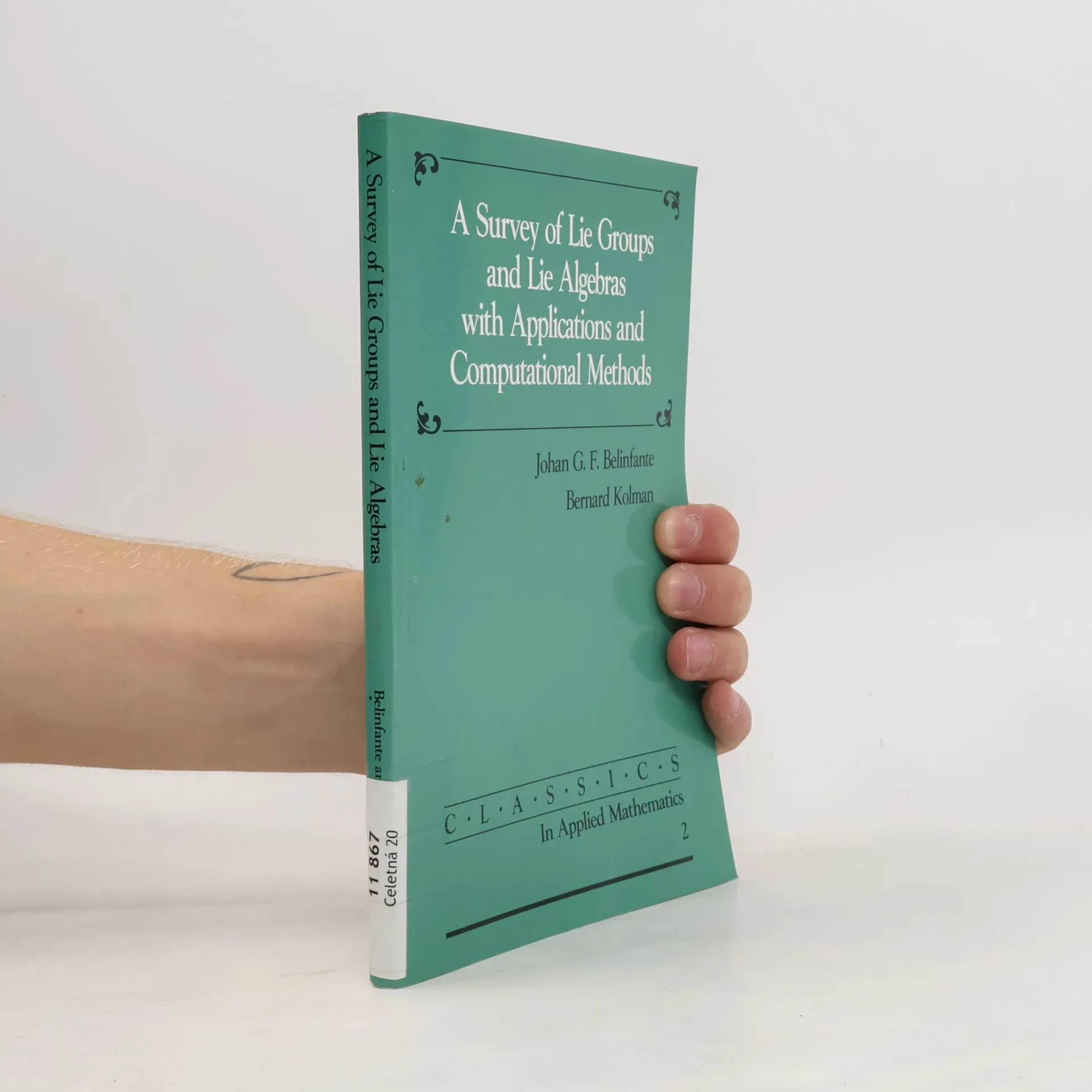
Classics in Applied Mathematics - 2: A Survey of Lie Groups and Lie Algebra with Applications and Computational Methods, Johan G. F. Belinfante, Bernard Kolman
- Idioma

- Publicado en
- 1989
- Encuadernación
- (Tapa blanda),
- Estado del libro
- Dañado
- Precio
- 8,92 €
Métodos de pago
Nadie lo ha calificado todavía.
- Título
- Classics in Applied Mathematics - 2: A Survey of Lie Groups and Lie Algebra with Applications and Computational Methods
- Idioma
- Inglés
- Autores
- Johan G. F. Belinfante, Bernard Kolman
- Publicado en
- 1989
- Formato
- Tapa blanda
- Páginas
- 174
- ISBN10
- 0898712432
- ISBN13
- 9780898712438
- Serie
- Descripción
- Introduces the concepts and methods of the Lie theory in a form accessible to the nonspecialist by keeping mathematical prerequisites to a minimum. Although the authors have concentrated on presenting results while omitting most of the proofs, they have compensated for these omissions by including many references to the original literature. Their treatment is directed toward the reader seeking a broad view of the subject rather than elaborate information about technical details. Illustrations of various points of the Lie theory itself are found throughout the book in material on applications. In this reprint edition, the authors have resisted the temptation of including additional topics. Except for correcting a few minor misprints, the character of the book, especially its focus on classical representation theory and its computational aspects, has not been changed.