



Más información sobre el libro
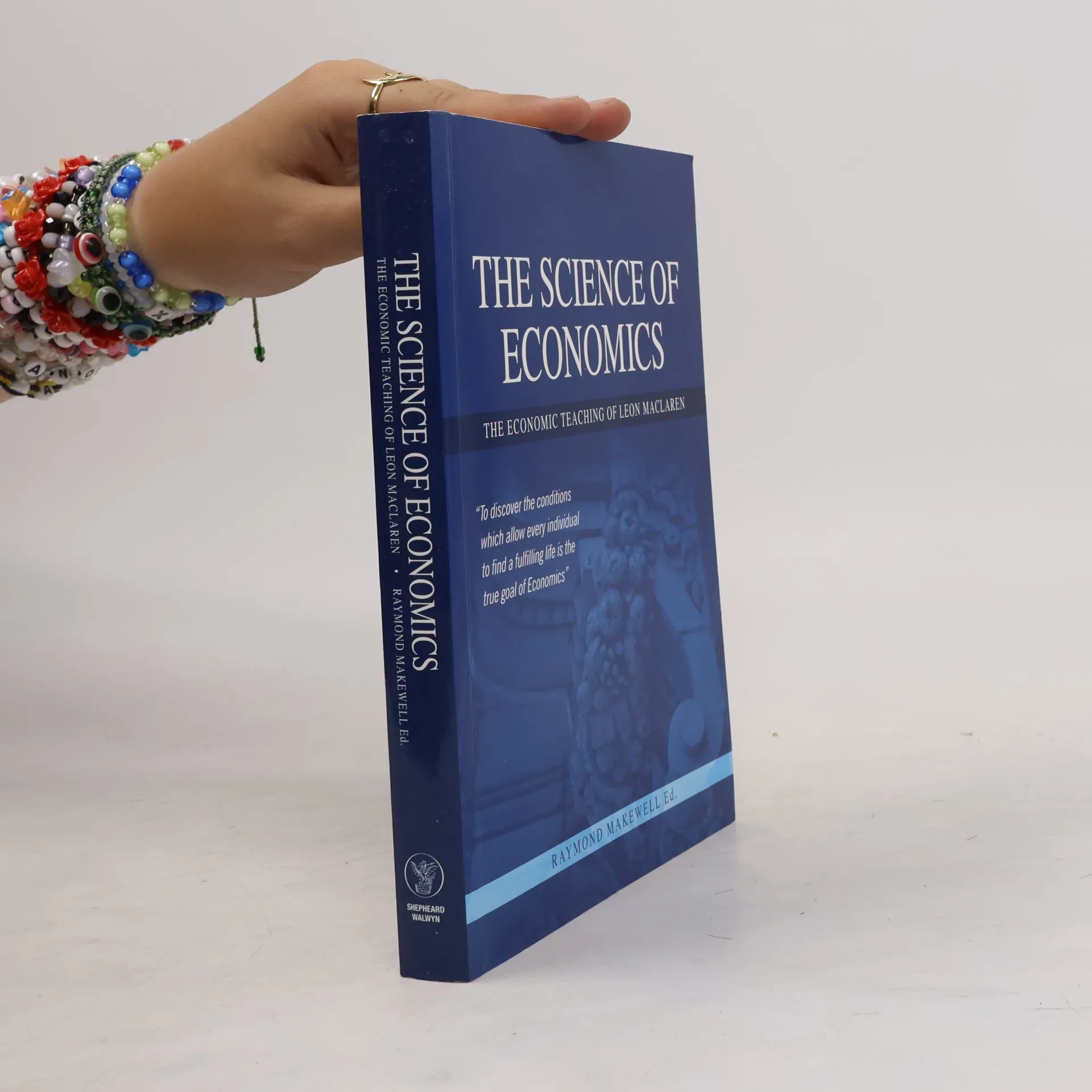
Based on a three-year course prepared by Leon MacLaren for the School of Economic Science in London in the late 1960s, this book reassesses the first principles of economics. Leon MacLaren (1910–1994) was a barrister, politician, philosopher, and the founder of the School of Economic Science. In his view, science is a study of laws that exist in nature, while economics is a study of the humanities with the interaction between human nature and the natural universe at its heart. With original subject matter from his economic course and introducing more recent examples and statistics from Australia, Canada, New Zealand, the UK, and the United States, the study examines the major characteristics of the modern economy—such as banking, taxation, and international trade—and considers the role of the government in economic affairs. It concludes with an examination of society's structure as a whole, the part economic activity plays in the bigger picture, and the social and cultural influences that shape the production and distribution of wealth.
Compra de libros
The Science of Economics, Raymond Makewell, Leon MacLaren
- Idioma

- Publicado en
- 2013
- Encuadernación
- (Tapa blanda),
- Estado del libro
- Bueno
- Precio
- 8,59 €
Métodos de pago
Nadie lo ha calificado todavía.
- Título
- The Science of Economics
- Subtítulo
- The Economic Teaching of Leon MacLaren
- Idioma
- Inglés
- Autores
- Raymond Makewell, Leon MacLaren
- Editorial
- Shepheard-Walwyn (Publishers) Ltd
- Publicado en
- 2013
- Formato
- Tapa blanda
- Páginas
- 284
- ISBN10
- 085683291X
- ISBN13
- 9780856832918
- Serie
- Categorías
- Etiquetas
- Comercio, Teorías científicas
- Descripción
- Based on a three-year course prepared by Leon MacLaren for the School of Economic Science in London in the late 1960s, this book reassesses the first principles of economics. Leon MacLaren (1910–1994) was a barrister, politician, philosopher, and the founder of the School of Economic Science. In his view, science is a study of laws that exist in nature, while economics is a study of the humanities with the interaction between human nature and the natural universe at its heart. With original subject matter from his economic course and introducing more recent examples and statistics from Australia, Canada, New Zealand, the UK, and the United States, the study examines the major characteristics of the modern economy—such as banking, taxation, and international trade—and considers the role of the government in economic affairs. It concludes with an examination of society's structure as a whole, the part economic activity plays in the bigger picture, and the social and cultural influences that shape the production and distribution of wealth.