



Parámetros
- 224 páginas
- 8 horas de lectura
Más información sobre el libro
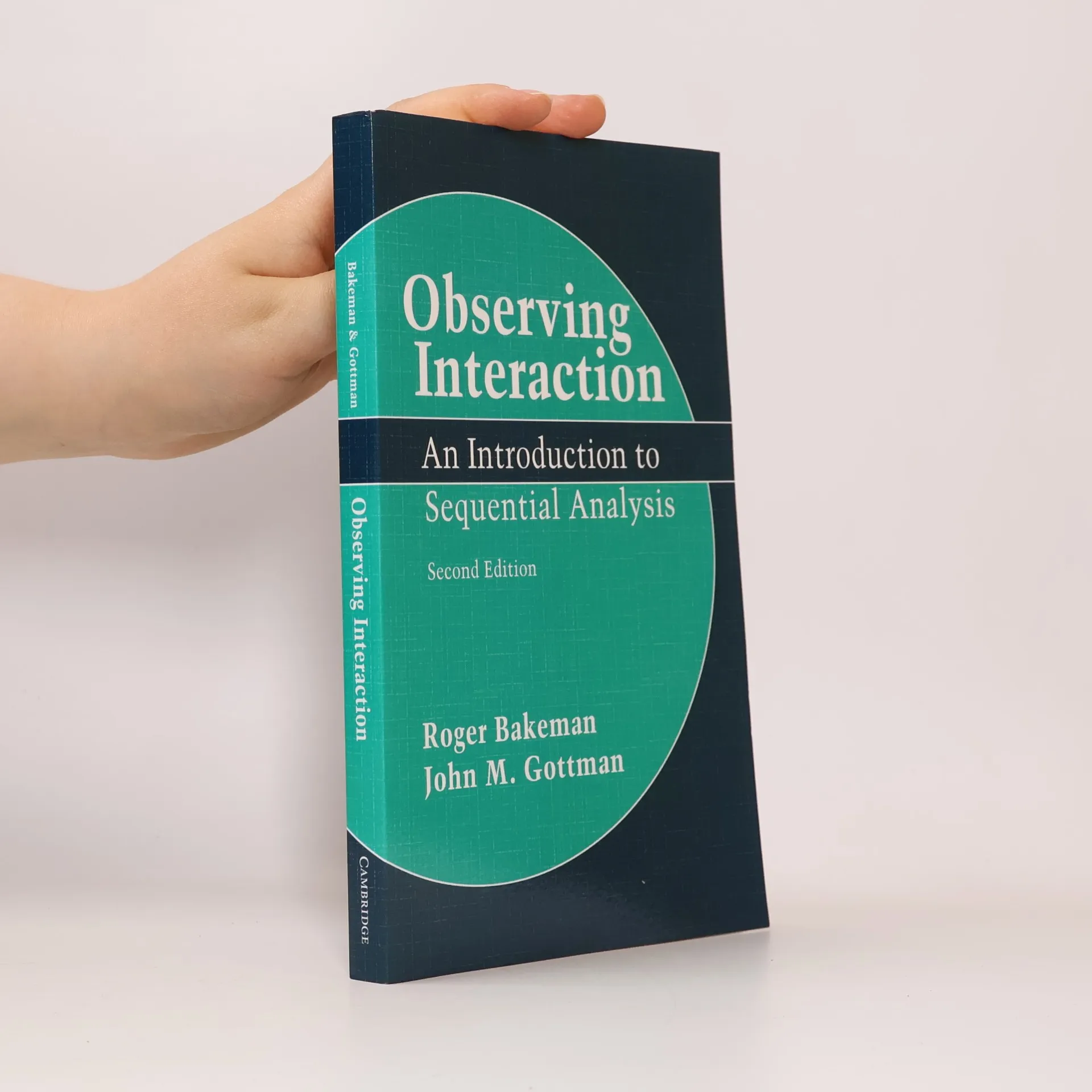
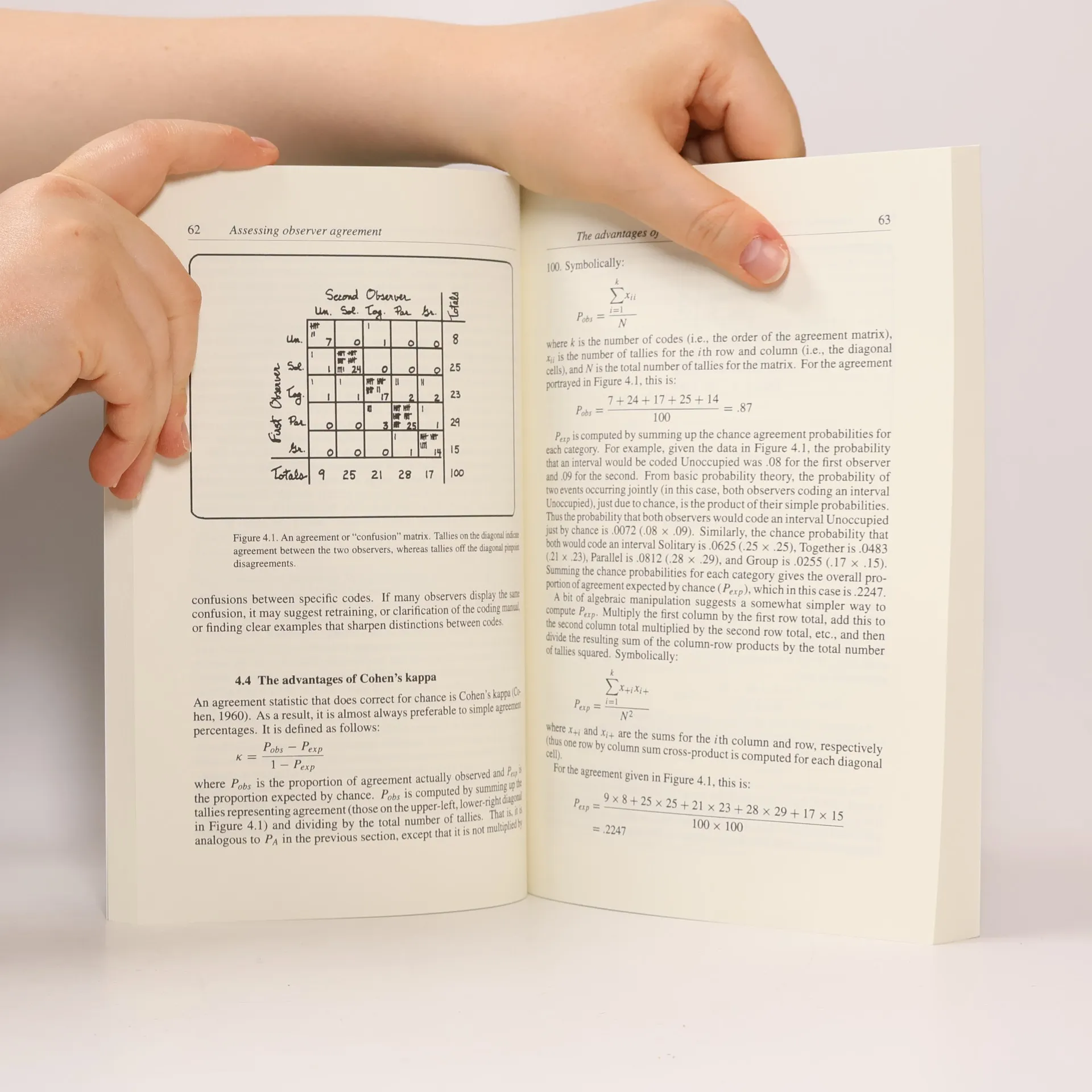
Mothers and infants exchanging gleeful vocalizations, married couples discussing their problems, children playing, birds courting, and monkeys fighting all have this in common: their interactions unfold over time. Almost anyone who is interested can observe and describe such phenomena. However, scientists usually demand more than a desription--they want observations that are replicable and amenable to scientific analysis, while still faithful to the dynamics of the phenomena studied. This book provides a straightforward introduction to scientific methods for observing social behavior. The second edition clarifies and extends material from the first edition, especially with respect to data analysis. A common standard for sequential data is introduced and sequential analysis is placed on firmer, log-linear statistical footing. The second edition is designed to work as a companion volume to Analyzing Interaction (1995). Because of the importance of time in the dynamics of social interaction, sequential approaches to analyzing and understanding social behavior are emphasized. An advanced knowledge of statistical analysis is not required. Instead, the authors present fundamental concepts and offer practical advice.
Compra de libros
Observing Interaction, Roger Bakeman, John Gottmann
- Idioma

- Publicado en
- 2006
- Encuadernación
- (Tapa blanda),
- Estado del libro
- Bueno
- Precio
- 7,99 €
Métodos de pago
Nadie lo ha calificado todavía.
- Título
- Observing Interaction
- Subtítulo
- An Introduction to Sequential Analysis - Second Edition
- Idioma
- Inglés
- Autores
- Roger Bakeman, John Gottmann
- Editorial
- Cambridge University Press
- Publicado en
- 2006
- Formato
- Tapa blanda
- Páginas
- 224
- ISBN10
- 0521574277
- ISBN13
- 9780521574273
- Serie
- Categorías
- Etiquetas
- Guías y Manuales, EE.UU., Medicina, Literatura especializada, Lingüística, Psiquiatría, Estadística, Fundamentos, Psicología Social, Sociolingüística
- Descripción
- Mothers and infants exchanging gleeful vocalizations, married couples discussing their problems, children playing, birds courting, and monkeys fighting all have this in common: their interactions unfold over time. Almost anyone who is interested can observe and describe such phenomena. However, scientists usually demand more than a desription--they want observations that are replicable and amenable to scientific analysis, while still faithful to the dynamics of the phenomena studied. This book provides a straightforward introduction to scientific methods for observing social behavior. The second edition clarifies and extends material from the first edition, especially with respect to data analysis. A common standard for sequential data is introduced and sequential analysis is placed on firmer, log-linear statistical footing. The second edition is designed to work as a companion volume to Analyzing Interaction (1995). Because of the importance of time in the dynamics of social interaction, sequential approaches to analyzing and understanding social behavior are emphasized. An advanced knowledge of statistical analysis is not required. Instead, the authors present fundamental concepts and offer practical advice.