

Más información sobre el libro
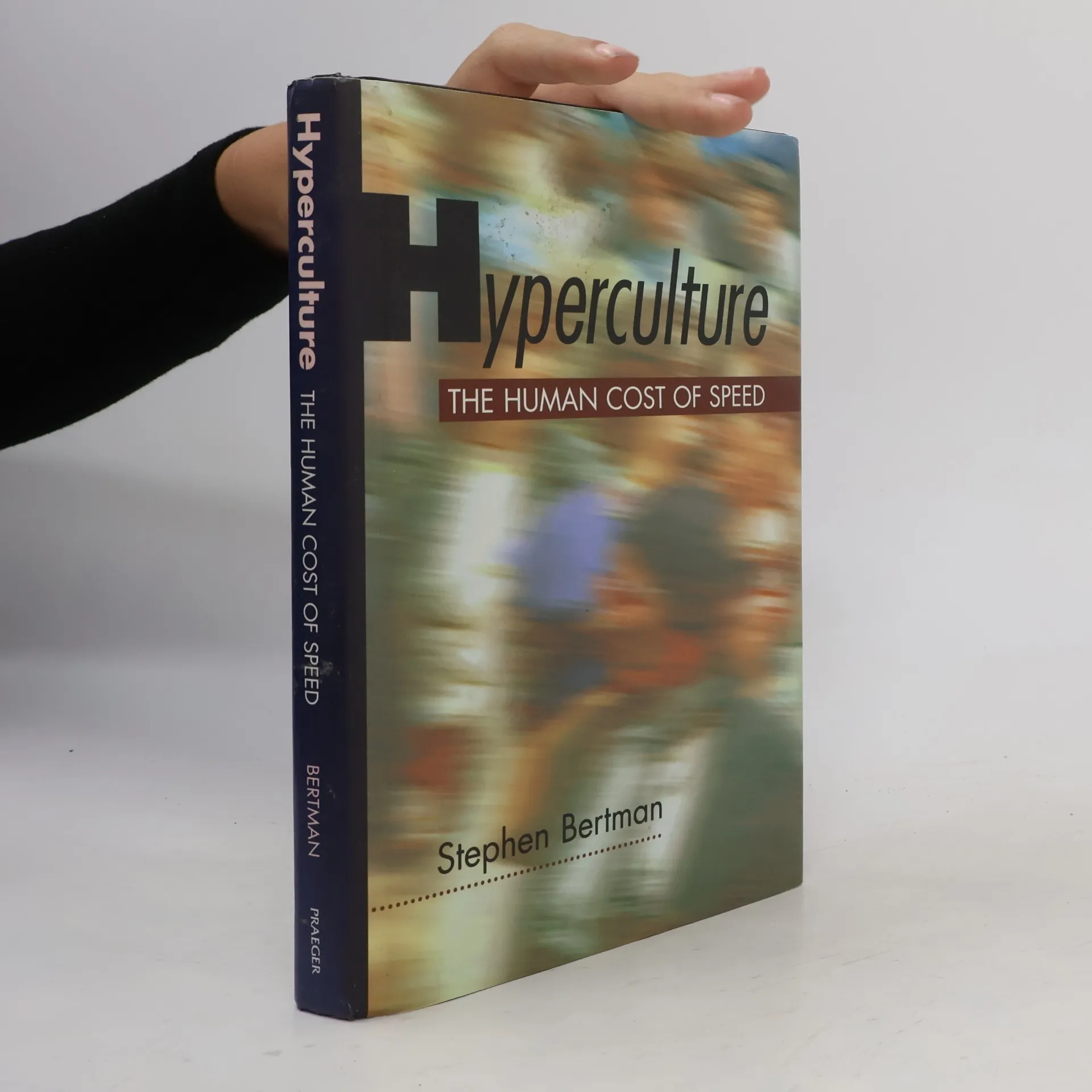
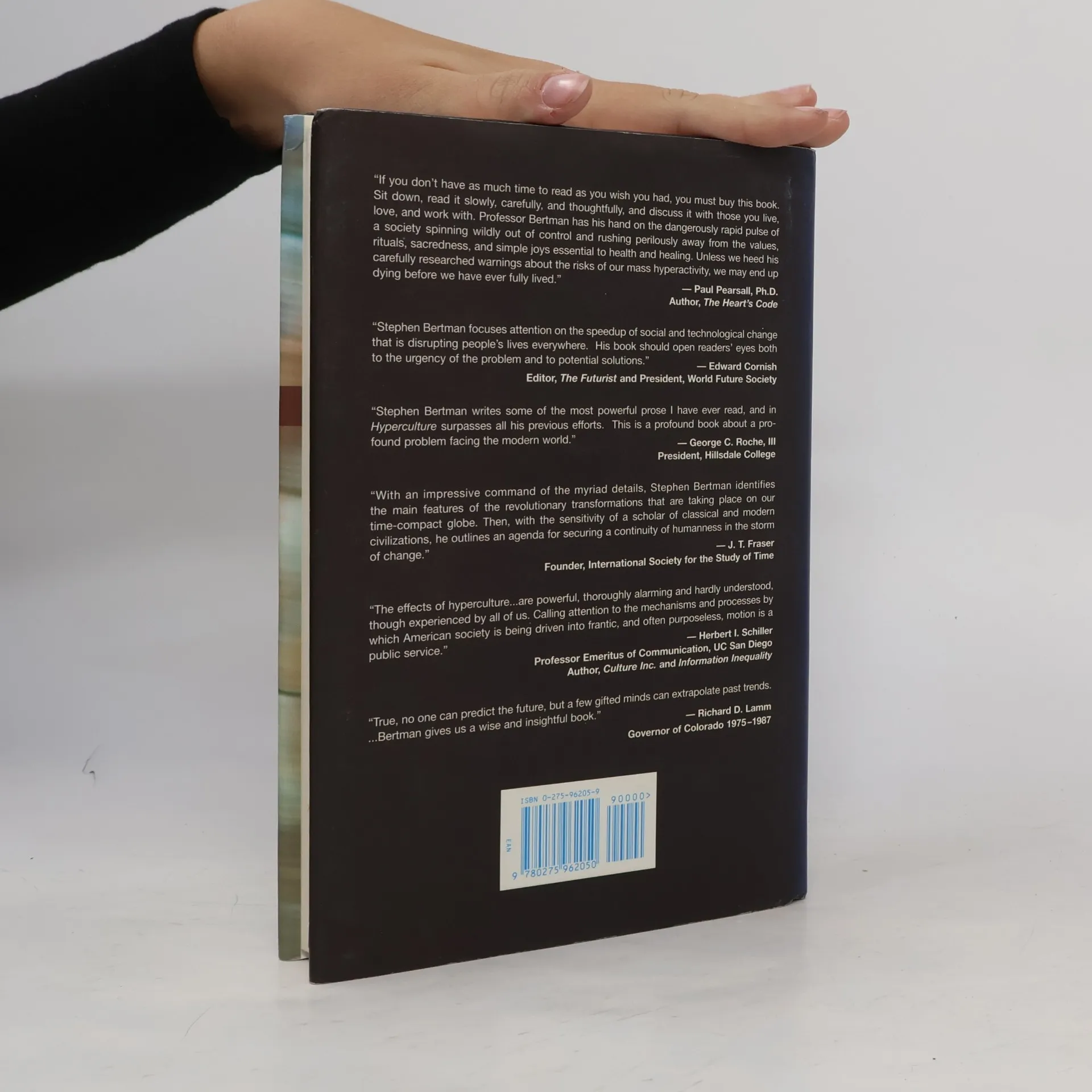
The rampant illnesses of our society―including the disintegration of the family, the degradation of the environment, unlimited commercialism, and unrelenting stress―are familiar to us all. For the first time, Stephen Bertman attempts to explain these disparate, overwhelmingly negative phenomena with a single, unifying that the accelerated pace of American society is eroding the essence of our most fundamental values. In 1970, Alvin Toffler identified a psycho-biological disease he called future shock caused by too much change in too short a time. Now Bertman daringly diagnoses an even more serious condition, hyperculture, a chronic warping of morals and ethics caused by America's addiction to speed. The treatment, he argues in this book, will require nothing less than a drastic slowdown―we must reassert control over the technologies that now dominate us in order to insure a humane future for our children and ourselves.We live, according to Bertman, in a society ruled by the power of now, a power that gives us instant gratification even as it demands our instantaneous obedience. As a result, we have adapted our lives and values to match the speed-of-light electronic technologies that surround us. But, in so doing, we have paid a high price in spirit and mind. Cut off from the wisdom of the past and too rushed to consider the consequences of our actions, we are caught up in a culture of sensationalism and transience in which the very definitions of personal identity and democracy are being transformed. Hyperculture dares to suggest that the cure for our condition lies not in an information superhighway or third wave information revolution, but in the radical and painful process of decelerating our lives enough to reclaim them. It is a daunting challenge, to be sure, but one on which our happiness and even our survival depend.
Compra de libros
Hyperculture, Stephen Bertman
- Idioma

- Publicado en
- 1998
- Encuadernación
- (Tapa dura),
- Estado del libro
- Bueno
- Precio
- 4,89 €
Métodos de pago
Nadie lo ha calificado todavía.
- Título
- Hyperculture
- Subtítulo
- The Human Cost of Speed
- Idioma
- Inglés
- Autores
- Stephen Bertman
- Editorial
- Praeger
- Publicado en
- 1998
- Formato
- Tapa dura
- Páginas
- 288
- ISBN10
- 0275962059
- ISBN13
- 9780275962050
- Serie
- Etiquetas
- Temática filosófica, EE.UU., Sociedad, Cultura y Sociedad, Cultura, Cultura popular, Civilización, Aspectos sociales
- Descripción
- The rampant illnesses of our society―including the disintegration of the family, the degradation of the environment, unlimited commercialism, and unrelenting stress―are familiar to us all. For the first time, Stephen Bertman attempts to explain these disparate, overwhelmingly negative phenomena with a single, unifying that the accelerated pace of American society is eroding the essence of our most fundamental values. In 1970, Alvin Toffler identified a psycho-biological disease he called future shock caused by too much change in too short a time. Now Bertman daringly diagnoses an even more serious condition, hyperculture, a chronic warping of morals and ethics caused by America's addiction to speed. The treatment, he argues in this book, will require nothing less than a drastic slowdown―we must reassert control over the technologies that now dominate us in order to insure a humane future for our children and ourselves.We live, according to Bertman, in a society ruled by the power of now, a power that gives us instant gratification even as it demands our instantaneous obedience. As a result, we have adapted our lives and values to match the speed-of-light electronic technologies that surround us. But, in so doing, we have paid a high price in spirit and mind. Cut off from the wisdom of the past and too rushed to consider the consequences of our actions, we are caught up in a culture of sensationalism and transience in which the very definitions of personal identity and democracy are being transformed. Hyperculture dares to suggest that the cure for our condition lies not in an information superhighway or third wave information revolution, but in the radical and painful process of decelerating our lives enough to reclaim them. It is a daunting challenge, to be sure, but one on which our happiness and even our survival depend.