

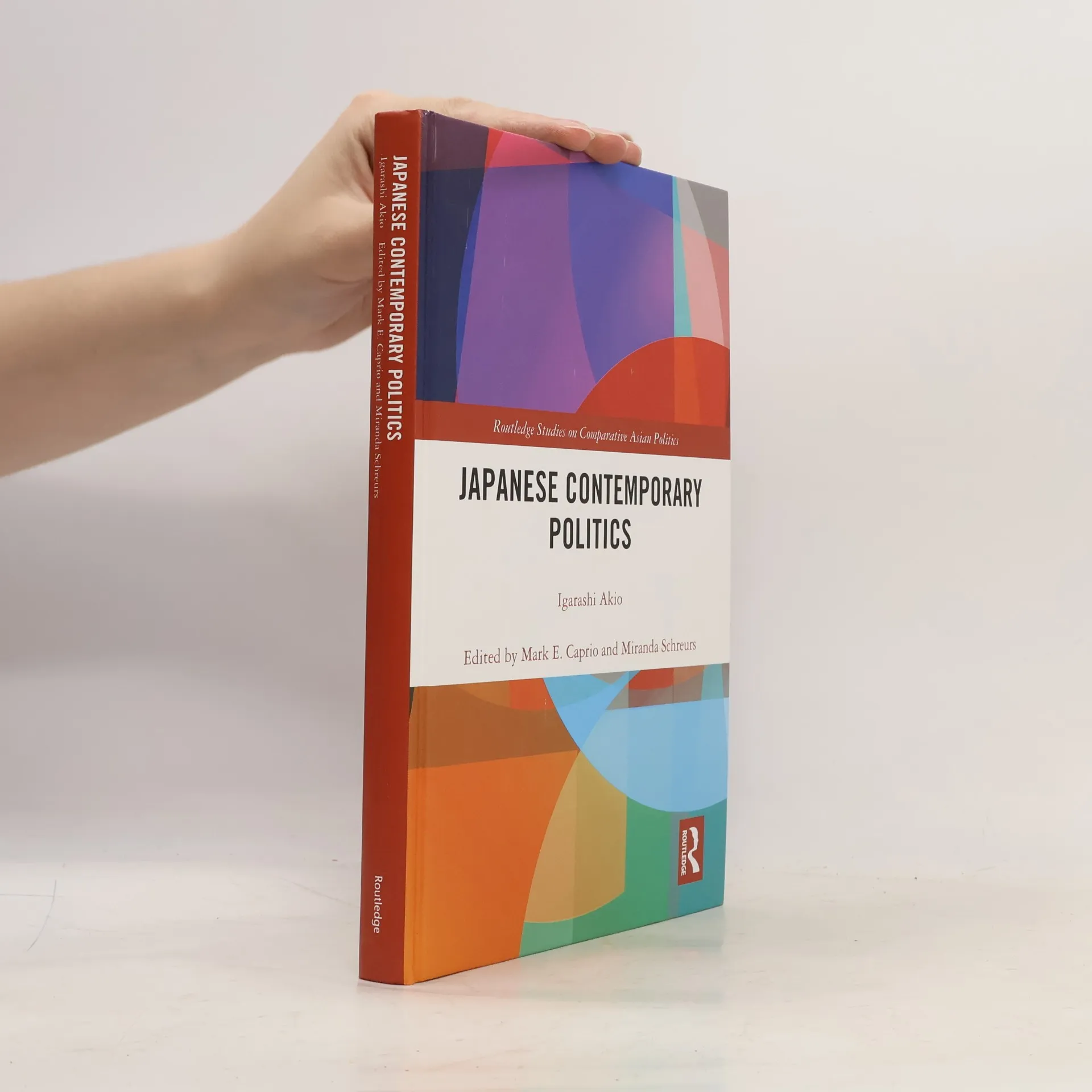


Routledge Studies on Comparative Asian Politics: Japanese Contemporary Politics
Parámetros
- 260 páginas
- 10 horas de lectura
Más información sobre el libro
In the postwar period, Japanese politics has significantly evolved, with gender, representation, and household economics gaining prominence. Following the Cold War, Japan has engaged in decentralization and deindustrialization, though its restructuring has been slower due to the bureaucracy's adherence to traditional methods. This translated and updated work traces developments in Japanese politics from the end of the Asia Pacific wars to the present, examining key transitional stages through four lenses: high politics, interest-centered politics, life-centered politics, and globalization. It includes contemporary analyses of themes such as the Abe administration's impact on international politics and nuclear issues. Written by an experienced Japanese scholar, the book illustrates how globalization has reshaped local politics and national security. However, the aftermath of the 2011 triple disaster highlights the persistence of traditional practices that contribute to corruption, scandal, and political mistrust among voters. This comprehensive introduction to Japanese politics serves as essential reading for students and scholars of Japanese, comparative, and Asian politics.
Compra de libros
Routledge Studies on Comparative Asian Politics: Japanese Contemporary Politics, Miranda Alice Schreurs, Akio Igarashi, Mark E. Caprio
- Idioma

- Publicado en
- 2018
- Encuadernación
- (Tapa dura),
- Estado del libro
- Muy Bueno
- Precio
- 74,39 €
Métodos de pago
Nadie lo ha calificado todavía.
- Título
- Routledge Studies on Comparative Asian Politics: Japanese Contemporary Politics
- Idioma
- Inglés
- Editorial
- Routledge
- Publicado en
- 2018
- Formato
- Tapa dura
- Páginas
- 260
- ISBN10
- 0815378793
- ISBN13
- 9780815378792
- Serie
- Etiquetas
- Política, Literatura especializada, Japón, Historia local, Ficción asiática, Gobierno
- Descripción
- In the postwar period, Japanese politics has significantly evolved, with gender, representation, and household economics gaining prominence. Following the Cold War, Japan has engaged in decentralization and deindustrialization, though its restructuring has been slower due to the bureaucracy's adherence to traditional methods. This translated and updated work traces developments in Japanese politics from the end of the Asia Pacific wars to the present, examining key transitional stages through four lenses: high politics, interest-centered politics, life-centered politics, and globalization. It includes contemporary analyses of themes such as the Abe administration's impact on international politics and nuclear issues. Written by an experienced Japanese scholar, the book illustrates how globalization has reshaped local politics and national security. However, the aftermath of the 2011 triple disaster highlights the persistence of traditional practices that contribute to corruption, scandal, and political mistrust among voters. This comprehensive introduction to Japanese politics serves as essential reading for students and scholars of Japanese, comparative, and Asian politics.