

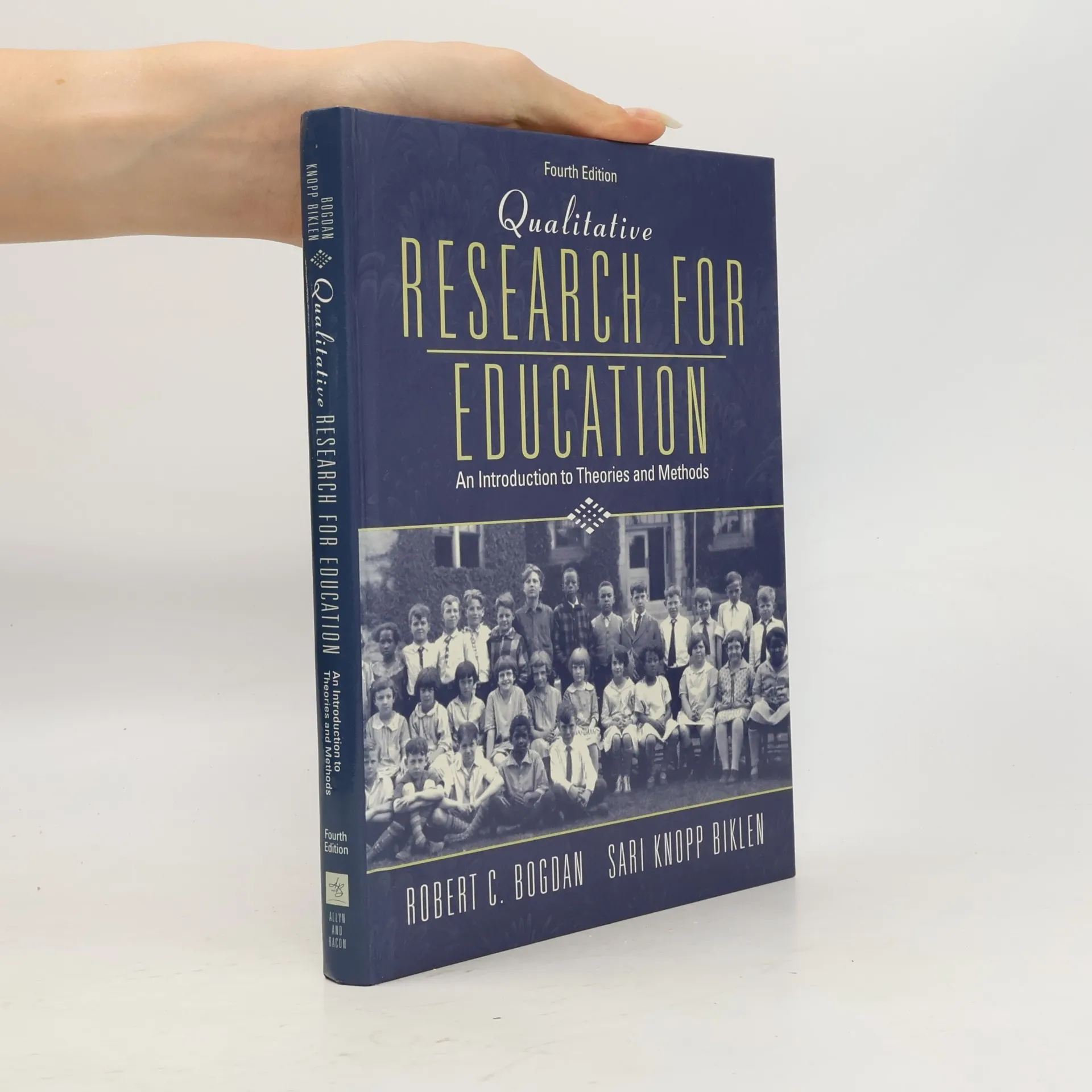



Más información sobre el libro
This concise, applied, and very clearly written introduction to qualitative research methods can be used effectively in a semester, or year-long course. The purpose of this book is to provide the reader with a background for understanding the uses of qualitative research in education (and other professions) to examine its theoretical and historical underpinnings, and to provide the "how-to's" of doing qualitative research. This new edition places qualitative research within current debates about research methods and alternative ways of knowing. While the authors approach the subject from a sociological perspective, they also take care to reflect the many changes in conceptualization of qualitative research brought by post-structural and feminist thought.
Compra de libros
Qualitative Research for Education, Robert C. Bogdan, Sari Knopp Biklen
- Idioma

- Publicado en
- 2002
- Encuadernación
- (Tapa dura),
- Estado del libro
- Muy Bueno
- Precio
- 8,59 €
Métodos de pago
Nadie lo ha calificado todavía.
- Título
- Qualitative Research for Education
- Subtítulo
- An Introduction to Theories and Methods - Fourth Edition
- Idioma
- Inglés
- Autores
- Robert C. Bogdan, Sari Knopp Biklen
- Editorial
- Allyn & Bacon
- Publicado en
- 2002
- Formato
- Tapa dura
- Páginas
- 291
- ISBN10
- 0205375561
- ISBN13
- 9780205375561
- Serie
- Categorías
- Etiquetas
- Guías y Manuales, EE.UU., Educación, Investigación, Metodología, Estudios de posgrado, Investigación Educativa
- Descripción
- This concise, applied, and very clearly written introduction to qualitative research methods can be used effectively in a semester, or year-long course. The purpose of this book is to provide the reader with a background for understanding the uses of qualitative research in education (and other professions) to examine its theoretical and historical underpinnings, and to provide the "how-to's" of doing qualitative research. This new edition places qualitative research within current debates about research methods and alternative ways of knowing. While the authors approach the subject from a sociological perspective, they also take care to reflect the many changes in conceptualization of qualitative research brought by post-structural and feminist thought.