

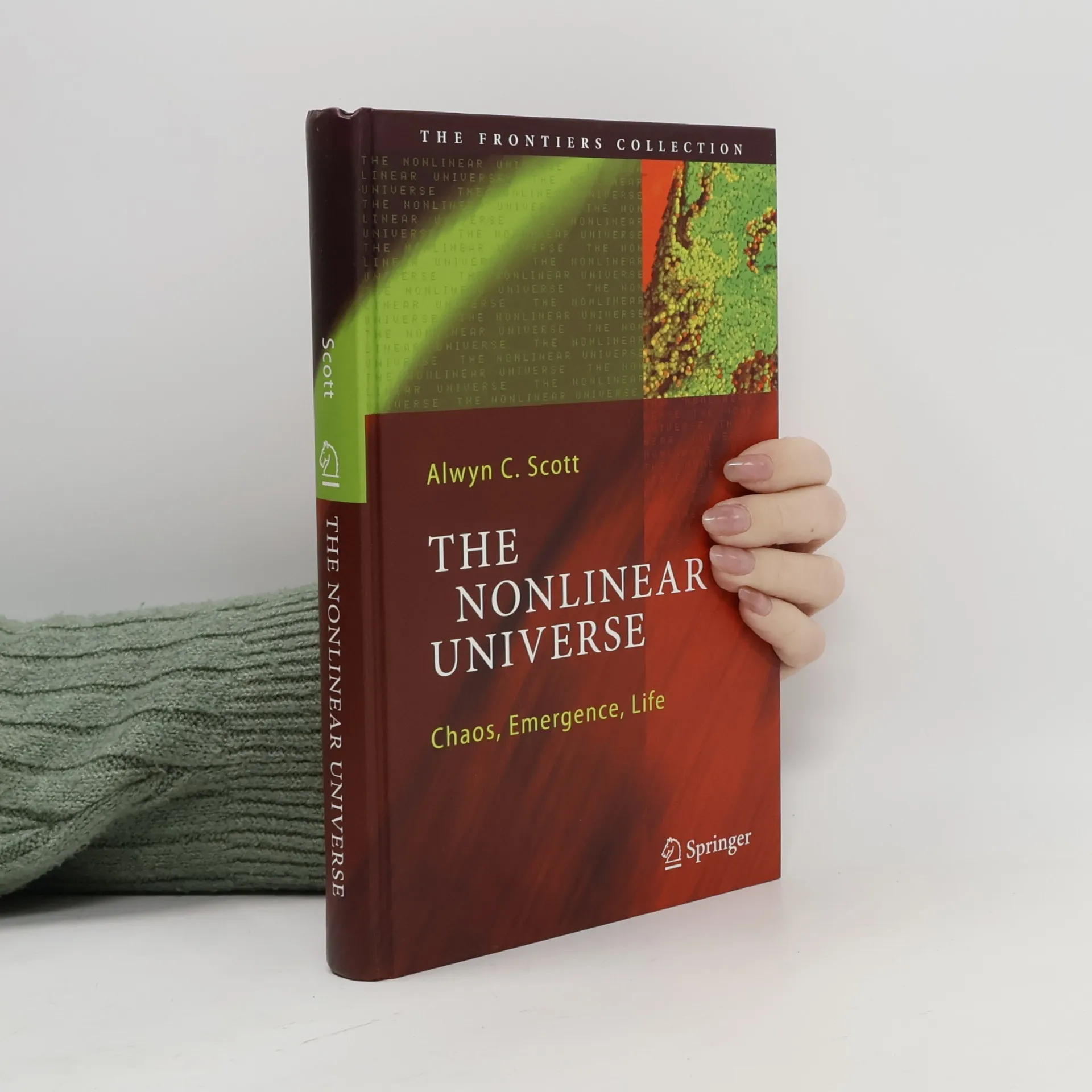
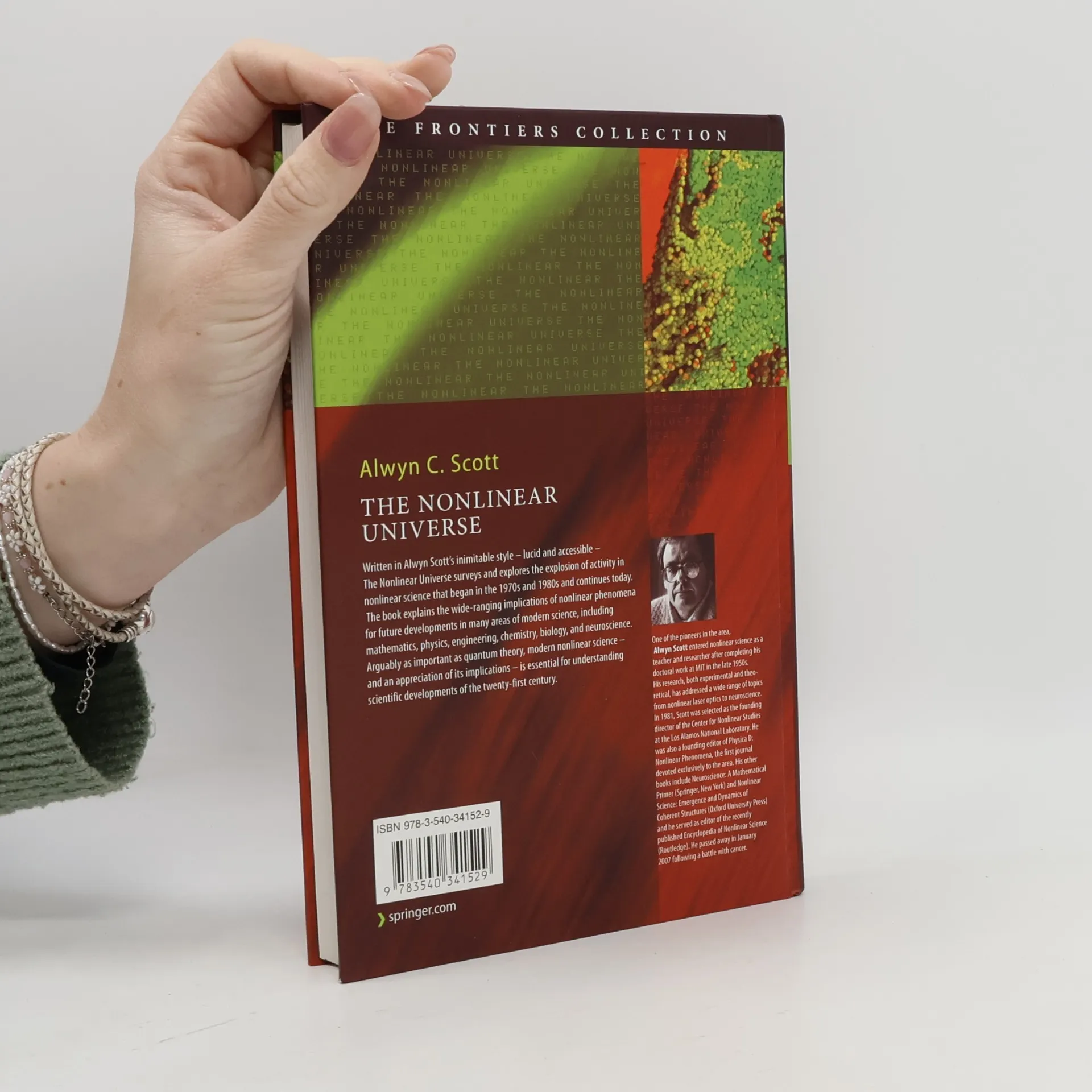

The nonlinear universe
Chaos, Emergence, Life
Autores
Parámetros
- 364 páginas
- 13 horas de lectura
Más información sobre el libro
It has been suggested that the big questions of science are answered – that science has entered a “twilight age” where all the important knowledge is known and only the details need mopping up. And yet, the unprecedented progress in science and technology in the twentieth century has raised qu- tions that weren’t conceived of a century ago. This book argues that, far from being nearlycomplete, the storyof sciencehas many morechapters, yet unwritten. With the perspective of the century’s advance, it’s as if we have climbed a mountain and can see just how much broader the story is. Instead of asking how an apple falls from a tree, as Isaac Newton did in the17thcentury, wecannowask: Whatisthefundamentalnatureofanapple (matter)? How does an apple (biological organism) form and grow? Whence came the breeze that blew it loose (meteorology)? What in a physical sense (synaptic ? rings) was the idea that Newton had, and how did it form? A new approach to science that can answer such questions has sprung up in the past 30 years. This approach – known as nonlinear science–ismore than a new ? eld. Put simply, it is the recognition that throughout nature, the whole is greater than the sum of the parts. Unexpected things happen.
Compra de libros
The nonlinear universe, Alwyn Scott
- Idioma

- Publicado en
- 2007
- Encuadernación
- (Tapa dura)
Métodos de pago
Nadie lo ha calificado todavía.
- Título
- The nonlinear universe
- Subtítulo
- Chaos, Emergence, Life
- Idioma
- Inglés
- Autores
- Alwyn Scott
- Editorial
- Springer
- Publicado en
- 2007
- Formato
- Tapa dura
- Páginas
- 364
- ISBN10
- 3540341528
- ISBN13
- 9783540341529
- Serie
- Categorías
- Etiquetas
- Ciencias naturales, Ciencia, Tecnología, Literatura especializada, Espacio, Investigación, Ingeniería, Ciencias humanas, Caos, Física Teórica, Pronósticos, Cibernética, Sistemas complejos
- Descripción
- It has been suggested that the big questions of science are answered – that science has entered a “twilight age” where all the important knowledge is known and only the details need mopping up. And yet, the unprecedented progress in science and technology in the twentieth century has raised qu- tions that weren’t conceived of a century ago. This book argues that, far from being nearlycomplete, the storyof sciencehas many morechapters, yet unwritten. With the perspective of the century’s advance, it’s as if we have climbed a mountain and can see just how much broader the story is. Instead of asking how an apple falls from a tree, as Isaac Newton did in the17thcentury, wecannowask: Whatisthefundamentalnatureofanapple (matter)? How does an apple (biological organism) form and grow? Whence came the breeze that blew it loose (meteorology)? What in a physical sense (synaptic ? rings) was the idea that Newton had, and how did it form? A new approach to science that can answer such questions has sprung up in the past 30 years. This approach – known as nonlinear science–ismore than a new ? eld. Put simply, it is the recognition that throughout nature, the whole is greater than the sum of the parts. Unexpected things happen.