

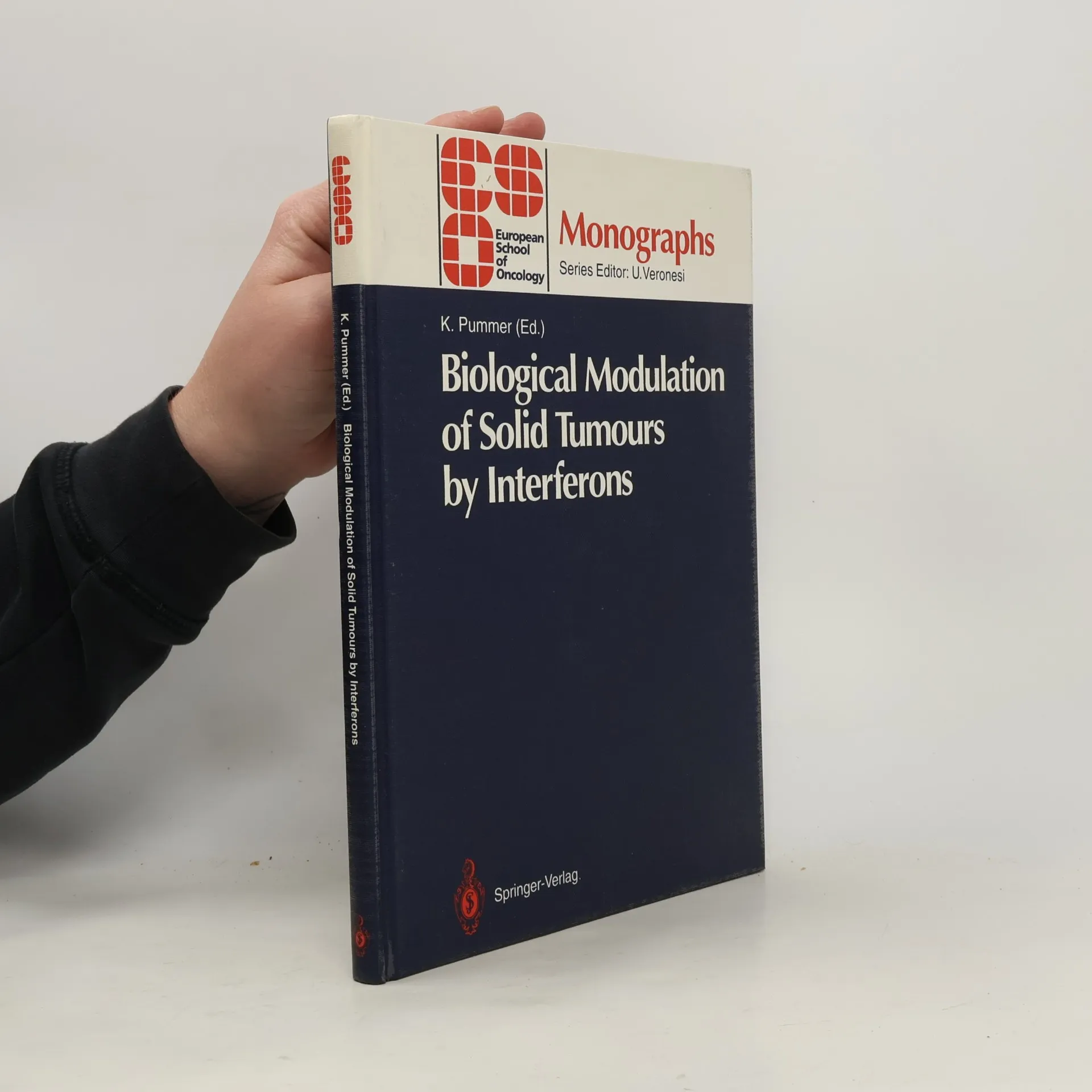
Biological Modulation of Solid Tumours by Interferons
Autores
Más información sobre el libro
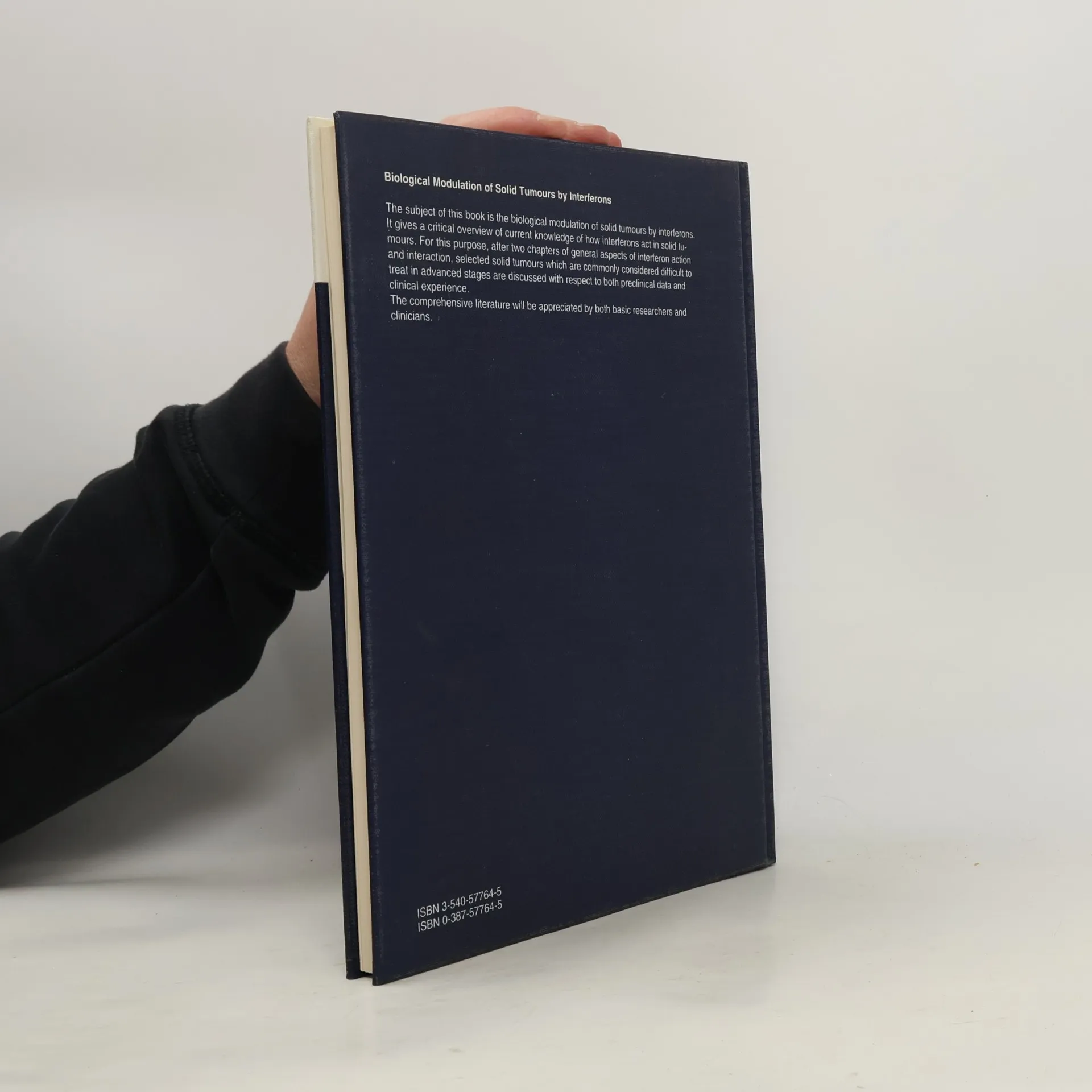
In the 1960s, it was reported that interferons have antitumour activity in different experimental models. Since that time, numerous studies have been performed to elucidate the various mechanisms of action that have been proposed. However, there is much controversy in the literature and promising preclinical findings failed to translate into substantial clinical progress. The present book gives a critical overview of current knowledge of how interferons act in solid tumours. For this purpose, after two chapters of general aspects of interferon action and interaction, selected solid tumours which are commonly considered difficult to treat in advanced stages are discussed with respect to both preclinical data and clinical experience.
Compra de libros
Biological Modulation of Solid Tumours by Interferons, Karl Pummer, U. Veronesi
- Idioma

- Publicado en
- 1994
- Encuadernación
- (Tapa dura),
- Estado del libro
- Bueno
- Precio
- 64,99 €
Métodos de pago
Nadie lo ha calificado todavía.
- Título
- Biological Modulation of Solid Tumours by Interferons
- Idioma
- Inglés
- Autores
- Karl Pummer, U. Veronesi
- Editorial
- Springer
- Publicado en
- 1994
- Formato
- Tapa dura
- Páginas
- 75
- ISBN10
- 3540577645
- ISBN13
- 9783540577645
- Serie
- Categorías
- Etiquetas
- Medicina, Literatura especializada, Investigación, Cáncer, tumores, Fundamentos, Oncología, Inmunología, Investigación Médica, Cáncer de mama
- Descripción
- In the 1960s, it was reported that interferons have antitumour activity in different experimental models. Since that time, numerous studies have been performed to elucidate the various mechanisms of action that have been proposed. However, there is much controversy in the literature and promising preclinical findings failed to translate into substantial clinical progress. The present book gives a critical overview of current knowledge of how interferons act in solid tumours. For this purpose, after two chapters of general aspects of interferon action and interaction, selected solid tumours which are commonly considered difficult to treat in advanced stages are discussed with respect to both preclinical data and clinical experience.